

There’s something deeply satisfying about opening a well-organized tackle box. Everything in its place, ready for any situation the water throws at you. But getting there — especially as a beginner — can feel overwhelming. Walk into any tackle shop and you’ll find hundreds of hooks, lures, weights, and gadgets that all seem essential. Spoiler: most of them aren’t.
The truth is, you can build a highly effective beginner tackle box for under $40 that will handle 95% of your freshwater fishing needs. In this guide, we’ll walk through exactly what to include, what to skip, and how to stay organized so you spend more time fishing and less time digging through a jumble of tangled hooks.
Start with the Right Box
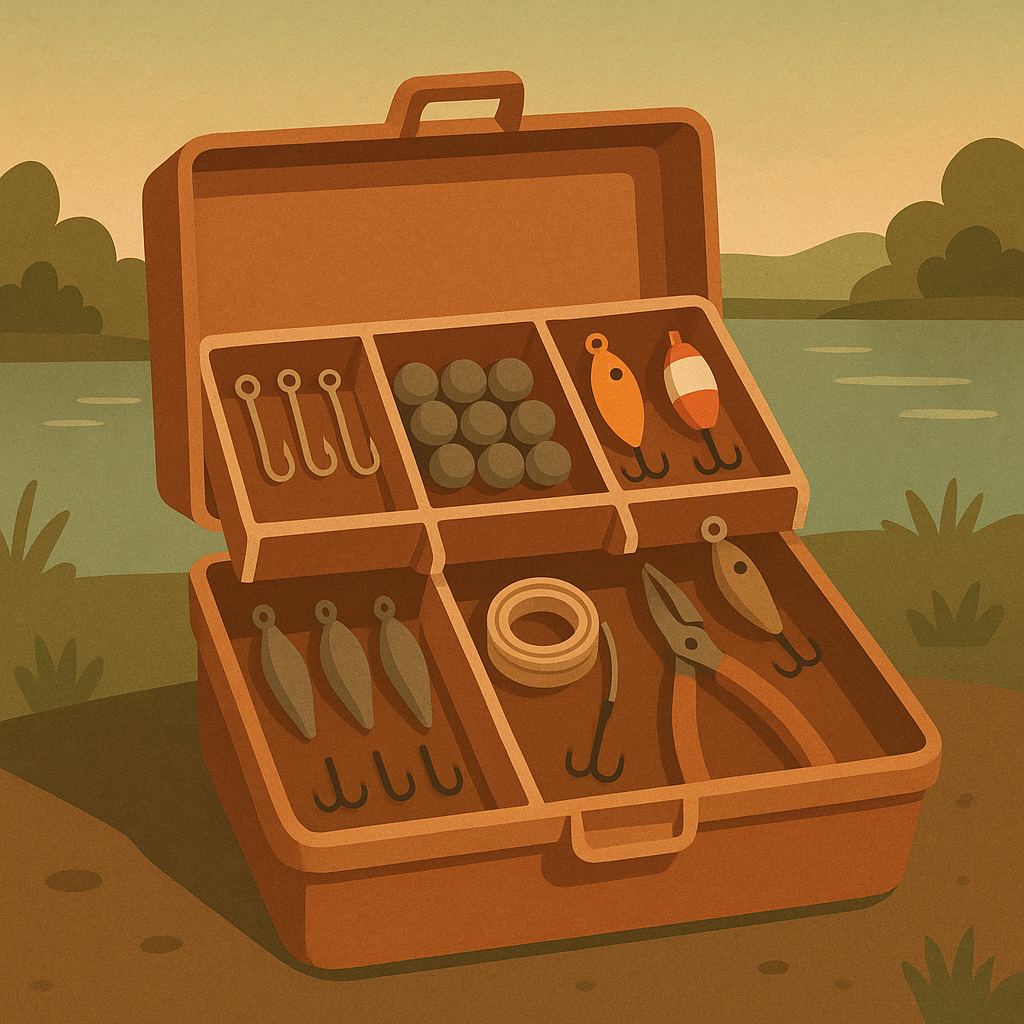
Before we talk about what goes inside, let’s talk about the container. A good beginner tackle box or bag has removable dividers so you can rearrange compartments as your kit grows. Look for something waterproof or at least water-resistant — it will spend time near the water, guaranteed. A medium-sized utility box with 3–4 tray compartments is usually perfect for a beginner’s kit.
Hard-sided boxes are great for hooks and small hardware. Many experienced anglers use soft tackle bags with removable utility boxes inside — you can customize the layout and carry more gear comfortably. Either way, avoid the impulse to buy the biggest box you can find. Start small and organized; upgrade when you actually run out of space.
Terminal Tackle: The Core of Your Kit
“Terminal tackle” refers to everything at the end of your line — hooks, weights, swivels, and bobbers. These are the absolute must-haves before anything else.
Hooks
You don’t need 50 varieties. A solid starter hook collection looks like this:
- Size 8–10 J-hooks: For panfish (bluegill, crappie) with worms or small baits
- Size 4–6 circle hooks: For bass and general use — great self-setting option for beginners
- Size 1/0 circle hooks: For catfish and larger species
- Bait holder hooks, size 6: For keeping nightcrawlers on the hook
Weights and Sinkers
- Split shot weights: Small, pinch-on weights for fine-tuning depth. Carry sizes from BB to 3/0 split shot.
- Egg sinkers (1/4 oz – 1/2 oz): Slide along your line for a natural bottom presentation — great for catfish and bass rigs
- 1/4 oz jig heads: Combine a weight and hook in one; very versatile with soft plastic baits
Bobbers and Floats
- Round snap-on bobbers: The classic red-and-white bobber — easy to use and effective in shallow water up to 6 feet
- Slip bobbers: Slide your line through a tube, set the depth with a stopper. Perfect for deeper water where round bobbers struggle
Swivels and Snaps
Barrel swivels prevent your line from twisting when using spinners or lures that rotate. Snap swivels add a clip so you can change lures without re-tying. Keep a small pack of size 10 and size 7 barrel swivels on hand — they save your line from embarrassing coil tangles after a day of casting spinners.
Lures: Keep It Simple to Start
You don’t need a box full of lures to catch fish. Start with a small, versatile selection and learn to use each one well rather than owning 30 lures you’ve never tried.
- Rooster Tail or inline spinner (1/8 oz – 1/4 oz): The most beginner-friendly lure in existence. Cast it out, reel it in steadily. Works on bass, trout, perch, and crappie.
- Soft plastic worms (4–6 inch): Rig them on a jig head or worm hook and drag slowly along the bottom. Bass love them.
- Small crankbaits: Once you’re comfortable casting, a shallow-running crankbait adds serious fish-attracting power in 2–6 feet of water
Tools Every Tackle Box Needs
Gear beyond hooks and lures that makes your fishing life dramatically easier:
- Needle-nose pliers: For removing hooks safely and pinching barbs. Get a pair with a line cutter built in.
- Extra line: A small spool of 8 lb mono in your box means a snapped line doesn’t end your day
- Small first-aid kit: Hook punctures happen. A few bandages and antiseptic wipes take up almost no space
- Measuring tape or ruler: For checking if a catch meets the legal size limit in your area
- Headlamp: Invaluable for early morning starts or if a great evening bite keeps you out past dark
Pros and Cons of Hard Box vs. Soft Tackle Bag
Better hook organization
Small compartments keep hooks and weights sorted by size — no tangling and easy to find what you need fast.
Waterproof protection
Hard plastic keeps contents dry even if set down in shallow water or caught in rain.
Less comfortable to carry far
A full hard box gets heavy on long walks to a fishing spot — a soft bag with a shoulder strap is much easier on longer trips.
Limited storage for bulky items
Extra line spools, pliers, and larger lures often don’t fit neatly inside standard hard-sided boxes.
What to Leave Out (At Least for Now)
Tackle shops are designed to make you buy things. Here’s what you can safely skip as a beginner:
- Expensive topwater lures: Fun to fish but situational — wait until you’re comfortable with the basics
- Large saltwater hooks: Oversized hooks spook freshwater fish more than they help
- Scent attractants: Useful for some situations but not essential when starting out
- Lure variety packs: These look like a bargain but fill your box with junk lures that don’t work in most situations
Frequently Asked Questions
How much should I spend on a starter tackle kit?
A solid beginner tackle box can be assembled for $30–$50, not counting your rod and reel. Spend on quality hooks, a few proven lures, and basic tools. Avoid bundled starter kits from big box stores — they often include low-quality hooks and useless accessories. Better to buy a few good things than a lot of bad ones.
How do I keep hooks from tangling in my tackle box?
Store hooks by size in small separate compartments — never dump mixed hooks into one big section. Some anglers keep hooks on the foam strips inside small plastic boxes, which prevents tangling completely. Loose hooks that mix together become a frustrating, finger-poking mess fast.
Should I carry bait in my tackle box?
Live bait (worms, minnows) should be kept separate in a bait container — not in your tackle box where they’d dry out or create a mess. Artificial soft plastics (worms, grubs) can live in resealable bags or their original packaging inside your box. Pre-tied rigs can be stored on a small leader wallet for quick access.
What’s the one item beginners forget most often?
Their fishing license. Keep a digital copy on your phone as backup, and if your state issues a physical license, laminate it and clip it inside your tackle box lid. After that, the second most commonly forgotten item is a hook remover or pliers — catching a fish and realizing you have no way to safely remove the hook is a frustrating experience you only have once.
Final Thoughts
The perfect tackle box isn’t the biggest one or the most expensive one — it’s the one you know by heart. When you can reach in and grab exactly what you need without thinking, you fish with more confidence and waste less time fussing with gear. Start simple, stay organized, and let your kit grow naturally as your fishing evolves. A beginner tackle box with 40 purposeful items beats a cluttered box with 200 random ones every time.