
The right fishing tools can make an ordinary day on the water feel smooth, safe, and a whole lot less frustrating. Most beginners start with a rod, reel, hooks, and bait, then realize pretty quickly that landing fish, cutting line, and removing hooks is where the real fumbling begins. That is why a small kit of reliable fishing tools matters more than most people expect.
Think of it like keeping a basic toolbox in the garage. You may not need every gadget on the shelf, but a few dependable essentials save time and prevent headaches. For freshwater beginners, especially adults who want a relaxed day instead of a gear wrestling match, the best fishing tools are simple, durable, and easy to reach when a fish is flopping at your feet.
NOAA recreational fishing data shows millions of Americans head out on the water each year, and catch-and-release guidance consistently emphasizes faster hook removal, shorter handling time, and safer landing methods. In practical terms, that means tools like long-nose pliers and a rubber landing net are not luxuries. They are everyday helpers that protect both the angler and the fish.
Why Fishing Tools Matter More Than Beginners Expect
Plenty of anglers picture tools as optional accessories, but they usually become essential the moment something goes sideways. A fish swallows the hook a little deeper than expected. Your line frays and needs a clean trim. A bass thrashes beside the bank, and now you need a safe way to land it without grabbing wildly.
Good fishing tools reduce three common beginner problems:
- Safer hook removal: Pliers keep your fingers away from sharp hooks and fish spines.
- Faster fish handling: Nets and grippers help you control a catch without squeezing or dropping it.
- Less wasted time: Clean cutters, organized tools, and a simple setup keep your trip moving.
The comfort angle
For many adults 50+, comfort and confidence matter just as much as catching fish. Bending over with slippery line in one hand and a wiggling fish in the other gets old fast. A few smart tools let you stay calm, stay tidy, and enjoy the day instead of feeling rushed.
The fish-care angle
NOAA best practices for catch and release highlight wet hands, short air exposure, and careful support of the fish. A rubber fishing net and quality fishing pliers help you do exactly that. You get the hook out quickly, avoid unnecessary squeezing, and return the fish in better shape.
The Core Fishing Tools Every Beginner Should Carry
You do not need a giant bag of fishing accessories to be prepared. Start with this core group and build from there.
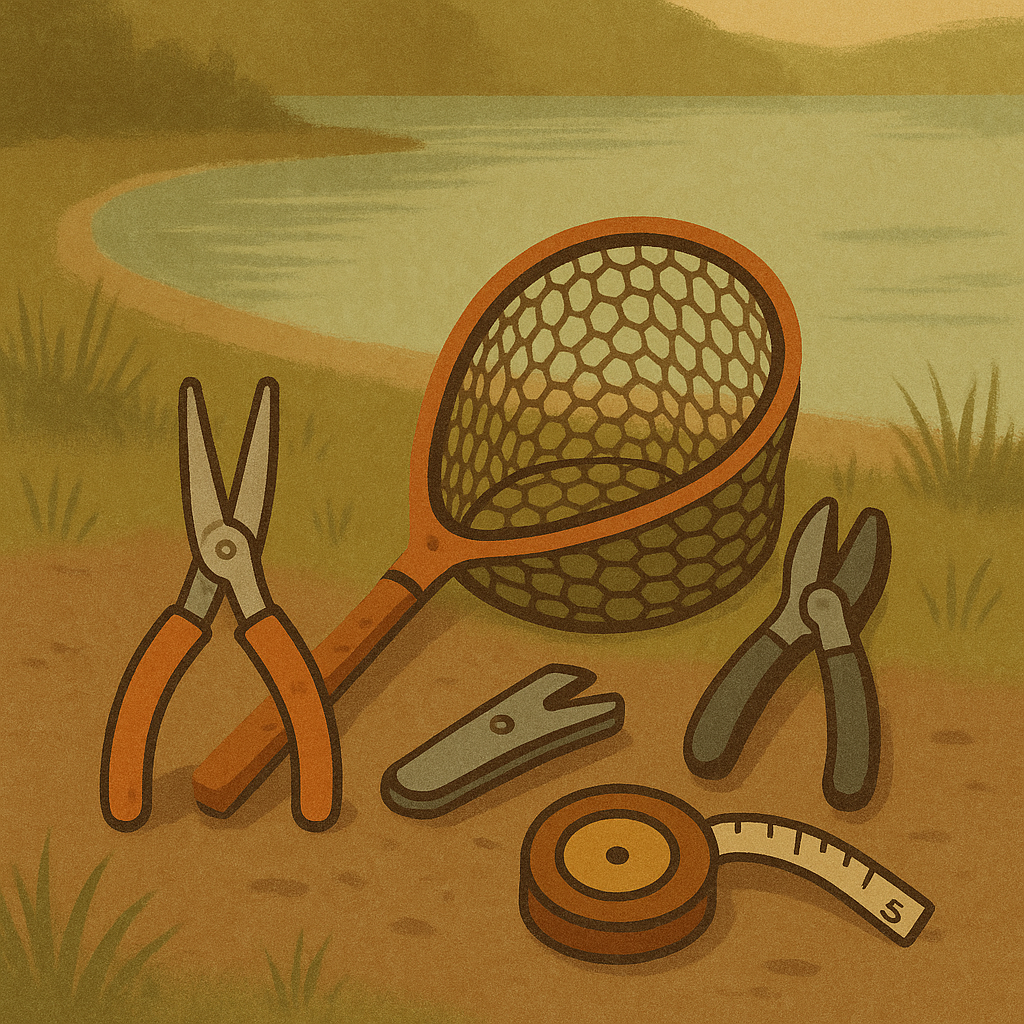
- Long-nose fishing pliers: Great for removing hooks, pinching split shot, and flattening barbs for easier catch and release.
- Line cutters or braid scissors: A clean cut makes knot tying easier and prevents frayed tag ends.
- Knotless rubber fishing net: Helps land fish safely while protecting scales and slime coat.
- Small measuring tape: Useful for checking legal size limits in your state.
- Compact scale: Optional, but handy if you like tracking your catches without guessing.
- Headlamp: A lifesaver for dawn launches, dusk bites, or retying in low light.
If you fish around toothy species or larger catfish, you can add fish grippers later. But for most beginner freshwater fishing, pliers, a net, and cutters do the heavy lifting.
How to Choose Good Fishing Pliers and a Good Fishing Net
Picking fishing pliers
The best fishing pliers are rust-resistant, easy to grip with wet hands, and long enough to keep your fingers clear of the hook. Spring-loaded handles feel easier on the hands, and built-in cutters are a bonus. You do not need tournament-grade pliers to start. You just need a pair that opens smoothly and feels solid.
Look for these features:
- Rubberized grip: Less slipping with wet fingers.
- Split ring tip: Useful if you swap hooks on lures.
- Corrosion resistance: Even freshwater gear benefits from stainless or coated metal.
- Lanyard or sheath: Prevents the classic mistake of setting pliers down and losing them in the grass.
Picking a fishing net
A rubber or coated fishing net is usually better than old-style rough mesh. It tangles less, treats fish more gently, and keeps treble hooks from becoming a full-blown disaster. For bank fishing, a medium net with a modest handle is plenty. For boats, a slightly longer handle helps you reach cleanly without leaning dangerously.
Safer and calmer fish handling
Pliers and nets reduce panic moments when a fish is hooked awkwardly or flopping beside you.
Better for catch and release
Quick hook removal and softer net material mean less stress on fish and faster release times.
More confidence for beginners
A small tool kit makes common problems feel manageable instead of chaotic.
More clutter than value
Too many niche accessories make tackle bags heavy and slow you down without helping you catch more fish.
Harder to stay organized
Beginners do better with a few tools they know well rather than a dozen items buried at the bottom of a bag.
Other Helpful Fishing Accessories Worth Considering
Once the basics are covered, a few fishing accessories can make your trips more enjoyable:
- Hook remover: Helpful for panfish and deeply hooked fish.
- First-aid kit: Hooks and knives are small until they are suddenly very memorable.
- Microfiber towel: Keeps hands dry and grips cleaner.
- Polarized sunglasses: Not a tackle tool, but one of the best ways to cut glare and spot structure.
- Small tackle tray: Keeps your must-have tools together so they are always within reach.
The trick is to choose tools that remove friction from the day. If an item saves time, improves safety, or protects the fish, it earns a place. If it only looks clever on a store shelf, leave it there for now.
Frequently Asked Questions
Do I really need a fishing net as a beginner?
Not for every fish, but a fishing net makes life much easier with bass, catfish, trout, and any fish that thrashes near shore. It also helps protect fish you plan to release. A small rubber net is one of the smartest beginner purchases you can make.
Can I use regular household pliers instead of fishing pliers?
You can in a pinch, but fishing pliers are easier to handle around hooks and wet conditions. They are usually slimmer, easier to grip, and built with anglers in mind. If you fish more than once in a while, they are worth it.
What fishing tools should stay on my body instead of in my tackle bag?
Pliers, line cutters, and a small measuring tape are the best candidates. Clip them to a belt, vest, or bag strap if possible. Tools you can reach quickly are the ones you will actually use when the bite gets busy.
How much should I spend on beginner fishing tools?
A practical starter kit can be built without spending much. Mid-range pliers, a simple rubber net, and basic line cutters will cover most freshwater trips. Spend on durability and grip, not flashy packaging.
Final Thoughts
The best fishing tools are not the fanciest ones. They are the ones that make your day easier, safer, and more enjoyable from the first cast to the last fish. Start with fishing pliers, a rubber fishing net, and reliable cutters. Add a few small fishing accessories as you go. Before long, you will have a compact kit that feels like second nature every time you head to the lake.