
If you spend enough time around other anglers, someone will eventually tell you the moon controls when fish bite. Maybe they swear by fishing during a full moon. Maybe they check solunar tables before every trip. It sounds like old folklore — but is there any truth to it?
The relationship between moon phases and fishing is one of the most debated topics in freshwater angling. Let’s look at what we actually know, what’s speculation, and how you can use this information to plan better trips.
What Are Moon Phases and Why Do Anglers Care?
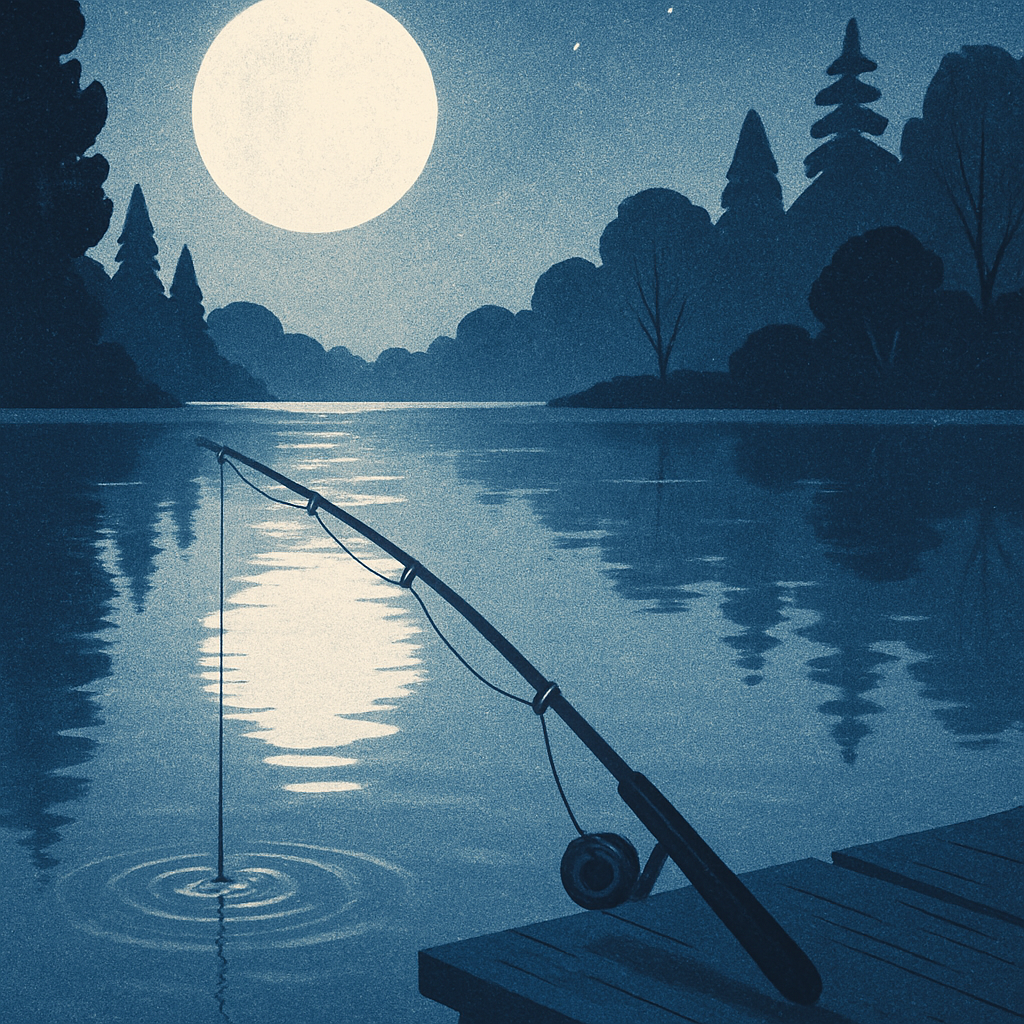
The moon goes through a complete cycle roughly every 29.5 days, moving through four main phases: new moon, first quarter, full moon, and last quarter. Each phase changes how much moonlight reaches the water at night, and — according to many anglers — influences how actively fish feed.
The idea isn’t new. Fishermen have tracked lunar cycles for centuries, long before anyone had a smartphone app for it. The basic theory is straightforward: the moon’s gravitational pull creates tidal movements in oceans, and some believe it has a similar, subtler effect on freshwater systems. Whether that actually changes fish behavior is where things get interesting.
The Science Behind Lunar Fishing
Here’s what the research actually tells us. In saltwater environments, the moon’s gravitational pull creates significant tidal movements that clearly affect fish behavior and feeding patterns. That connection is well-established and easy to observe.
Freshwater is a different story. Lakes and rivers experience negligible tidal effects — we’re talking fractions of an inch at most. Large-scale studies analyzing thousands of fishing records in freshwater systems have found no statistically significant relationship between moon phases and catch rates. Factors like water temperature, weather patterns, and seasonal timing consistently show much stronger correlations with fishing success.
Solunar Tables: What They Are and How Anglers Use Them
Solunar tables were developed by John Alden Knight in 1926. They predict peak fish and wildlife activity based on the positions of the sun and moon throughout the day. The tables identify two types of feeding windows:
- Major periods: Roughly two hours long, occurring when the moon is directly overhead or directly underfoot. These are supposed to be the strongest feeding times.
- Minor periods: About one hour long, occurring when the moon rises or sets. These are considered secondary feeding windows.
Many fishing apps and calendars include solunar data, and plenty of anglers plan their trips around these predictions. The challenge is that recent scientific studies testing solunar predictions against actual catch data — particularly in freshwater trout fisheries — found no meaningful correlation.
How Moonlight Might Actually Affect Fish
Where the moon may genuinely influence freshwater fishing isn’t through gravitational pull but through light. A full moon provides substantially more ambient light at night, and this can change fish behavior in measurable ways.
- Extended night feeding: Some species like bass and walleye may feed more actively on bright moonlit nights because they can see prey more easily in the extra light.
- Reduced daytime appetite: If fish feed heavily during a bright full-moon night, they may be less hungry the following morning — which could explain slower daytime bites some anglers report around full moons.
- Spawning connections: Research suggests some freshwater species — particularly largemouth bass and bluegill — may time spawning activity around the full moon, possibly because increased light aids in nest building and egg protection.
- New moon advantage: During the new moon, nights are very dark. Some anglers believe fish compensate by feeding more aggressively during daylight hours, making daytime fishing more productive.
Practical Tips for Fishing Around Moon Phases
Whether you believe the moon has a significant effect or not, here are some practical approaches that many experienced anglers find useful:
- Full moon nights: If you enjoy night fishing, a full moon can be excellent. Bass and walleye in particular become more active when they can see well after dark.
- Morning after a full moon: Don’t expect a red-hot morning bite. Fish that fed heavily overnight may be sluggish at dawn.
- New moon periods: Focus on daytime fishing. With darker nights, fish are more likely to feed during daylight hours.
- Don’t cancel trips over the moon: Water temperature, weather fronts, and barometric pressure all have much larger effects on fishing than the lunar cycle. A great weather day during a “bad” moon phase will almost always outfish a poor weather day during a “good” moon phase.
Pros and Cons of Using Moon Phases to Plan Fishing Trips
Adds structure to trip planning
Having a framework for choosing fishing days gives beginners confidence and a starting point for their schedule.
Night fishing guidance
Full moon periods genuinely help with night fishing visibility and can increase activity for nocturnal feeders.
Encourages observation
Paying attention to the moon makes you more observant of all natural patterns, which improves your fishing overall.
Limited scientific support
Most freshwater studies find no significant correlation between moon phases and catch rates.
Can lead to missed opportunities
Skipping fishing days because of a “bad” moon phase means missing great conditions caused by weather or temperature changes.
Frequently Asked Questions About Moon Phases and Fishing
Is a full moon good or bad for fishing?
It depends on when you fish. Full moons can make night fishing excellent because fish can see prey more easily. However, daytime fishing the morning after a bright full moon may be slower because fish already fed heavily overnight.
What moon phase is best for freshwater fishing?
Many anglers prefer the days around a new moon for daytime fishing, reasoning that darker nights push more feeding activity into daylight hours. But weather, water temperature, and time of day are far more reliable predictors of success.
Are solunar tables accurate for freshwater fishing?
Scientific testing hasn’t found strong evidence that solunar predictions reliably predict freshwater catch rates. They can be a fun planning tool, but don’t skip a trip just because the solunar table says it’s a slow day.
Should beginners worry about moon phases when planning fishing trips?
Not really. Focus on getting the basics right first — good location, proper bait, and fishing during the morning or evening feeding windows. Moon phase awareness is something you can explore later as you develop your skills.
Final Thoughts
The moon is a beautiful thing to watch rise over the water while you’re fishing, and that alone makes it worth paying attention to. Whether it genuinely controls when fish bite in freshwater is debatable — the science leans toward “probably not much” — but understanding the basics gives you one more tool in your angling toolbox.
My advice? Fish when you can, pay attention to weather and water temperature first, and treat the moon as a bonus factor rather than the main event. The best fishing day is always the one where you actually get out on the water.