
Here’s something that surprises a lot of new anglers: some of the best fishing days are the ones that look terrible from your kitchen window. Overcast skies, light rain, even a approaching storm front — conditions that keep fair-weather fishermen home can actually turn on the bite like nothing else.
I’ve had some of my best days on the water when the sky was gray and drizzle was falling. Once you understand why bad weather fishing works and how to stay safe doing it, you might start looking forward to those gloomy forecasts.
Why Fish Love Bad Weather
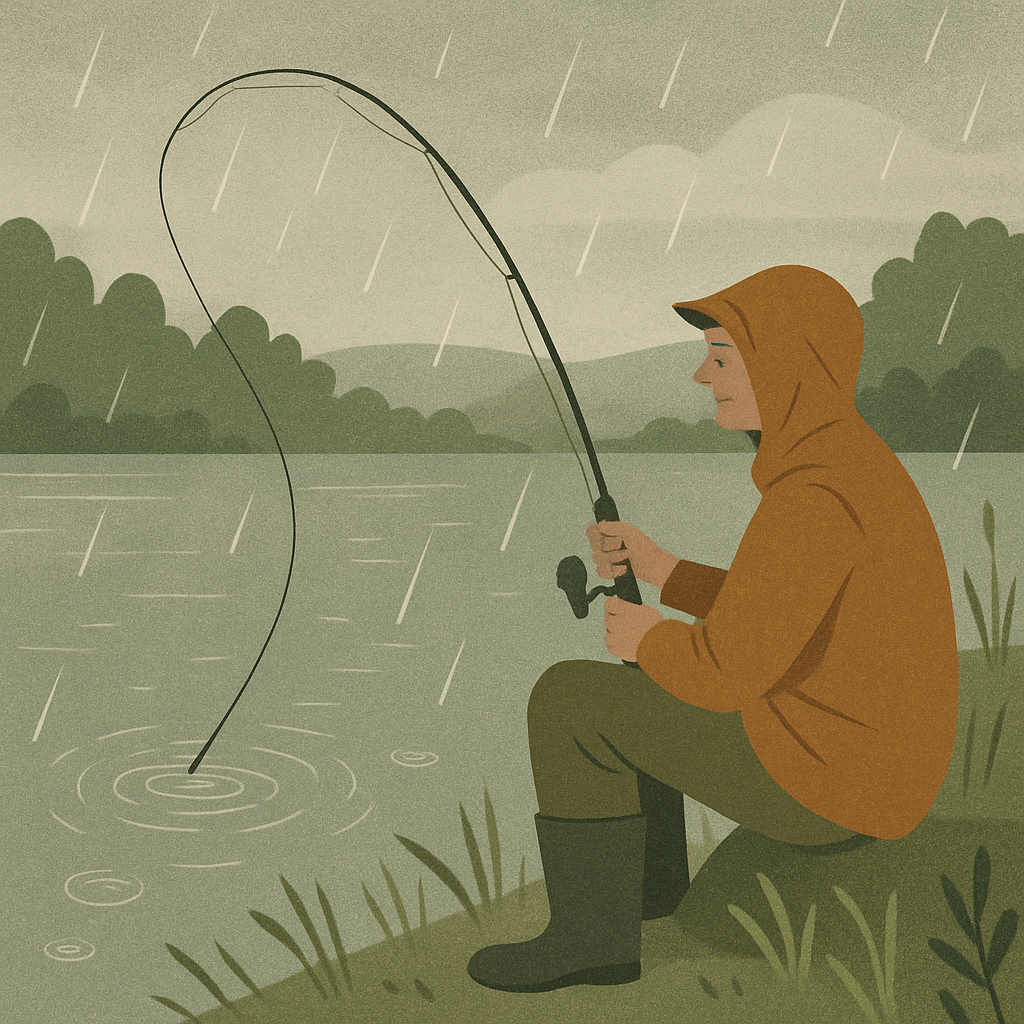
Fish don’t think about weather the way we do. They don’t get annoyed by rain or wish for sunshine. What they respond to are the physical changes that bad weather creates in their environment — and most of those changes work in the angler’s favor.
The biggest factor is barometric pressure. As pressure drops before and during a rainstorm, fish often become significantly more active. Scientists believe the lower pressure makes their swim bladders expand slightly, increasing comfort and energy levels. That translates to more aggressive feeding behavior — exactly what you want when you’ve got a line in the water.
Overcast Skies: The All-Day Bite
On bright sunny days, most freshwater fish retreat to deep water, shade, and cover during midday. The strong light makes them feel exposed to predators and uncomfortable near the surface. This is why dawn and dusk are typically the best times to fish in clear weather.
Overcast days change the equation entirely. With cloud cover filtering the light, fish feel secure enough to feed in shallow water throughout the entire day. That means the morning and evening feeding windows extend to become an all-day opportunity. Species like bass, crappie, and walleye will cruise shorelines, weed edges, and structure that they’d normally avoid during bright conditions.
- Shallow water confidence: Fish move into water you can reach easily from shore or dock.
- Extended feeding windows: Instead of a 2-hour morning bite, you might get 6-8 hours of steady action.
- Topwater success: Overcast days are outstanding for surface lures because fish are willing to look upward.
Fishing in the Rain: Technique Adjustments
Light to moderate rain adds several advantages on top of the overcast benefits. Raindrops break up the water surface, making it harder for fish to see you, your boat, or your line. Runoff from the shore washes insects, worms, and other food sources into the water, creating natural feeding zones near creek mouths, drains, and shoreline inlets.
Rain also increases dissolved oxygen in the water, which boosts fish metabolism — especially in summer when warm water holds less oxygen. That extra oxygen kick can turn sluggish fish into aggressive feeders.
- Target runoff areas: Fish near where streams, ditches, or drains empty into your lake or river. These spots attract baitfish and predators.
- Use brighter lures: In stained or murky water from rain, switch to chartreuse, white, or bright-colored baits that fish can spot more easily.
- Add vibration: Spinnerbaits and chatterbaits work exceptionally well in rain because fish can feel the vibration even when visibility drops.
- Fish faster: Aggressive fish in rain conditions respond well to a faster retrieve. Cover more water to find the active schools.
When Bad Weather Becomes Dangerous Weather
There’s an important line between productive bad weather and dangerous conditions. Light rain and overcast skies are fishing gold. Thunderstorms, lightning, and severe weather are genuine safety threats that no fish is worth risking.
- Lightning rule: If you can hear thunder, get off the water immediately. Lightning can strike miles ahead of visible storm clouds. Carbon fiber fishing rods are excellent conductors of electricity.
- Heavy rain concerns: Prolonged heavy rain can make water dangerously turbid and create strong currents. If visibility drops to near zero or water levels are rising rapidly, it’s time to pack up.
- Wind safety: Moderate wind can actually improve fishing by pushing baitfish into shorelines. But strong gusts make boat control difficult and create hazardous wave conditions on larger water.
- Cold rain in spring: Fishing in cold rain without proper gear can lead to hypothermia. Dress in layers and bring waterproof outerwear even if rain seems unlikely.
Essential Gear for Bad Weather Fishing
Staying comfortable in bad weather is mostly about preparation. You don’t need expensive gear — just the right basics to keep you dry and functional for a few hours on the water.
- Waterproof jacket: A breathable rain jacket keeps you dry without overheating. This is the single most important piece of bad-weather gear.
- Waterproof hat with brim: Keeps rain off your face and out of your eyes so you can watch your line and bobber.
- Quick-dry clothing: Cotton holds moisture and gets cold. Synthetic fabrics dry fast and retain warmth even when damp.
- Zip-lock bags: Protect your phone, wallet, and car keys. A simple gallon-size bag works perfectly.
- Headlamp: Overcast days get dark early, and stormy conditions can reduce visibility quickly. A small headlamp weighs nothing and can save you.
Pros and Cons of Fishing in Bad Weather
More active fish
Dropping barometric pressure and overcast skies trigger aggressive feeding behavior in most freshwater species.
Less competition
Most anglers stay home when the forecast looks bad, leaving prime spots open for those willing to get a little wet.
All-day feeding windows
Overcast conditions extend the productive fishing period well beyond the typical dawn and dusk windows.
Comfort challenges
Staying wet and cold for hours isn’t enjoyable without proper gear and preparation.
Safety risks
Lightning, strong currents, and rapidly changing conditions require constant awareness and quick decision-making.
Frequently Asked Questions About Bad Weather Fishing
Is it worth fishing in the rain?
Absolutely. Light to moderate rain is one of the best conditions for freshwater fishing. Fish are more active, less wary, and feeding zones expand into shallow water that’s easy to access.
Do fish bite before or after a storm?
Fish typically bite most aggressively in the hours before a storm as barometric pressure drops. Fishing can also be excellent immediately after a storm passes, as fish resume feeding and runoff brings fresh food into the water.
What is the worst weather for fishing?
Bluebird skies with high barometric pressure after a cold front passage tend to produce the toughest fishing. Fish become lethargic, move deep, and are reluctant to chase food aggressively.
Should I use different bait in overcast conditions?
Yes — switch to brighter colors and lures with more vibration or noise. In low light and stained water, fish rely more on their lateral line to detect movement, so baits that create disturbance are more effective.
Final Thoughts
The next time you wake up and see gray skies and rain in the forecast, don’t groan — grab your rain jacket and your tackle box. Some of the most memorable fishing days happen when the weather looks its worst. Fish don’t own umbrellas, and they don’t stop eating just because it’s raining. If anything, they eat more.
Stay safe, dress for the conditions, and respect lightning. But don’t let a little rain keep you off the water. The fish will thank you for showing up.