
Ever notice how some days the fish seem to bite constantly, while other days—with seemingly perfect conditions—you can’t buy a bite? The secret often lies in something you can’t see: the weather’s effect on fish behavior.
Weather and fishing are connected in ways that go far beyond just your comfort on the water. Changes in atmospheric pressure, temperature, and precipitation trigger specific responses in fish that smart anglers learn to predict and exploit.
Understanding these patterns transforms fishing from pure guesswork into informed strategy. Instead of checking just the temperature forecast, you’ll be reading the weather like a fish biologist. Let’s dive into how Mother Nature influences your fishing success.
How Weather Really Affects Fish Behavior
Fish are incredibly sensitive to environmental changes because they live in a world where survival depends on reading natural signals. Unlike us, they can’t check a weather app—they feel every shift in their environment through their bodies.
Think of fish as living barometers. They detect changes in atmospheric pressure through their swim bladders, sense temperature variations instantly, and respond to light changes that affect their vision and behavior.
- Barometric Pressure: Affects swim bladder pressure and feeding behavior
- Temperature Changes: Influence metabolism and activity levels
- Light Conditions: Determine visibility and predator-prey relationships
- Wind Patterns: Create food distribution and water movement
Barometric Pressure: The Hidden Game Changer
Barometric pressure is the most important weather factor most anglers ignore. Fish feel pressure changes in their swim bladders—the organ that helps them control buoyancy. When atmospheric pressure drops, their swim bladders expand, often making them uncomfortable and less likely to feed actively.
Reading Pressure Patterns
High pressure (above 30.20 inches) usually means clear skies and stable fishing conditions. Fish behavior becomes predictable, and they often stick to their normal patterns.
Low pressure (below 29.80 inches) typically brings unsettled weather. Fish may become less active, but experienced anglers know that the period just before pressure drops can trigger feeding frenzies.
Temperature: The Metabolism Controller
Water temperature directly controls fish metabolism. Warmer water speeds up their systems, making them more active but also requiring more oxygen. Cooler water slows everything down but allows fish to be more energy-efficient.
Most freshwater fish are most comfortable when water temperatures range from 65-75°F. Outside this range, their behavior changes predictably:
- Cold Water (below 50°F): Fish move slowly, stay deep, and eat less frequently
- Ideal Range (65-75°F): Peak activity levels and aggressive feeding
- Hot Water (above 80°F): Fish seek deeper, cooler areas and become less active
- Temperature Transitions: Fish often feed heavily during warming or cooling periods
Cloud Cover and Light Conditions
Overcast Days: A Fisherman’s Friend
Cloudy, overcast conditions are often ideal for fishing. Reduced light makes fish feel more secure about leaving cover to feed. They’re less spooked by movement and shadows, making them easier to approach and catch.
Fish that normally stay hidden during bright sunny days become more active under cloud cover. This is especially true for popular species like bass and walleye.
Bright Sunny Days
Intense sunlight drives many fish deeper or under cover. However, this doesn’t mean you can’t catch fish—you just need to adjust your strategy. Focus on shaded areas, deeper water, or fish early morning and late afternoon when the sun is less intense.
Best Weather Conditions for Fishing
🏆 Prime Fishing Weather
Stable barometric pressure, light overcast skies, gentle breeze, and temperatures in the 70s. These conditions create comfortable, predictable fish behavior.
⭐ Surprisingly Good Conditions
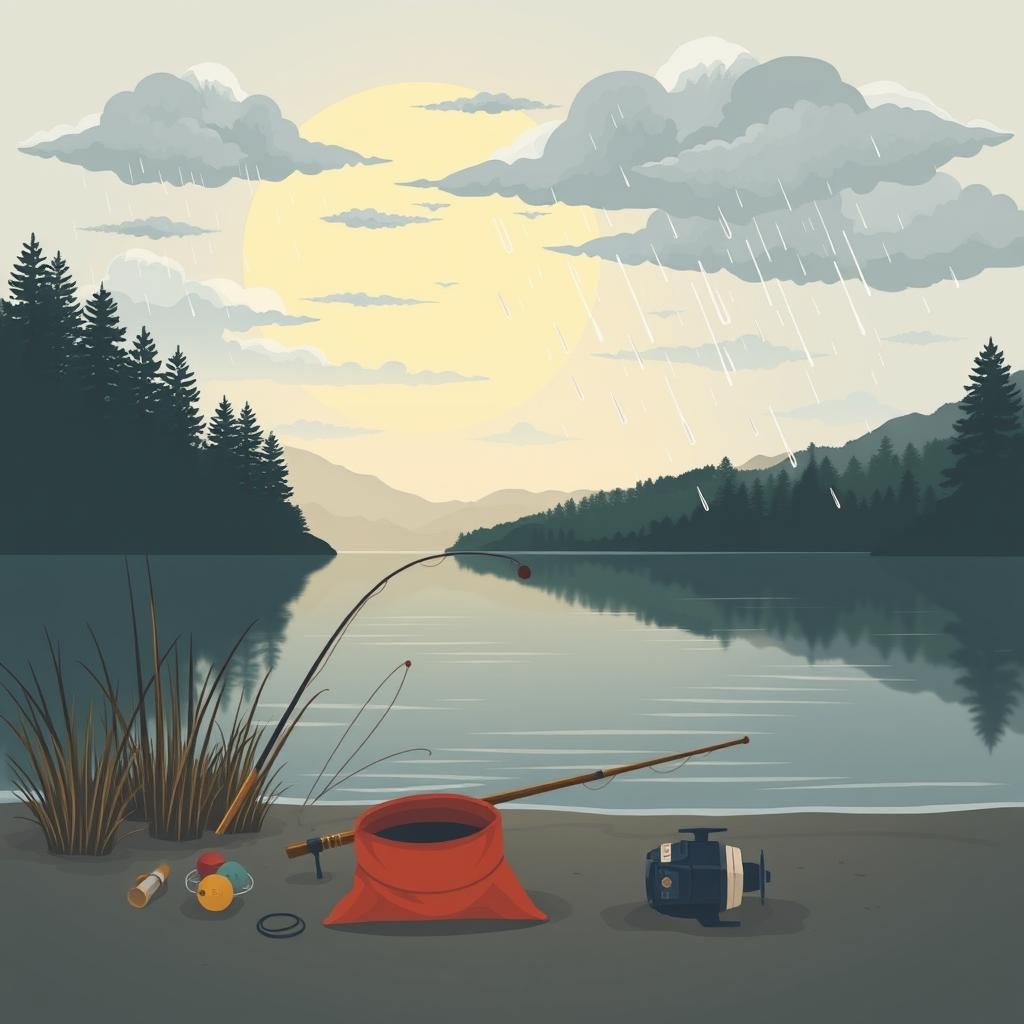
Light rain, approaching weather fronts (before pressure drops), and the first warm day after a cold snap. Fish often feed heavily before major weather changes.
Predictable Patterns
Understanding weather helps predict fish behavior and location.
Timing Advantage
Plan fishing trips around optimal weather windows for better success.
Year-Round Applicable
Weather patterns affect fish behavior in every season.
Unpredictable Changes
Weather can change quickly, affecting planned fishing strategies.
Regional Variations
Local geography can create unique weather patterns that take time to learn.
Seasonal Weather Patterns
Spring Fishing Weather
Spring brings the most variable fishing conditions. Warm sunny days heat shallow areas quickly, drawing fish into spawning areas. Cold fronts can shut down the bite temporarily, but fish usually resume feeding once conditions stabilize.
Watch for the first sustained warm weather patterns—fish become increasingly active as water temperatures rise into the 50s and 60s.
Summer Weather Strategies
Hot summer weather drives fish deep during the day, but creates excellent early morning and evening opportunities. Thunderstorms can provide temporary relief from high pressure and heat, often triggering feeding activity.
Pay attention to wind direction during summer. A breeze can oxygenate water and create comfort zones where fish congregate.
Fall and Winter Weather
Fall weather changes trigger feeding frenzies as fish prepare for winter. Stable high pressure systems often provide the best late-season fishing as fish feed heavily before cold weather arrives.
Winter fishing requires patience and attention to minor weather changes. A few degrees of warming can activate lethargic cold-water fish.
Frequently Asked Questions
Should I cancel my fishing trip if rain is forecast?
Light rain can actually improve fishing by reducing light penetration and adding oxygen to the water. Avoid thunderstorms for safety, but don’t let drizzle keep you home.
How do I check barometric pressure for fishing?
Most weather apps show barometric pressure. Look for readings above 30.00 inches for good fishing, and pay attention to rising or falling trends.
Why do fish stop biting before storms?
Rapidly falling barometric pressure affects fish swim bladders, making them uncomfortable and less likely to feed until pressure stabilizes.
Is fishing better on sunny or cloudy days?
Generally cloudy days are better because reduced light makes fish feel safer about leaving cover to feed. However, you can catch fish in any weather by adjusting your approach.