

There’s something magical about fishing with family – three generations sharing stories while waiting for that telltale tug on the line. Whether you’re introducing grandkids to your favorite childhood pastime or planning your first family fishing adventure, the key is making it enjoyable for everyone involved, regardless of age or experience level.
Family fishing isn’t about who catches the biggest fish or demonstrates the most advanced techniques. It’s about creating lasting memories, teaching patience and respect for nature, and passing down traditions that strengthen family bonds. With the right approach, you can ensure everyone from energetic 8-year-olds to seasoned grandparents has a fantastic time on the water.
Planning Your Multi-Generational Fishing Trip
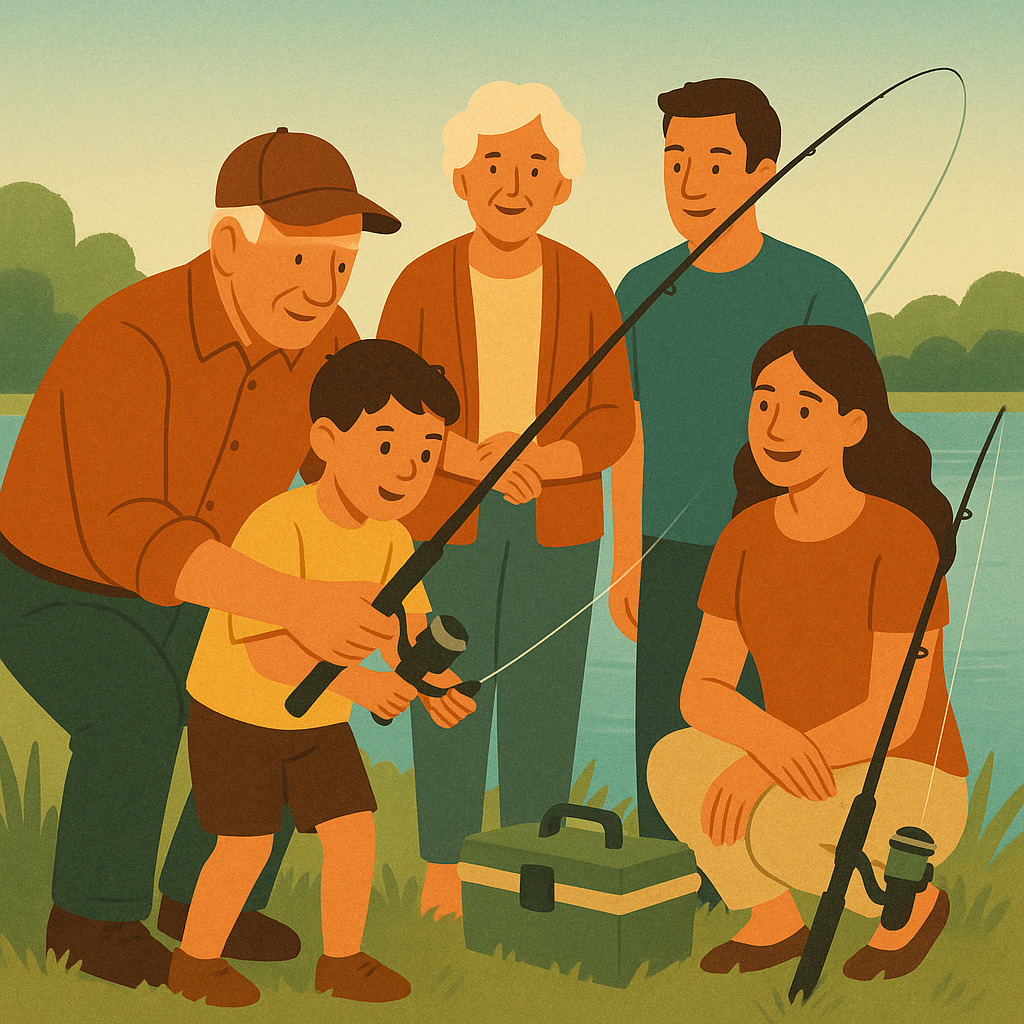
Successful family fishing starts long before you reach the water. The secret is choosing locations and approaches that accommodate different comfort levels, attention spans, and physical abilities.
🏆 Perfect Family Fishing Spots
Look for accessible locations with amenities: piers with railings, parks with restrooms nearby, and stocked ponds where catches are practically guaranteed.
⭐ Timing Is Everything
Plan shorter trips (2-3 hours max) during comfortable weather. Early morning offers the best fish activity, but mid-morning can be more family-friendly.
🎯 Set Realistic Expectations
Focus on the experience rather than the catch count. Even a day with no fish can be successful if everyone enjoys spending time together outdoors.
Gear That Works for All Ages
The right equipment makes the difference between frustration and fun. When fishing with family, prioritize simple, user-friendly gear over advanced tackle that might intimidate beginners.
- Spinning reels: Much easier for kids and beginners than baitcasting reels
- Shorter rods (5-6 feet): Easier for children to handle and less likely to tangle with other lines
- Pre-tied rigs: Prepare leaders and hooks ahead of time to minimize setup delays
- Comfortable seating: Portable chairs or cushions for grandparents and tired kids
- Backup equipment: Extra rods rigged and ready for tangles or breakoffs
Keeping Everyone Engaged
Different ages require different strategies to stay interested and involved throughout the fishing trip.
For Young Children (5-10 years)
- Action-packed spots: Choose locations known for frequent bites, even if fish are smaller
- Simple techniques: Bobber fishing provides visual excitement when fish bite
- Backup activities: Bring nature books, snacks, or simple games for quiet periods
- Celebrate everything: Make a big deal about every catch, no matter how small
For Teenagers
- Give them responsibility: Let them choose lures, pick spots, or help younger siblings
- Introduce skill challenges: Casting accuracy contests or trying different techniques
- Respect their independence: Allow them to fish their own way while staying nearby
- Photography opportunities: Teens often enjoy documenting the experience
For Grandparents
- Comfortable setup: Ensure good seating and easy access to gear
- Share their wisdom: Encourage them to tell fishing stories and share techniques
- Lightweight gear: Choose equipment that won’t cause fatigue
- Flexible participation: They might prefer watching and coaching rather than actively fishing
Safety First with Mixed Age Groups
When fishing with family, safety considerations multiply with different ages and experience levels in the group.
- Establish boundaries: Clear rules about where everyone can fish and move around
- Supervise closely: Assign responsible adults to watch younger children near water
- Life jackets: Non-negotiable for kids near deep water, regardless of swimming ability
- First aid kit: Include band-aids, antiseptic, and any family-specific medications
- Sun protection: Hats, sunscreen, and umbrella for shade during long trips
Creating Learning Opportunities
Family fishing trips offer incredible teaching moments that go far beyond catching fish. These experiences can instill values and knowledge that last a lifetime.
- Conservation ethics: Teach catch and release, respecting size limits, and leaving no trace
- Nature appreciation: Point out wildlife, water conditions, and seasonal changes
- Patience and persistence: Fishing naturally teaches these valuable life skills
- Problem-solving: Let family members figure out solutions to tangles and technique challenges
- Responsibility: Everyone can help with setup, cleanup, and gear care
Pros and Cons of Family Fishing
Builds lasting memories
Shared experiences in nature create bonds that strengthen over decades and get passed to future generations.
Teaches valuable life skills
Patience, problem-solving, and respect for nature are natural byproducts of fishing together.
Screen-free quality time
Removes digital distractions and encourages meaningful conversation and connection.
Requires extra planning
Coordinating different ages, gear needs, and comfort levels takes more preparation than solo trips.
May reduce fishing success
Noise, movement, and attention to family members can decrease your personal catch rate.
Higher stress potential
Managing different expectations and potential safety concerns can feel overwhelming at first.
Making Memories Beyond the Fish
The most successful family fishing trips often have less to do with the fish caught and more to do with the memories created. Here are ways to enhance the experience:
- Start traditions: Annual fishing trips, special locations, or unique family rituals
- Document everything: Photos, videos, and a fishing journal that kids can help maintain
- Cook together: If you keep fish, make meal preparation part of the experience
- Share stories: Use quiet moments to share family history and fishing memories
- Celebrate milestones: First fish, biggest fish, best cast – make each achievement special
Frequently Asked Questions
What age is too young for fishing?
Children as young as 3-4 can enjoy fishing with proper supervision and realistic expectations. Start with very short trips focused on the outdoor experience rather than catching fish.
How do I handle different skill levels in one group?
Pair experienced family members with beginners, use simple techniques everyone can master, and focus on helping rather than competing with each other.
What if nobody catches anything?
Prepare backup activities and emphasize the experience over the catch. Pack a good lunch, bring nature guides, and focus on quality time together outdoors.
How can I afford gear for the whole family?
Start with basic spinning combos, share equipment when possible, and gradually build your family gear collection. Many locations rent equipment for beginners.
Final Thoughts
Family fishing isn’t about perfect technique or trophy catches – it’s about creating connections that last a lifetime. Some of your most treasured memories will come from teaching a grandchild to cast, watching a teenager land their first bass, or simply enjoying quiet conversation while waiting for fish to bite.
Start small, stay patient, and remember that every successful family fishing trip is measured not in fish caught, but in smiles shared and memories made. The fishing skills will come naturally, but the family bonds you create will be the real trophy from your time on the water.