
Ever wondered about those boats slowly cruising across the lake with multiple fishing lines trailing behind? That’s trolling fishing — one of the most effective techniques for covering water and finding fish. Unlike casting from a stationary position, trolling fishing involves pulling lures or bait through the water while your boat moves at a slow, steady pace.
Think of trolling like window shopping at the mall — you’re constantly moving and presenting your “products” (lures) to as many potential “customers” (fish) as possible. It’s a fantastic technique for beginners because it requires less casting skill and covers more water than traditional fishing methods.
What Is Trolling Fishing?
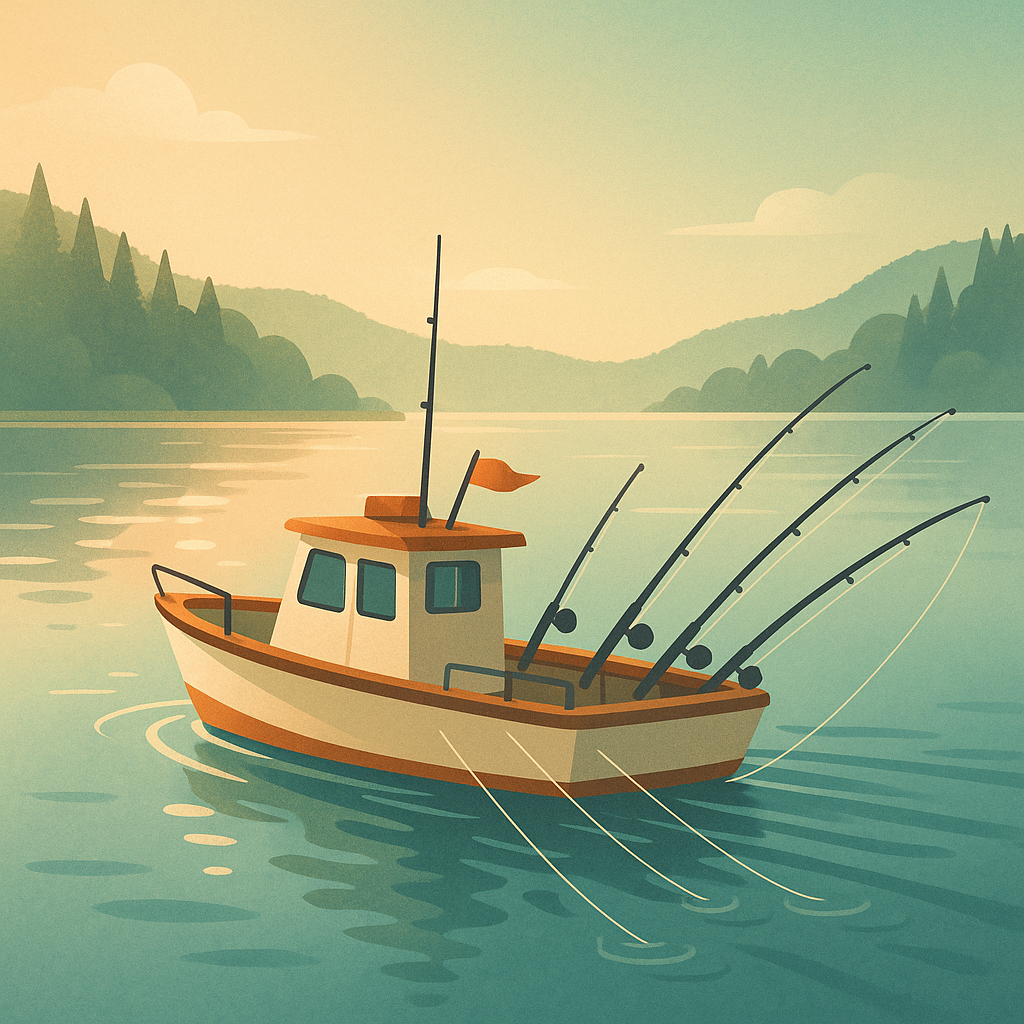
Trolling fishing is the practice of dragging one or more fishing lines behind a moving boat. The boat maintains a consistent speed, typically between 1.5 and 3 mph, while lures or bait move through the water at various depths. This technique mimics the movement of prey fish, triggering predatory responses from game fish.
The beauty of trolling lies in its simplicity. Once your lines are set, the boat does most of the work. You can cover vast areas of water, locate schools of fish, and even enjoy conversation with fellow anglers while maintaining an active fishing approach.
Key Trolling Parameters
- Speed range: 1.5 to 3 mph for most freshwater species
- Line count: Typically 2-4 lines depending on boat size and regulations
- Depth variety: Surface to deep water using different techniques
- Species targeted: Bass, walleye, trout, salmon, and many others
Why Trolling Works So Well
Fish are constantly on the move, searching for food and following temperature changes throughout the day. Traditional stationary fishing means you’re waiting for fish to find you. Boat fishing with trolling techniques flips this script — you’re actively searching for fish.
Trolling also allows you to experiment with different depths, speeds, and lure types simultaneously. If one line starts producing fish, you can adjust the others to match the successful setup. This trial-and-error approach helps you learn what works in specific conditions.
Essential Trolling Equipment
Getting started with trolling techniques doesn’t require expensive specialized gear. Most freshwater anglers can begin with equipment they already own, with a few key additions for success.
Rod and Reel Setup
🎣 Basic Rod Setup — Medium-Heavy Action
7-8 foot medium-heavy action rods work best for trolling. They provide enough backbone to handle fighting fish while trolling and can manage the constant pressure of pulling lures through water.
⚙️ Reel Considerations — Line Counter Advantage
While any spinning or baitcasting reel works, line-counter reels help track how much line you’ve let out. This becomes crucial when you find fish at specific depths.
Advanced Equipment
🎯 Downrigger Systems — Depth Control
For deeper fishing, downriggers use weighted cables to pull your lures down while keeping your rod free. Entry-level manual downriggers cost less than high-end fishing rods.
Trolling Patterns and Boat Control
Successful trolling involves more than just driving in straight lines. Varying your boat’s path creates different lure actions and helps you cover water more effectively. Most productive trolling patterns involve gentle turns, figure-eights, and S-curves.
When you turn the boat, the outside lines move faster while inside lines slow down and often drop deeper. This variation can trigger strikes from fish that ignored your lures at consistent speed and depth.
Effective Trolling Patterns
- S-curves: Gentle side-to-side motion covers wide areas
- Figure-eight patterns: Effective around structure like points and humps
- Contour following: Stay parallel to depth changes and drop-offs
- Speed changes: Occasional acceleration can trigger following fish
Lure Selection for Trolling
The constant motion of trolling opens up lure categories that don’t work well with other techniques. Crankbaits, spoons, and crawler harnesses become incredibly effective when pulled behind a moving boat.
Crankbaits dive to specific depths based on their lip design and trolling speed. They wobble and vibrate, sending out sound waves that attract fish from considerable distances. Choose colors that match local baitfish — silver and white for clear water, brighter colors for stained water.
Spoons create flash and vibration that mimics injured baitfish. They’re particularly effective for trout and salmon but work well for bass and walleye too. Vary your retrieval speed to change the spoon’s action.
Reading Your Electronics
Modern fish finders become invaluable tools for successful trolling. You can watch your lures on the screen, observe fish reactions, and identify structure that holds fish. Learning to interpret sonar while moving takes practice but dramatically improves your success rate.
Pros and Cons of Trolling
Covers Large Areas
Search vast amounts of water to locate active fish quickly.
Multiple Lines Working
Run 2-4 lines simultaneously, increasing your chances of hooking fish.
Consistent Lure Action
Boat speed maintains perfect lure presentation without manual effort.
Great for Groups
Everyone can fish while enjoying conversation and scenery.
Requires Boat and Motor
Higher equipment costs and maintenance compared to shore fishing.
Burns Fuel
Constant boat operation increases trip costs, especially on large waters.
Line Tangles
Multiple lines can cross during turns, requiring careful boat handling.
Learning Curve
Coordinating boat control, electronics, and fishing takes practice.
Frequently Asked Questions
What’s the ideal trolling speed for beginners?
Start with 2.5 mph for most freshwater species. This speed works well for bass, walleye, and trout. Adjust based on lure action — if your lures aren’t wobbling properly, slow down slightly.
How far behind the boat should I run my lures?
Begin with 50-75 feet of line for most situations. In clear water or heavily pressured lakes, let out 100-150 feet to keep lures away from boat noise and disturbance.
Can I troll effectively with a small boat?
Absolutely! Even 14-16 foot boats work great for trolling. Smaller boats are actually advantages on smaller lakes and allow access to areas larger boats can’t reach.
What should I do when I get a strike while trolling?
Put the boat in neutral immediately, then fight the fish normally. Some anglers prefer to turn in a large circle to keep other lines away from the fighting fish.
Getting Started With Confidence
Your first trolling trip should focus on learning boat control and line management rather than catching large numbers of fish. Choose a familiar lake with moderate boat traffic, and start with simple setups — two lines maximum until you’re comfortable with the basics.
Consider hiring a guide for your first trolling experience. A good guide will teach you local patterns, proper boat handling, and equipment setup much faster than trial and error. The investment pays dividends in reduced learning time and increased confidence.
Remember that trolling fishing opens up an entirely new dimension of angling. You’ll discover fish-holding structure you never knew existed, learn to read electronics effectively, and develop boat-handling skills that benefit all your future fishing adventures.
Start simple, stay safe, and enjoy the process of learning this versatile and productive fishing technique. Before long, you’ll wonder why you waited so long to try trolling for yourself.