Beginner fishing lures can feel confusing because the tackle aisle makes every little shape look important. Spinners, spoons, crankbaits, jigs, soft plastics, colors, sizes, hooks, and packages all compete for your attention before you have even made your first cast.
The good news is that you do not need a wall full of lures to catch fish. For most relaxed freshwater trips, five simple lure types cover ponds, small lakes, docks, and easy bank fishing. Think of them as a starter tray, not a final collection.
Why Beginner Fishing Lures Matter
Lures give you a way to search water without carrying live bait. They can imitate small fish, insects, crawfish, or simple movement that catches a fish's attention. That makes them useful when you want to walk a bank, try several spots, or keep the trip clean and simple.
The U.S. Fish and Wildlife Service includes fishing lures in its beginner freshwater checklist, while also reminding anglers to check local regulations because some places limit certain bait or tackle choices. That is a good habit before any new lake, park, refuge, or stocked pond. You can review their first-time fishing guidance here: A Guide to Fishing for the First Time.
Once you have a few lures, keeping them neat matters too. ReelHow's guide to bait and lure storage can help you avoid rusty hooks, mystery tangles, and cluttered boxes.
Start With Five Lures, Not Fifty
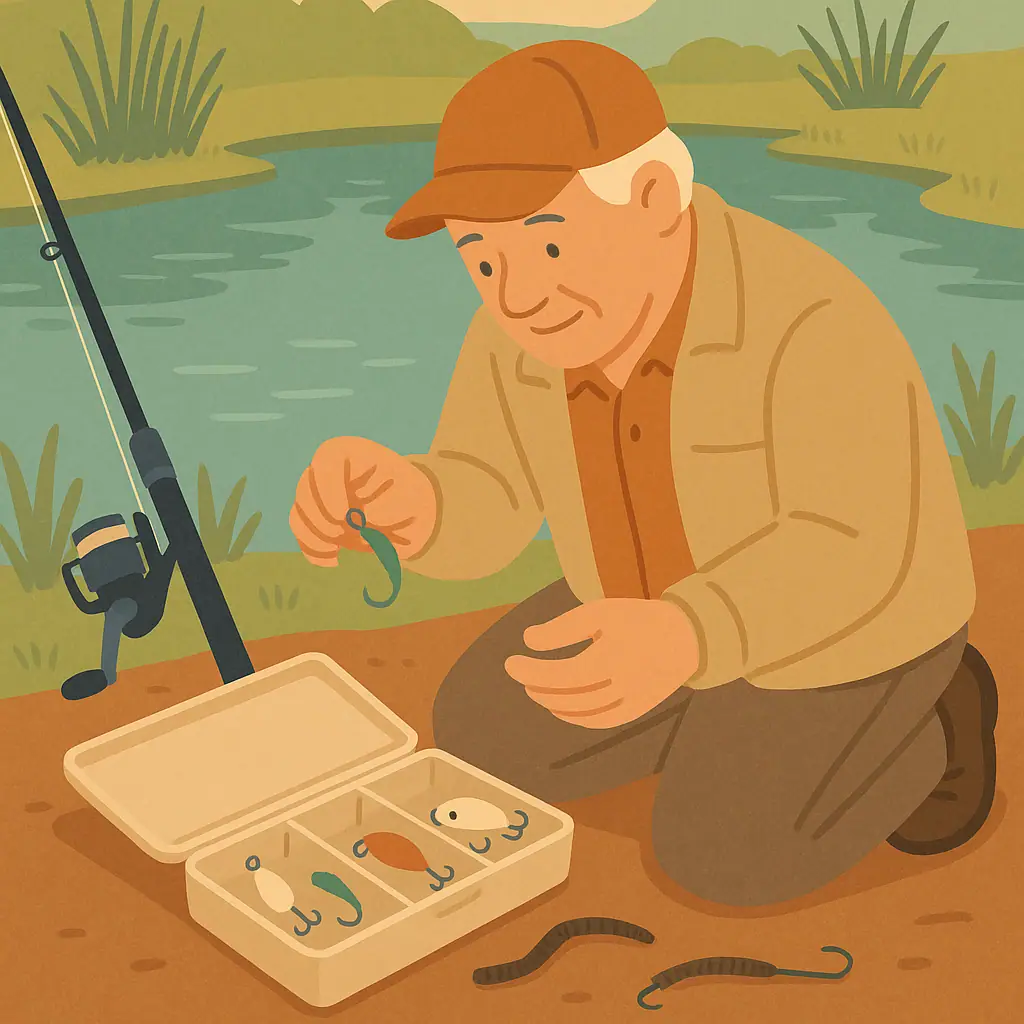
A beginner lure kit should solve common freshwater situations. You want one lure that flashes, one that vibrates, one that works slowly, one that fishes around cover, and one that catches panfish when the day is quiet.
Here are the five easy choices that make sense for most beginners:
- Inline spinner: a small spinning blade lure for bluegill, bass, trout, and other active fish.
- Small spoon: a shiny wobbling lure that casts well and works with a steady retrieve.
- Soft plastic grub: a curly-tail plastic on a jig head for slow, simple presentations.
- Small crankbait: a hard bait that wiggles and dives as you reel.
- Weedless soft plastic worm: a slow lure for bass around weeds, wood, and quiet edges.
If your tackle box still feels unfinished, the ReelHow article on tackle box essentials explains the basic tools that support those lures without overbuying.
Pick modest sizes first
Small to medium lures catch more types of fish. A giant bass lure may look exciting, but a smaller spinner, spoon, grub, or crankbait gives bluegill, crappie, trout, and smaller bass a realistic chance to bite.
Choose visible but natural colors
Start with silver, gold, white, chartreuse, green pumpkin, and black. Bright colors can help in stained water. Natural colors often work better in clear water. You do not need every shade on the rack.
Inline Spinners: The Easiest Cast-and-Reel Lure
An inline spinner is one of the friendliest beginner fishing lures because it gives instant feedback. Cast it out, let it sink for a second or two, then reel slowly enough that the blade spins. You may feel a light thump through the rod tip.
Spinners are useful from banks, docks, and open pond edges. They cover water quickly and attract fish with flash and vibration. If you are not sure where fish are holding, make a few casts fan-shaped across the area instead of throwing to the same spot every time.
Use a small spinner when you want action from panfish, trout, or small bass. Step up slightly in size when bass are chasing baitfish or when the water has a little stain.
Small Spoons: Simple Flash for Open Water
A spoon is a curved metal lure that wobbles as it moves. It is simple, durable, and easy to cast. Beginners often like spoons because the retrieve does not need fancy rod work. Cast, reel steadily, and occasionally pause for a second.
Spoons are good where you have room to retrieve without dragging through heavy weeds. They can work along dock edges, open banks, points, and deeper pond sections. If fish are following but not biting, slow down or try a pause during the retrieve.
Soft Plastic Grubs: Slow Down and Stay in Control
A soft plastic grub on a small jig head is plain, cheap, and very useful. The curly tail moves with very little effort, which helps when fish are not chasing fast lures.
Cast near the edge of weeds, shade, rocks, or a drop-off. Let the jig sink, then reel slowly with tiny pauses. If the bottom is clean, you can let it touch down now and then. If the area is snaggy, keep it swimming just above the trouble.
This lure is a good bridge between bait fishing and lure fishing. It still feels natural and slow, but you can cover more water than you would with a worm under a bobber.
Small Crankbaits: Let the Lure Do the Wiggling
A small crankbait has a built-in wiggle. When you reel, it dives and swims. The bill on the front controls how deep it runs, so choose shallow-running models for ponds, docks, and beginner bank fishing.
Crankbaits work best when you can keep them moving through fairly open water. Cast beside weed edges, along riprap, around dock shade, or across a shallow point. Reel until you feel the lure working, then keep a steady pace.
For beginners, avoid deep-diving crankbaits at first. They can dig into bottom, collect weeds, and snag more often. Shallow and medium divers are easier to understand.
Weedless Soft Plastic Worms: A Calm Choice Around Cover
A weedless soft plastic worm is slower than a spinner or crankbait, but it shines around cover. Bass often hold near weeds, laydowns, stumps, shade, and quiet pockets. A weedless rig lets you work through those places with fewer snags.
Cast near the cover, let the worm settle, then lift the rod gently and reel slack line. Move it slowly. Many bites feel like a tap, a little heaviness, or the line moving sideways.
This is not the fastest lure for children or impatient beginners, but it is a great confidence builder when you want to learn how fish use cover.
Pros and Cons of Starting With Lures
Clean and easy to carry
Lures do not need a bait container, cooler, or constant care during a short outing.
Good for searching water
You can make repeated casts, walk the bank, and test several spots without resetting bait every time.
Reusable after each trip
A few durable lures can last a long time if you dry them, organize them, and replace damaged hooks when needed.
Snags can happen
Hard baits and exposed hooks can catch weeds, wood, rocks, and old line if you cast into heavy cover too quickly.
Too many choices can distract you
Changing lures every few casts often teaches less than fishing one simple lure patiently in a good spot.
A Simple Beginner Lure Checklist
- One small spinner: silver or gold, easy to cast and retrieve.
- One small spoon: good for open water and steady retrieves.
- Two grub bodies and jig heads: one light color and one darker color.
- One shallow crankbait: compact size, natural color, not a deep diver.
- One pack of soft plastic worms: green pumpkin or black for bass around cover.
- Needle-nose pliers: useful for hook removal, split rings, and safer handling.
- Local rules checked: especially at parks, refuges, trout waters, and special regulation lakes.
If you are deciding which basic tools to bring with those lures, ReelHow's guide to fishing tools for beginners covers pliers, nets, and other simple helpers.
When to Use Bait Instead
Lures are useful, but they are not always the easiest choice. If you are taking a grandchild fishing, trying to catch bluegill from a dock, or learning the feel of bites, worms under a bobber may be simpler and more relaxing.
Use bait when you want to sit in one spot and let fish come to you. Use lures when you want to search, cover water, and practice casting. Many good anglers carry both and choose based on the mood of the day.
Frequently Asked Questions
What is the best first fishing lure for beginners?
A small inline spinner is often the easiest first lure because you can cast it and reel steadily. It works for several freshwater species and gives clear vibration feedback.
Do lure colors really matter?
They matter some, but not as much as location, depth, and retrieve speed. Start with a light color, a dark color, and one shiny option before buying many shades.
Should beginners use lures or live bait?
Both are useful. Live bait is often easier for sitting in one place, while lures help you search water and practice casting. Choose the method that keeps the trip calm and enjoyable.
How do I avoid losing lures?
Start with open water, retrieve slowly near cover, and avoid casting directly into thick weeds or fallen trees until you understand how the lure runs.
Final Thoughts
Beginner fishing lures should make fishing simpler, not more stressful. Start with a spinner, spoon, grub, shallow crankbait, and weedless worm. Learn what each one feels like before buying more.
Fish good-looking water, retrieve slowly, check local rules, and keep your lure box small enough that you can actually use what is inside. A handful of simple lures can teach you more than a crowded tackle tray ever will.