
Here’s a secret the fishing industry doesn’t want you to know: you don’t need expensive gear to catch fish. Fish don’t care if your rod cost $30 or $300. What matters is putting the right bait in the right place at the right time — and for that, a modest, well-chosen setup works just fine.
Whether you’re testing the waters before committing to the hobby, shopping for a grandkid’s first kit, or just not ready to splurge, you can build a fully functional freshwater fishing setup for under $100. Here’s how to do it smartly.
The Core: Rod and Reel Combo
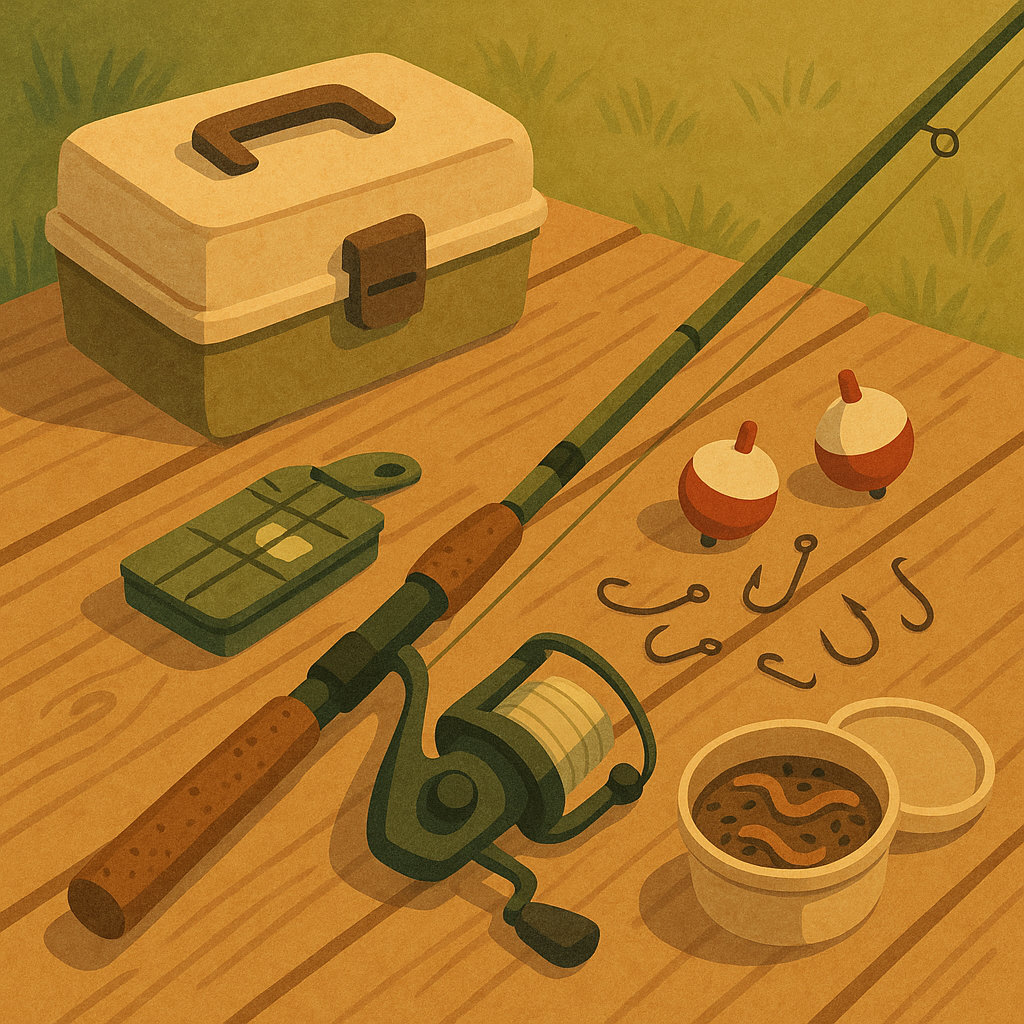
Your biggest expense will be the rod and reel — and the best money-saving move is buying them as a combo rather than separately. Combos are pre-matched for balance, come ready to fish (often pre-spooled with line), and typically save you 20–30% over individual pieces.
For beginners, a spinning combo is the right call. Spinning reels are far more forgiving than baitcasters — less tangling, easier to cast, and simpler to control. Look for a 6.5 to 7-foot medium-power rod paired with a 2500 or 3000 series spinning reel. That size handles most freshwater species from panfish to bass to catfish.
Brands worth considering in the $40–$70 range:
- Ugly Stik GX2: Famous for durability. The fiberglass-graphite blank survives accidental drops and abuse well.
- Shakespeare Ugly Stik Camo Combo: Popular starter kit, often available at big box stores.
- Daiwa Crossfire: Smooth reel, reliable drag, versatile lengths from 6 to 8 feet.
Fishing Line: Simple and Inexpensive
Most beginner combos come pre-spooled, but if you need to respool or replace line, monofilament is the budget-friendly choice. It’s forgiving, stretchy (which helps when setting the hook), easy to tie knots with, and costs just $5–$10 for a large spool.
For freshwater fishing, 8–10 lb monofilament covers most situations. It handles bass, catfish, crappie, and perch without issue. If you’re targeting larger species like carp or pike, bump up to 12–15 lb test.
Tackle Box: The Essentials Only
The fishing tackle industry loves to sell you things you don’t need. For a beginner setup, keep it simple and functional:
- Hooks: An assortment pack of sizes 6–2/0 covers most freshwater fishing. Look for a 50-piece variety pack for under $5.
- Split shot sinkers: Small weights that clamp onto your line. A mixed pack runs $3–$5 and lasts for years.
- Bobbers: A 10-pack of spring-clip bobbers costs about $3. Essential for beginners to detect bites visually.
- Swivels: Prevent line twist, especially when using spinners. A 30-pack costs under $4.
- Soft plastic lures: Curly tail grubs, stick baits, and creature baits catch almost everything. A bag of 10 costs $3–$5 and one package can last many trips.
- One or two spinners: Rooster Tails or Mepps Aglia in silver or gold work on bass, trout, and perch. Budget $3–$6 each.
Total for terminal tackle: roughly $25–$30 for a well-stocked beginner box.
Must-Have Tools (Not Optional)
Two tools every angler needs from day one:
- Fishing pliers or multi-tool: For removing hooks safely, especially when practicing catch-and-release. A basic pair runs $8–$15.
- Line cutter or small scissors: Cutting line cleanly prevents fraying. Often included with multi-tool sets.
Optional but helpful: a small landing net ($15–$20) helps bring fish in without dropping them, especially useful for larger catches or when fishing from a dock.
What About Live Bait?
If you’re not ready to learn artificial lures, live bait is the most effective and budget-friendly approach. A container of nightcrawlers (worms) runs $3–$5 at any gas station near a lake or fishing store. Worms catch bass, catfish, perch, trout, crappie — basically everything in freshwater. Crickets work great for bluegill and panfish.
Starting with live bait removes one variable from learning: you know the bait works, so you can focus on reading water, presentation, and patience.
Low risk investment
If fishing doesn’t stick as a hobby, you haven’t spent a fortune on equipment that collects dust.
Covers almost all beginner scenarios
A $60–$80 setup handles panfish, bass, catfish, and trout across most freshwater environments.
Easy to upgrade over time
Start simple, learn what you enjoy fishing for, then upgrade specific pieces as your skills grow.
Budget reels wear faster
Entry-level reels may need replacement sooner than premium models, especially with heavy use.
Less sensitivity in the rod
Budget rods made from fiberglass are more durable but less sensitive than graphite — you may miss subtle bites at first.
Frequently Asked Questions
Can I really catch fish with cheap gear?
Absolutely. Fish don’t know what your rod costs. Many anglers catch fish consistently with $50 setups. Technique and location matter far more than gear price.
Should I buy a combo or separate rod and reel?
As a beginner, a combo is the smarter choice. They’re already matched for balance, often come pre-spooled, and cost less than buying pieces separately.
What’s the most important piece of gear to spend money on?
The rod and reel combo. Spend $50–$70 here rather than going ultra-cheap. Everything else — line, hooks, weights — is commodity stuff that costs very little.
When should I upgrade my gear?
When you find yourself fishing consistently, targeting specific species, or noticing clear limitations in your current setup. Upgrade one component at a time rather than replacing everything at once.
Final Thoughts
The best fishing setup is the one you actually have with you. A modest, well-chosen $70–$100 kit will catch fish, build skills, and give you years of enjoyment. Don’t let gear anxiety hold you back from getting out on the water. Start small, fish often, and upgrade as your passion grows.
Fishing is about the experience — the stillness of the morning, the pull of the line, the thrill of a catch. None of that requires a premium price tag.