
When I first started fishing, I showed up in a cotton t-shirt and jeans. By noon, I was sunburned, soaked in sweat, and miserable — and I’d only been out three hours. Sound familiar? The good news is that fishing clothing doesn’t have to be complicated or expensive. A few smart choices make a world of difference between a great day on the water and a day you’d rather forget.
Think of dressing for fishing like packing for a camping trip: you want to be comfortable, protected, and ready for whatever the weather throws at you. Here’s everything a beginner needs to know about what to wear fishing.
Why Fishing Clothing Actually Matters
Anglers spend hours outdoors — often near reflective water that can increase UV exposure by up to 15%. That’s not just sunburn territory; it’s long-term skin health territory. Beyond the sun, wind, rain, and temperature swings can turn a beautiful morning into a chilly ordeal. The right fishing attire keeps you comfortable enough to stay out longer and focus on what matters: catching fish.
The Foundation: Sun Protection Clothing
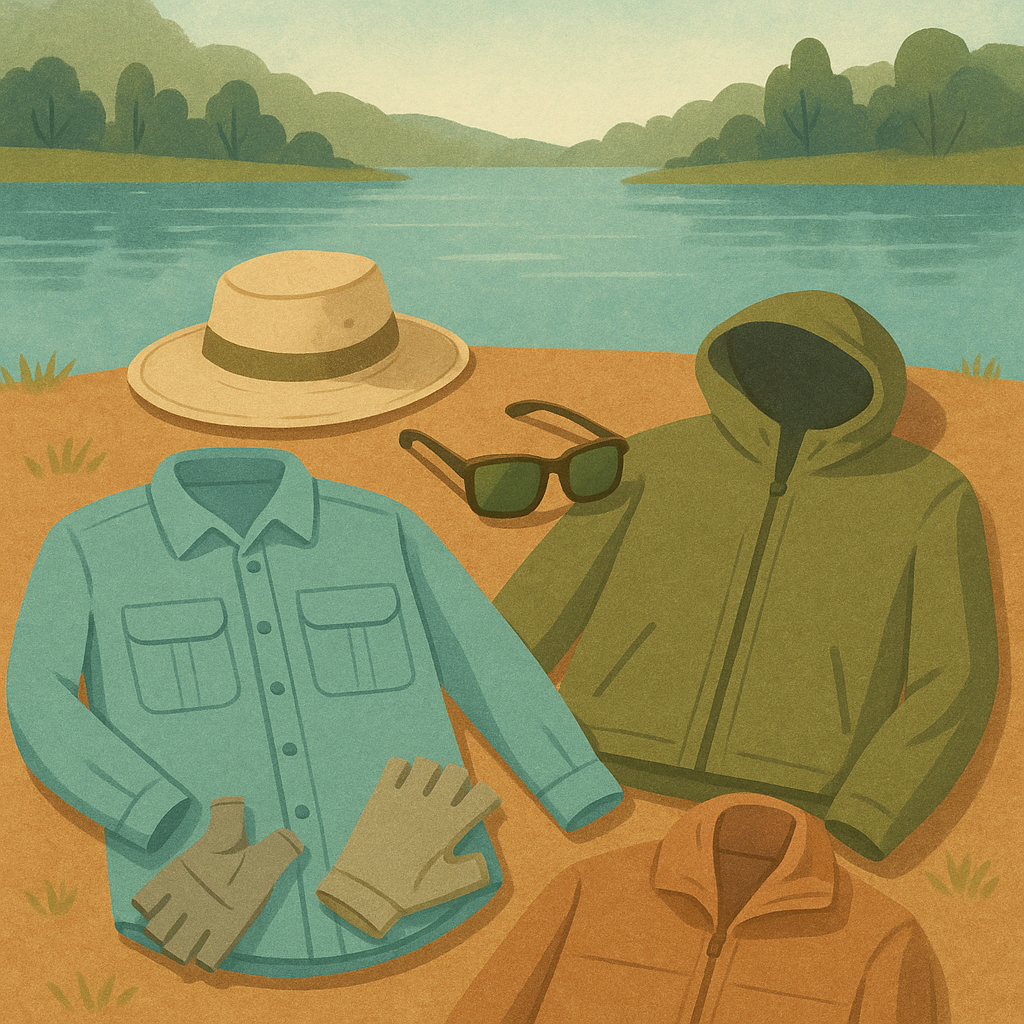
UPF (Ultraviolet Protection Factor) is the single most important rating to look for in fishing shirts and pants. A UPF 50+ shirt blocks at least 98% of UV radiation — far more reliable than sunscreen, which wears off with sweat. Cotton offers little to no UV protection, especially when wet, where its UPF rating can drop by 30–50%.
Instead, look for:
- Polyester or nylon fishing shirts: Lightweight, quick-drying, and rated UPF 50+. Many feature ventilation panels and moisture-wicking fabric to keep you cool.
- Long sleeves are worth it: Yes, even in summer. A breathable long-sleeve shirt keeps you cooler than burning bare skin under direct sun.
- Light colors: White, tan, or light blue reflect heat rather than absorbing it, making you more comfortable on hot days.
Hats, Gloves, and Eyewear: The Finishing Touches
A good hat is your first line of defense for your head, scalp, face, and neck. Wide-brimmed hats — sometimes called boonie hats — offer 360-degree protection and often include ventilated crowns and adjustable chin straps. A basic baseball cap leaves your ears and neck exposed, which is fine in the early morning but risky during peak sun hours.
For your hands, lightweight fingerless gloves with UPF 50+ fabric protect the backs of your hands without sacrificing the dexterity needed to tie knots or bait a hook. Look for non-slip palms and quick-drying material.
Polarized sunglasses are non-negotiable. They cut glare off the water’s surface, letting you actually see into the water — and your eyes from UV damage. Many experienced anglers consider them one of the most important pieces of gear they own.
The Layering System for Changing Conditions
Spring and fall mornings can be 45°F at dawn and 75°F by midday. Layering solves this problem without forcing you to pack a bag full of clothes.
- Base layer: A moisture-wicking synthetic or merino wool shirt worn against the skin. Avoid cotton — when it gets wet, it stays wet and gets cold.
- Mid-layer: A lightweight fleece or hoodie for cool mornings. Easy to tie around your waist when the sun heats things up.
- Outer layer: A packable rain jacket or wind shell. Even on clear days, wind over cold water can cut right through you, and afternoon showers are common.
Footwear and Pants: Don’t Overlook These
Wet feet make miserable fishing days. If you’re fishing from the bank, waterproof boots or water shoes with good grip are far smarter than sneakers. Hiking sandals work well in warm weather near calm water. If you plan to wade, invest in proper wading boots with felt or rubber soles for traction on slippery river rocks.
For pants, quick-dry nylon or polyester beats denim every time. They’re lighter, dry in under an hour, and won’t drag you down if you take an unexpected dip. Convertible pants with zip-off legs give you shorts when the afternoon heats up.
Long-lasting sun protection
UPF clothing works all day without reapplication — unlike sunscreen that wears off with sweat.
Stay comfortable longer
Moisture-wicking, quick-dry fabrics regulate body temperature so you can fish longer without fatigue.
Adaptable to changing weather
A proper layering system handles anything from cold mornings to warm afternoons without drama.
Higher upfront cost
Quality UPF fishing shirts cost more than a basic cotton tee — but they last for years with proper care.
Can feel warm in extreme heat
Long sleeves take adjustment on very hot days, though breathable fabrics help considerably.
Frequently Asked Questions
Do I really need a fishing shirt, or can I just wear sunscreen?
Sunscreen is a good backup, but it wears off with sweat and water. A UPF 50+ shirt provides consistent, all-day protection without reapplication. Use both for maximum coverage on long days.
What colors should I wear fishing?
Light, neutral colors like tan, khaki, and light blue are best — they reflect heat and are less likely to spook fish in clear, shallow water. Avoid bright whites near the surface when light is low.
Do I need special footwear for bank fishing?
Not necessarily. Comfortable closed-toe shoes with grip work fine on most banks. Avoid sandals if you’re on rocky or uneven terrain. Water shoes are a smart choice if you expect wet feet.
Is expensive fishing gear worth the money?
Mid-range UPF shirts and basic layering pieces perform nearly as well as premium brands. Focus on UPF rating and fabric type rather than logos. You don’t need to spend a fortune to fish comfortably.
Final Thoughts
Good fishing clothing isn’t about looking the part — it’s about staying comfortable, protected, and focused on fishing rather than your discomfort. Start with a quality UPF shirt, a wide-brimmed hat, and polarized glasses. Add layers as the season demands. Over time, you’ll build a system that works for your local conditions and your favorite spots.
The best fishing outfit is the one that keeps you out on the water longer. Dress smart, stay comfortable, and tight lines.