
Think about the best fishing day you’ve ever had. Now try to remember exactly where you were, what bait you used, what time you arrived, what the weather was like, and why the fish were biting like crazy. Hard to recall every detail, right? That’s exactly why a fishing journal is one of the most powerful tools any angler can keep.
It’s not complicated. A fishing journal is simply a record of your trips — what worked, what didn’t, and what conditions were like. Over time, those notes become your personal playbook for catching more fish, more often.
What Is a Fishing Journal?
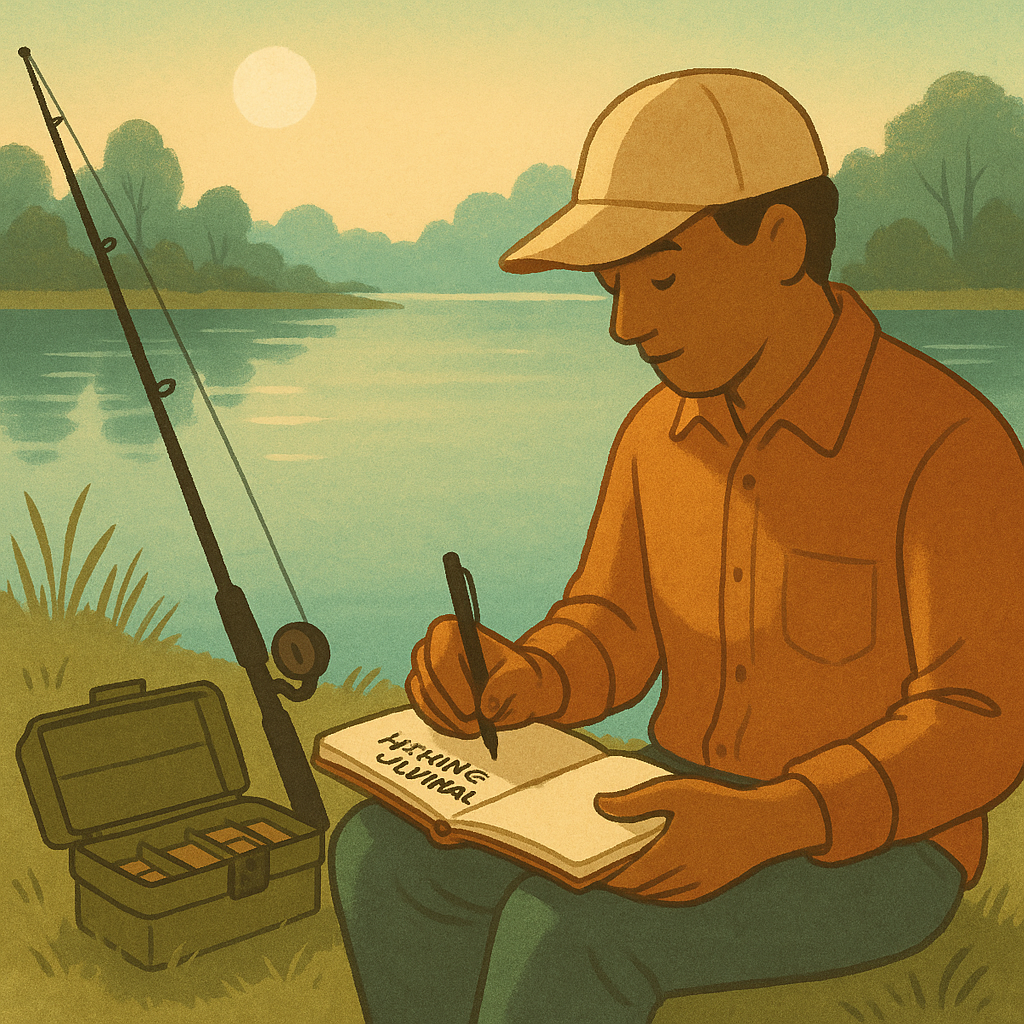
A fishing journal — also called a fishing log or fishing diary — is a written record of your outings on the water. It can be as simple as a pocket notebook or as organized as a dedicated mobile app. The key isn’t the format; it’s the consistent habit of recording your experiences.
Think of it like keeping score in a card game. You might remember winning a big hand, but you can’t improve your game without knowing when, how, and why certain moves worked. Your fishing journal is that scorecard — and over a full season, it becomes one of the most useful things you own as an angler.
Why Keeping a Fishing Log Makes You a Better Angler
Fish behavior is influenced by dozens of factors — water temperature, time of year, barometric pressure, moon phase, bait type, casting depth, and more. No human brain can track all those variables across months and seasons purely from memory.
A journal removes guesswork. Instead of “I think last April they were hitting near that dock,” you’ll know exactly: April 14, overcast, 58°F, arrived at 6am, #6 hook with nightcrawlers, 7 bluegill in 2 hours near the north dock. That’s repeatable information you can use every single year.
What to Write in Your Fishing Journal
You don’t need to write a novel after every trip. A few consistent fields give you all the data you’ll ever need:
- Date and time: Even the hour matters — fish bite differently at 6am vs. noon vs. dusk.
- Location: Name of the lake, river, or specific spot. Be as precise as you can manage.
- Weather: Temperature, cloud cover, wind direction. Even “sunny and warm” gives useful context.
- Water conditions: Clear or murky, high or low, warm or cold. Water temperature is gold if you have a thermometer.
- Bait or lure used: Include color, size, and rigging style when you know it.
- Species and count: What you caught, how many, and rough size estimates.
- Notes: Anything unusual — birds diving nearby, boat traffic, an insect hatch, what wasn’t working and why you switched.
Paper Journal vs. Fishing App
Both work great — and both have loyal fans. A small waterproof notebook (under $10 at any outdoor store) is simple, reliable, and doesn’t need a battery. It fits easily in your tackle bag and there’s something genuinely satisfying about writing in it after a good morning on the water.
Fishing apps like Fishbrain, BassForecast, or even a basic notes app on your smartphone let you attach photos, tag GPS locations, and sometimes pull in weather data automatically. They’re especially useful for searching past entries when you return to a spot after a long absence. The best tool is simply the one you’ll use consistently — so choose whatever feels natural to you.
Pros and Cons of Keeping a Fishing Journal
Improves Catch Rates Over Time
Pattern recognition from your own data makes every future trip more productive and intentional.
Personal Memory Book
Beyond the data, it becomes a meaningful record of your fishing life and the progress you’ve made.
Helps on Tough Days
When fish aren’t biting, past entries show what worked in similar conditions — so you can adapt faster.
Requires Consistent Effort
A few missing entries here and there can break patterns and reduce the journal’s long-term usefulness.
Takes a Few Minutes per Trip
It’s a small time investment, but it needs to become a built-in part of your post-trip routine to pay off.
Frequently Asked Questions
Should I write in my journal while I’m fishing or wait until after?
After is perfectly fine. Many anglers jot a quick note at the end of the trip while details are still fresh. Waiting until the next day is when things start getting fuzzy.
What if I don’t catch anything? Should I still record the trip?
Absolutely. Knowing what conditions led to zero bites is just as valuable as knowing what led to your best day ever. Blank days teach lessons too.
How long until a fishing journal starts being useful?
You’ll notice small patterns after 5 to 10 trips. After a full season, you’ll have genuinely actionable data for planning the following year.
Should I share my fishing journal entries with others?
That’s entirely your call. Many anglers keep their best spots and winning conditions private — your journal is a personal advantage, not an obligation to share.
Final Thoughts
A fishing journal won’t catch fish for you — but it will help you figure out exactly what will. It turns every trip, successful or not, into a lesson you can apply. Over one full season of consistent logging, you’ll understand your local waters better than most anglers who’ve been fishing them for years.
Start simple: date, location, what you used, what you caught. Five lines. That’s enough to begin building your personal fishing playbook.