
Walk into any tackle shop and you’ll see walls of fishing line options — monofilament, fluorocarbon, braided, copolymer, and more. For a beginner, it can feel like reading a foreign language. The good news? You really only need to understand three types to cover almost every freshwater fishing situation you’ll ever face. Think of it like choosing between regular, premium, and diesel at a gas station — each has its place, and picking the wrong one just means a bumpier ride.
In this guide, we’ll break down mono, fluoro, and braid in plain English so you can make a confident choice before your next fishing trip.
Why Fishing Line Matters More Than You Think
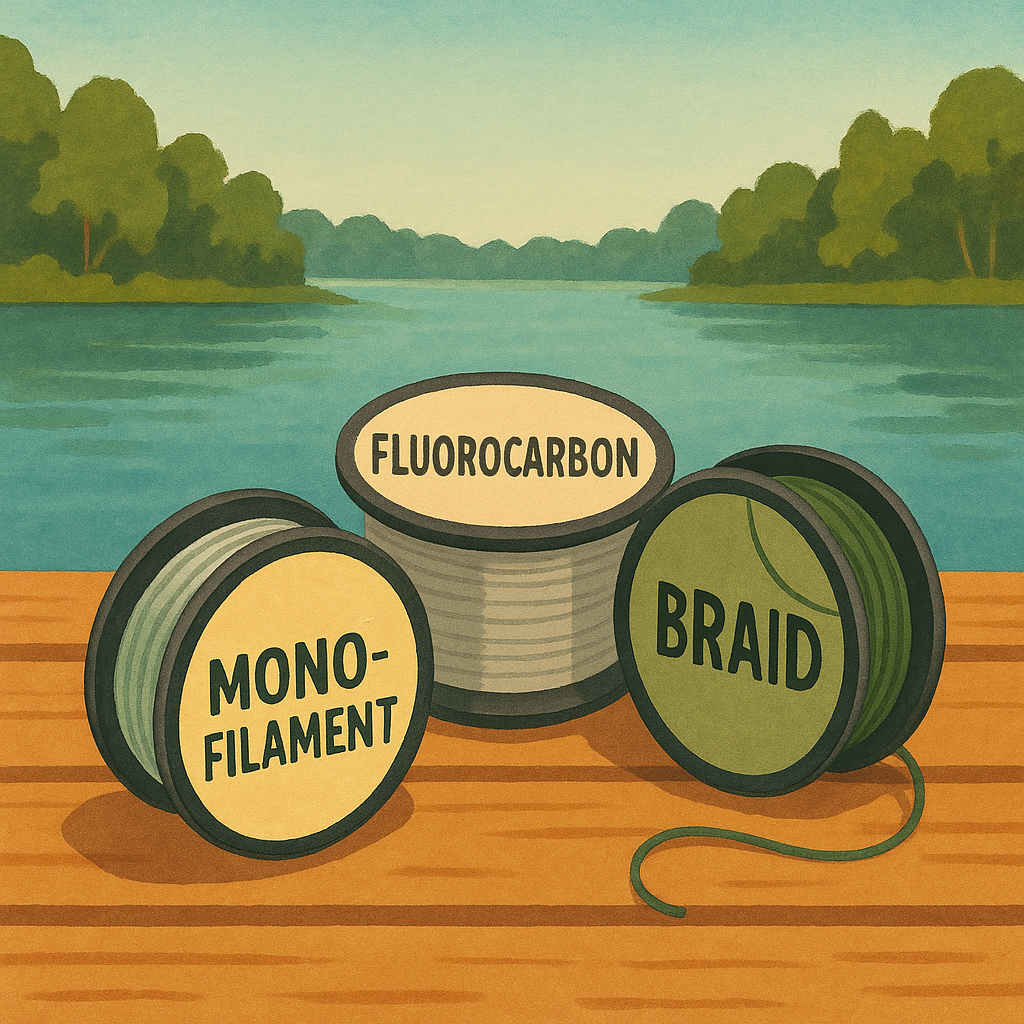
Your fishing line is the only physical connection between you and the fish. It affects how far you can cast, how well you can feel bites, whether fish can see your bait, and how many fish you actually land. Most beginners invest heavily in rods and reels but treat line as an afterthought — that’s a mistake.
According to the American Sportfishing Association, about 55 million Americans fish each year, and tackle shops report that line is one of the most under-replaced items in any angler’s kit. Fresh line performs dramatically better than old, degraded line. As a general rule, replace your line at least once per season.
Monofilament: The Best Starting Line for Beginners
Monofilament — usually called “mono” — is a single strand of nylon. It’s been the go-to fishing line for decades, and for good reason. If you’re just getting started, mono is almost certainly the right choice for you.
Why Mono Works Best for New Anglers
Mono is easy to handle, knots up well with basic knots like the improved clinch knot, and has a slight stretch to it that acts as a shock absorber. That stretch is helpful when a fish makes a sudden run or strikes hard — instead of snapping, your line gives a little, protecting your connection. It’s also the most affordable line type, typically costing $5–$12 for a generous spool.
- Best for: Beginners learning to fish, bobber fishing, live bait setups, most panfish and bass situations
- Recommended strength: 6–10 lb test for most freshwater use
- Key downside: Breaks down with UV exposure over time; replace once per season
- Color tip: Clear or light green blends into most water conditions
Fluorocarbon: Nearly Invisible and Highly Sensitive
When to Use Fluoro
Fluorocarbon (often called “fluoro”) is made from a different material than mono — polyvinylidene fluoride, to be specific. Its standout quality is that it’s nearly invisible underwater because its refractive index is very close to water itself. Fish literally have a harder time seeing it.
Fluoro also sinks faster than mono (useful for getting bait deeper quickly) and is more abrasion-resistant, meaning it holds up better around rocks, dock pilings, and woody debris. It transmits vibrations better too, so you can feel subtle bites that mono might miss.
- Best for: Clear water fishing, finicky fish in pressured lakes, use as a leader material
- Recommended strength: 6–12 lb test for freshwater
- Key downside: More expensive than mono; stiffer, which can make knot-tying trickier
- Pro tip: Many anglers use braid as their main line with a 12–18 inch fluoro leader attached at the end for invisibility
Braided Line: Maximum Strength and Sensitivity
Braided line is woven from multiple synthetic fibers (usually Spectra or Dyneema). It’s incredibly thin for its breaking strength — a 30 lb braid is roughly the same diameter as 8 lb mono. That thin diameter lets you fit more line on your reel and makes longer, more accurate casts easier.
The biggest advantage of braid is zero stretch. That makes it the most sensitive line type — you’ll feel every tap, tick, and nibble transmitted straight to your hand. It’s also extremely durable and resistant to cutting against structure. For fishing in heavy weeds, around fallen timber, or in deep water, braid is hard to beat.
- Best for: Experienced anglers, heavy cover fishing, deep water, situations needing max strength
- Recommended strength: 15–30 lb for most freshwater use
- Key downside: Very visible underwater; not recommended as a standalone line in clear water without a fluoro leader
- Knot note: Braid requires specific knots (like the Palomar knot) — standard knots can slip on its slick surface
Pros and Cons at a Glance
Easiest to use for beginners
Forgiving stretch absorbs sudden strikes; simple to knot and manage on any spinning reel.
Most affordable option
A quality 300-yard spool costs under $10 and covers most freshwater setups.
Versatile across techniques
Works well for bobber fishing, live bait, spinners, and most beginner setups.
Degrades over time
UV light, heat, and water weaken mono — replace it at the start of every season for best performance.
Less sensitive than fluoro or braid
Stretch that protects you on hooksets also means you may miss the subtlest bites.
Which Line Should You Buy First?
If you’re brand new to fishing: buy monofilament. A spool of 8 lb clear mono handles the vast majority of freshwater situations — panfish, bass, catfish, crappie — with zero complications. Once you’ve gotten comfortable casting, setting the hook, and fighting fish, you can experiment with fluoro leaders or eventually braid.
A simple progression that works well for most anglers looks like this:
- Year 1: 8 lb clear monofilament as your main line for everything
- Year 2: Add a spool of 8 lb fluorocarbon to use as leader material in clearer water
- Year 3+: Experiment with 15–20 lb braid for heavy cover situations, with a fluoro leader
Frequently Asked Questions
How often should I replace my fishing line?
For monofilament, replace at the start of every fishing season — or sooner if you notice kinks, rough texture, or your line snapping more than usual. Braid lasts longer (2–3 seasons) but check for fraying. Fluorocarbon leaders should be inspected after every few fish or whenever fishing around rough structure.
What does “lb test” mean on a fishing line?
Pound test (lb test) refers to how much weight the line can hold before breaking under ideal conditions. An 8 lb test line should handle up to 8 pounds of steady pressure. In practice, knots reduce that number slightly, so always use a line rated slightly above the weight of fish you’re targeting.
Can I mix different line types on one reel?
Yes — this is actually a common technique. Many anglers spool braid as their main line (for strength and capacity) and then tie a 12–18 inch fluorocarbon leader to the end. This setup gives you the benefits of both lines without the downsides of using either alone in clear water.
Does fishing line color matter?
It can, especially in clear water. Fluorocarbon is nearly invisible underwater regardless of color. For mono, clear or light green is a safe default. High-visibility colors (yellow, orange) are useful for detecting line movement when fishing with bobbers or drifting, as you can see subtle twitches from the bank.
Final Thoughts
Choosing the right fishing line doesn’t have to be complicated. Start with a quality 8 lb monofilament, learn to tie a solid knot, and go fishing. As you develop as an angler, you’ll naturally start experimenting with fluoro leaders for clearer water or braid for tougher situations. The most important thing is getting on the water — not agonizing over gear specs at the tackle shop.
Keep your line fresh, match your pound test to your target species, and you’ll be in great shape for a full season of productive fishing.