Fishing weights explained in plain language starts with one simple idea: a weight helps your bait or lure get where the fish are. Sometimes that means adding just enough split shot to keep a worm under a bobber. Other times it means using a sliding sinker so a catfish can pick up bait without feeling much resistance.
You do not need a drawer full of every shape in the tackle aisle. For most beginner freshwater trips, a few small split shot, a couple of egg sinkers, and maybe some bell or bank sinkers will cover a lot of pond, dock, river, and lake situations.
Why Fishing Weights Explained Matters
Weights seem like tiny pieces of tackle, but they change how your whole rig behaves. Too little weight and your bait may drift above the fish, blow back toward shore, or never settle where you expect. Too much weight and the rig can splash hard, snag more often, or make a cautious fish feel something unnatural.
That is why fishing weights explained should be about control, not just heaviness. The right weight helps with casting distance, sink rate, depth, current, wind, and bite detection. It also helps beginners slow down and fish a spot carefully instead of constantly wondering whether the bait is even in the right place.
If you are still building the rest of your setup, the ReelHow guide to tackle box essentials can help you keep hooks, bobbers, pliers, and small weights organized without buying gear you will rarely use.
Start With the Main Types of Fishing Weights
Most freshwater beginners can think of weights in a few useful families. The names matter less than what each one does on the line.
- Split shot: small round weights that pinch onto the line. They are easy to add or move for bobber rigs, live bait, and light presentations.
- Egg sinkers: rounded sliding sinkers with a hole through the middle. They work well when you want bait near the bottom and want fish to move with less resistance.
- Bell sinkers: teardrop-shaped weights with an eye at the top. They are simple for bottom rigs, especially from a bank or dock.
- Bank sinkers: longer sinkers that cast well and hold bottom fairly cleanly in mild current.
- Bullet weights: cone-shaped weights often used with soft plastic worms, especially for bass around weeds or cover.
For many relaxed pond and lake trips, split shot and small bell sinkers are enough. Add egg sinkers when you start bottom fishing for catfish, carp, or other fish that may pick up bait and move away.
Split shot is the first weight to learn
Split shot is useful because it adjusts quickly. If your bobber rig is drifting too high, pinch one small shot on the line 6 to 12 inches above the hook. If the bobber sinks too low, remove a little weight or use a smaller bobber.
Sinkers are for bottom control
When you want bait to stay near the bottom, use a sinker style that matches the water. Calm ponds need less weight. Current, wind, and longer casts usually need more. Start lighter and increase only when the rig will not stay where you need it.
When to Use Split Shot
Use split shot when you need small adjustments, especially with worms, crickets, minnows, or small hooks. It is the gentle steering wheel of beginner rigs. You can move it, add one more, or take one off without rebuilding everything.
A good starting point is one small split shot about a hand length above the hook. That keeps bait down but still lets it move naturally. For shallow bluegill or panfish, that may be all you need. For deeper water, windy banks, or a faster drift, add another small shot rather than jumping straight to a heavy sinker.
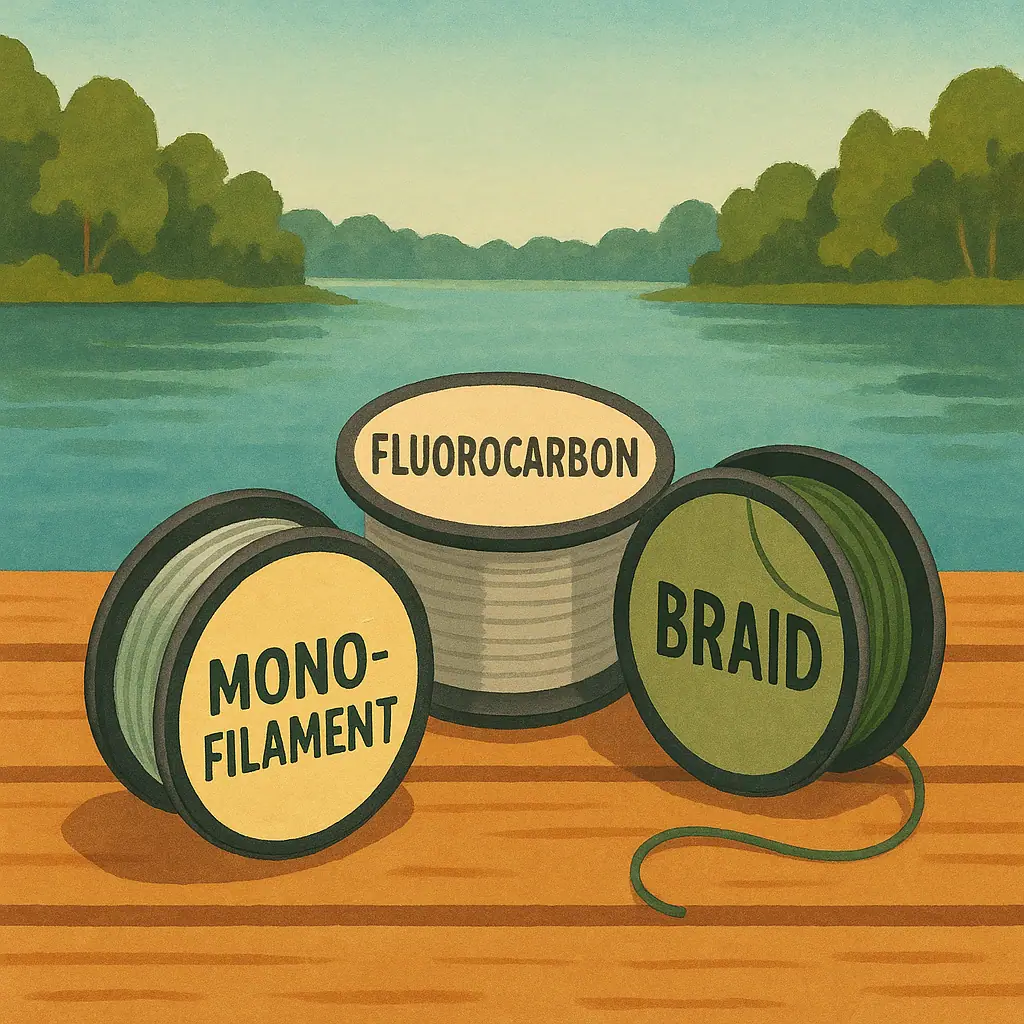
If you are also choosing line for this kind of light setup, ReelHow's fishing line guide explains why line type affects casting, stretch, and how clearly you feel a bite.
When to Use Egg, Bell, and Bank Sinkers
Use egg sinkers when you want a sliding bottom rig. The line runs through the sinker, then usually to a swivel, leader, and hook. This style is common for catfish because a fish can pick up bait and move before feeling the full weight of the sinker.
Use bell sinkers when you want a simple fixed bottom rig. They are easy to clip or tie on, cast neatly, and work from docks, piers, and banks. They are not magic against snags, but they are straightforward and easy to understand.
Use bank sinkers when you need a little more casting distance or current control. Their longer shape can roll less than round weights in some situations, though any sinker can snag around rocks, roots, brush, and old line.
Some waters have special rules about tackle materials. For example, Maine's inland fisheries agency explains restrictions on certain small lead sinkers and lead jigs in its lead fishing tackle guidance. Rules vary by state, lake, refuge, and park, so check local regulations before assuming every weight in your box is allowed everywhere.
How to Choose the Right Fishing Weight Step by Step
You can make this decision calmly on the bank. Do not start by asking, "What is the best sinker?" Ask what you need the rig to do today.
- Decide the depth: shallow bobber fishing needs tiny weights. Deep bottom fishing usually needs more.
- Look at wind and current: moving water or wind-blown line may require extra weight to keep contact.
- Choose the lightest workable size: start small, cast once or twice, and increase only if the rig will not reach or hold.
- Match the rig: use split shot for small bobber adjustments, egg sinkers for sliding bottom rigs, and bell or bank sinkers for simple bottom setups.
- Watch the bite signal: if the bobber sinks from too much weight or the rod tip feels dead, adjust before blaming the fish.
- Check for snags: if you keep hanging up, use less weight, shorten the cast, change angles, or move to cleaner bottom.
Pros and Cons of Common Fishing Weights
Easy rig control
The right weight helps your bait reach the depth, distance, or bottom zone you are trying to fish.
Beginner-friendly adjustments
Small split shot and simple sinkers let you make changes on the water without rebuilding your whole setup.
Works with simple bait fishing
Weights pair naturally with worms, minnows, bobbers, and bottom rigs, which makes them useful for relaxed freshwater trips.
Too much weight feels clumsy
Heavy weights can splash, snag, reduce natural bait movement, and make small fish harder to detect.
Some materials may be restricted
Lead tackle rules vary by location, especially around certain inland waters, parks, refuges, and wildlife-sensitive areas.
Common Fishing Weight Mistakes to Avoid
The most common mistake is using weight as a cure for every problem. If the bait is not staying down, weight may help. But if you are snagging constantly, casting into heavy weeds, or fishing the wrong depth, more weight can make things worse.
Another mistake is crimping split shot too hard. A small pinch should hold it in place, but crushing the line can weaken it. If you need to move the shot often, consider using removable split shot or retie when the line looks damaged.
Beginners also tend to ignore current. A rig that works beautifully in a quiet pond may be too light in a river. On the other hand, a heavy river sinker may feel awkward in a small lake. Let the water tell you what is needed.
A Simple Fishing Weights Checklist
- Bobber sitting correctly? If it sinks or leans badly, adjust weight or bobber size.
- Bait reaching the zone? Add small weight gradually until the bait fishes at the right depth.
- Bottom rig staying put? Increase sinker size only enough to hold in place.
- Line still smooth? Check for damage after crimping split shot, snagging, or landing fish.
- Local rules checked? Look up state, park, refuge, or lake rules before using lead weights in unfamiliar water.
- Snags repeating? Try less weight, a different angle, or cleaner bottom before casting to the same problem spot again.
When to Get Extra Help
Ask a local tackle shop, fisheries office, park staff member, or experienced angler when you are fishing unfamiliar water. This matters most around special regulation areas, trout waters, wildlife refuges, and places where lead tackle rules may be different from the general state rule.
You should also ask for help if your rig keeps tangling. A tiny change in where the weight sits can fix a surprising amount of frustration. Sometimes the answer is not a different sinker, but a shorter leader, smaller bobber, lighter line, or cleaner cast.
Frequently Asked Questions
What fishing weight should a beginner buy first?
Start with a small assortment of split shot and a few light bell or egg sinkers. That covers many bobber and bottom fishing situations without filling your tackle box.
How much weight should I use under a bobber?
Use just enough for the bobber to sit upright while keeping part of the bobber visible. If it sinks, you have too much weight or too small a bobber.
Are lead fishing weights still allowed?
It depends on where you fish. Some states, parks, refuges, and specific waters restrict certain lead sinkers or jigs. Check local regulations before using them in unfamiliar water.
Why do my sinkers keep getting snagged?
You may be fishing rocks, roots, weeds, or old line on the bottom. Try a lighter weight, shorter cast, different angle, or a cleaner area before changing everything else.
Final Thoughts
Fishing weights explained simply comes down to matching the weight to the job. Split shot makes small bobber and live bait adjustments easy. Egg sinkers help with sliding bottom rigs. Bell and bank sinkers give beginners a simple way to keep bait near the bottom.
Start light, adjust slowly, check your line for damage, and pay attention to local tackle rules. Once you see weights as small control tools instead of mystery hardware, your rigs will feel calmer and your time on the water will be more enjoyable.