Learning how to spool a spinning reel is one of those small fishing jobs that pays you back all season. When the line goes on neatly, casts feel smoother, the bail behaves better, and you spend less time picking at loops when you would rather be watching your bobber.
The good news is that you do not need a workbench full of special tools. You need your reel, fresh line, a pair of scissors or clippers, a little steady tension, and a few calm checks as you go. Most line twist trouble starts because the new line comes off its filler spool in the wrong direction or goes onto the reel too loose.
Why Line Twist Happens on a Spinning Reel
A spinning reel wraps line around a fixed spool. That design is easy to cast and beginner-friendly, but it also means line direction matters. If the line comes off the package spool one way and goes onto your reel the opposite way, the line can store twists like a phone cord used to do.
Mercury Marine's guide to properly spooling a spinning reel recommends starting with the filler spool label facing up, reeling a few turns, and watching whether the line begins to twist. That practical check is easier than guessing from across the room.
Line type matters too. Monofilament and fluorocarbon have more memory than braid, so they are more likely to show loose coils if you rush. If line choice still feels confusing, ReelHow's fishing line guide explains mono, fluoro, and braid in plain beginner terms.
Start With the Right Setup
Before you tie anything, set yourself up where the reel can sit steady and the filler spool can lie flat on the floor or table. Good light helps. So does having the rod nearby, because running line through the first guide keeps the line angle closer to the way it will work on the water.
What you need
- Your spinning reel: mounted on the rod or held securely so the handle turns freely.
- Fresh fishing line: choose a line strength that matches the rod and the fish you expect.
- Small clippers or scissors: for trimming the tag end after tying the line to the spool.
- A damp cloth or soft glove: optional, but helpful for holding light tension without burning your fingers.
- A few quiet minutes: rushing is the easiest way to overfill the spool or miss early twist.
If this is your first reel, it helps to understand the reel itself before filling it. The ReelHow article on choosing your first fishing reel is a useful companion before you start changing line.
How to Spool a Spinning Reel Step by Step
These steps work for a simple freshwater spinning setup with monofilament or fluorocarbon. Braid can need backing or tape depending on the spool, so check your reel's instructions if you are using braid for the first time.
- Open the bail: do this before tying the line. Many beginners tie the knot first, then realize the bail cannot pick up the line correctly.
- Run the line through the first rod guide: use the guide closest to the reel. This keeps the line path natural.
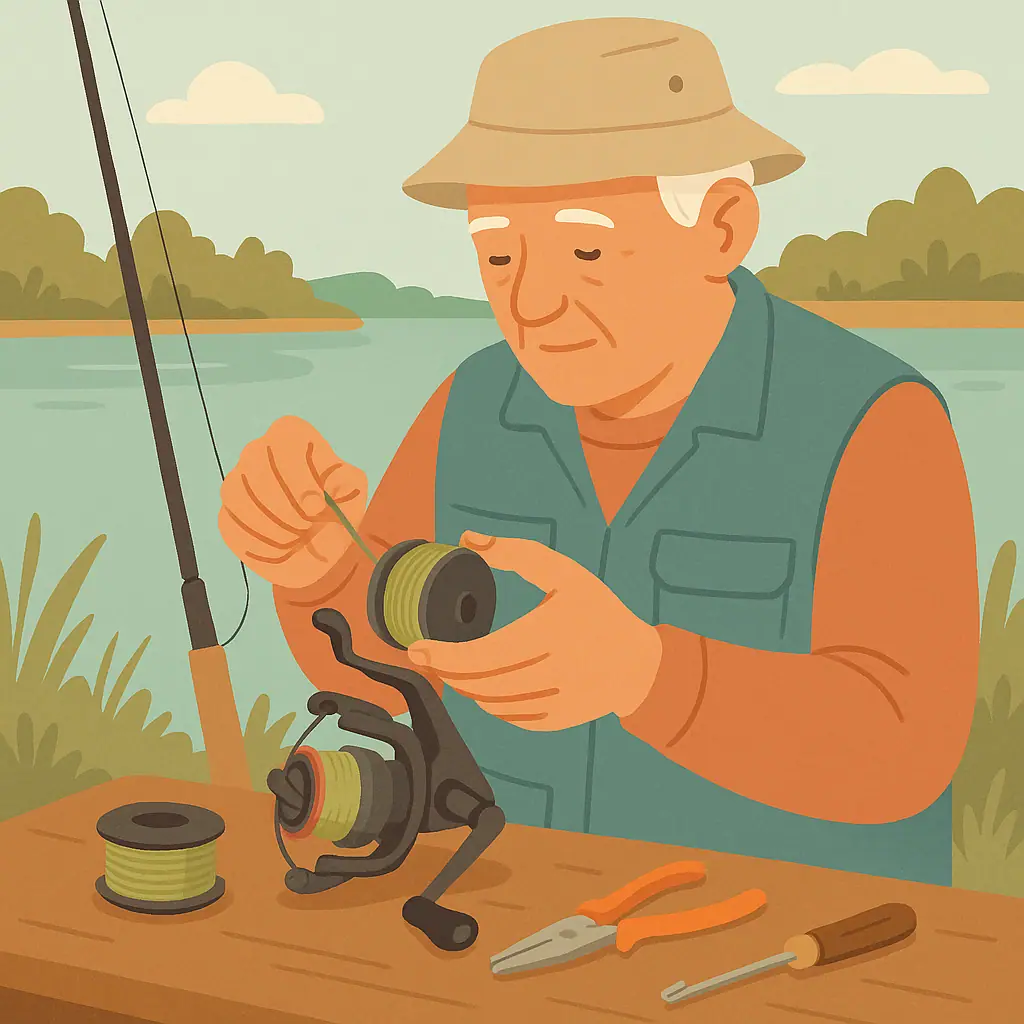
- Tie the line to the reel spool: an arbor knot works well, but a snug simple knot is enough for many beginner freshwater setups. Trim the tag end short.
- Close the bail by hand: this puts the line where it belongs and builds a good habit for fishing later.
- Lay the filler spool flat: start with the label facing up if you are using a small filler spool. Reel five or six turns slowly.
- Check for twist: drop a little slack near the reel. If the line curls into tight loops, flip the filler spool over and try again.
- Keep light tension: pinch the line gently above the reel with a damp cloth or your fingers while reeling slowly.
- Stop before the lip: leave a small gap below the spool rim. Overfilling is a common cause of loops jumping off during casts.
How Full Should the Reel Spool Be?
A spinning reel should look full, but not stuffed. As a beginner rule, stop with a small visible gap between the line and the outer lip of the spool. Many anglers aim for roughly one-eighth inch of space, but you do not need to measure it like a machine part.
Too little line can shorten casts because the line rubs more against the spool lip. Too much line can jump off in big loops, especially with fresh monofilament. The sweet spot is enough line for clean casting without a bulging edge.
Do not reel against a slipping drag
Line twist can also appear after the reel is spooled. One common habit is turning the handle while a fish is pulling drag. When the drag is clicking and line is going out, reeling can add twist without gaining line. Let the fish run, then reel when you are actually recovering line.
If you are still building a beginner kit around this reel, the budget fishing setup guide can help you keep line, hooks, tools, and the reel balanced without overspending.
Pros and Cons of Spooling Your Own Reel
You learn your gear
Handling the line, bail, drag, and spool teaches you how the reel behaves before you are standing at the bank.
You can fix problems sooner
If line gets old, kinked, or badly twisted, you will know how to replace it without waiting for a shop visit.
It saves money over time
A filler spool of line can handle several refreshes, especially on smaller freshwater reels.
It takes patience
Spooling too fast can create loose wraps, early twist, or an overfilled spool that misbehaves later.
Braid can be trickier
Some braid-ready spools are simple, but slick braid may need backing or another grip method to keep it from slipping.
Common Mistakes to Avoid
The first mistake is forgetting to open the bail before tying the line on. It happens to plenty of people, and the only fix is to cut the knot and start again. The second mistake is letting the filler spool roll across the floor like a wheel when you are using mono or fluoro on a spinning reel. That can be fine for some other reel types, but it often adds twist here.
Another mistake is spooling dry, loose wraps because you are trying not to touch the line. Light, even tension is your friend. You do not need to squeeze hard. You just want the wraps to lie snugly beside each other.
Finally, do not use fresh line as an excuse to skip local rules before a trip. The U.S. Fish and Wildlife Service has a fishing information hub that points anglers toward state resources for licenses and regulations.
A Simple Reel Spooling Checklist
- Bail open before knot: check this before tying the line to the spool.
- Line through first guide: this helps the reel load line at a natural angle.
- Filler spool flat: start label-up, then flip if tight coils appear.
- Light tension: keep the line snug, not pinched hard.
- Slow handle turns: speed is not the goal. Even wraps are the goal.
- Small gap at the rim: stop before the line reaches the very edge of the spool.
- Manual bail close: practice closing the bail by hand after spooling and after casts.
Frequently Asked Questions
What should I check first when spooling a spinning reel?
Check that the bail is open before tying the line on. Then make sure the line is running through the first rod guide and coming off the filler spool without tight coils.
Should the line spool face up or down?
With many small filler spools, label-up is a good starting point. Reel a few turns and watch the line. If it curls into tight loops, flip the filler spool over and continue.
Can I have a tackle shop spool my reel?
Yes. A good shop can spool it quickly, and that is helpful if you are using braid or a large reel. It is still worth learning the home method so you can refresh line later.
How often should I change fishing line?
Change it when it looks nicked, faded, curly, or weak, and before important trips if it has been sitting for a long time. Frequent anglers usually replace line more often than casual weekend anglers.
Final Thoughts
Learning how to spool a spinning reel is not about being fancy. It is about removing one common frustration before you get to the water. Open the bail, tie the line cleanly, watch the filler spool direction, keep gentle tension, and stop before the reel is overfilled.
Once you do it a time or two, the process feels ordinary. That is exactly what you want from beginner fishing gear: simple, dependable steps that leave more room for the quiet part of fishing.