Live bait containers are one of those small pieces of fishing gear that can make the whole trip feel calmer. A good container keeps worms cool, minnows alive, hands cleaner, and the back seat of the car from smelling like a bait shop on the ride home.
You do not need fancy equipment to manage bait well. You just need the right container for the bait, a little shade, fresh bedding or water, and a habit of checking things before they become a mess.
Why Live Bait Containers Matter
Live bait is useful because it already looks, smells, and moves like food. Worms wiggle. Minnows flash and swim. Crickets kick. But bait that gets hot, dry, crowded, or low on oxygen becomes weak fast, and weak bait is harder to fish with.
Take Me Fishing notes that natural freshwater baits include worms, leeches, minnows, crayfish, crickets, and grasshoppers, and its guide to freshwater bait is a helpful outside refresher on common bait choices. For this post, the main point is simple: each bait type needs a container that matches how it stays alive.
If you are still choosing when bait makes more sense than lures, ReelHow's guide to live bait fishing with worms, crickets, and minnows walks through the basics without turning it into a science lesson.
Start With the Right Container for Each Bait
The best live bait containers are not always the biggest ones. They are the containers that keep bait cool, contained, and easy to reach without spilling everything every time you rebait a hook.
- Worm containers: use the original cup, a small insulated bait box, or a ventilated container with damp bedding.
- Minnow buckets: use a bucket with water, a secure lid, and an aerator for longer trips or warm days.
- Cricket cages: use a ventilated cage or tube that lets you shake out one cricket at a time.
- Leech containers: use cool water and a secure lid because leeches can slip through surprising gaps.
- Short family trips: choose simple containers that are easy for older hands and young helpers to open and close.
Good storage is also part of keeping your tackle organized. The ReelHow article on bait and lure storage can help you keep hooks, soft plastics, bait tools, and small containers from becoming one tangled pile.
Worms need cool, damp bedding
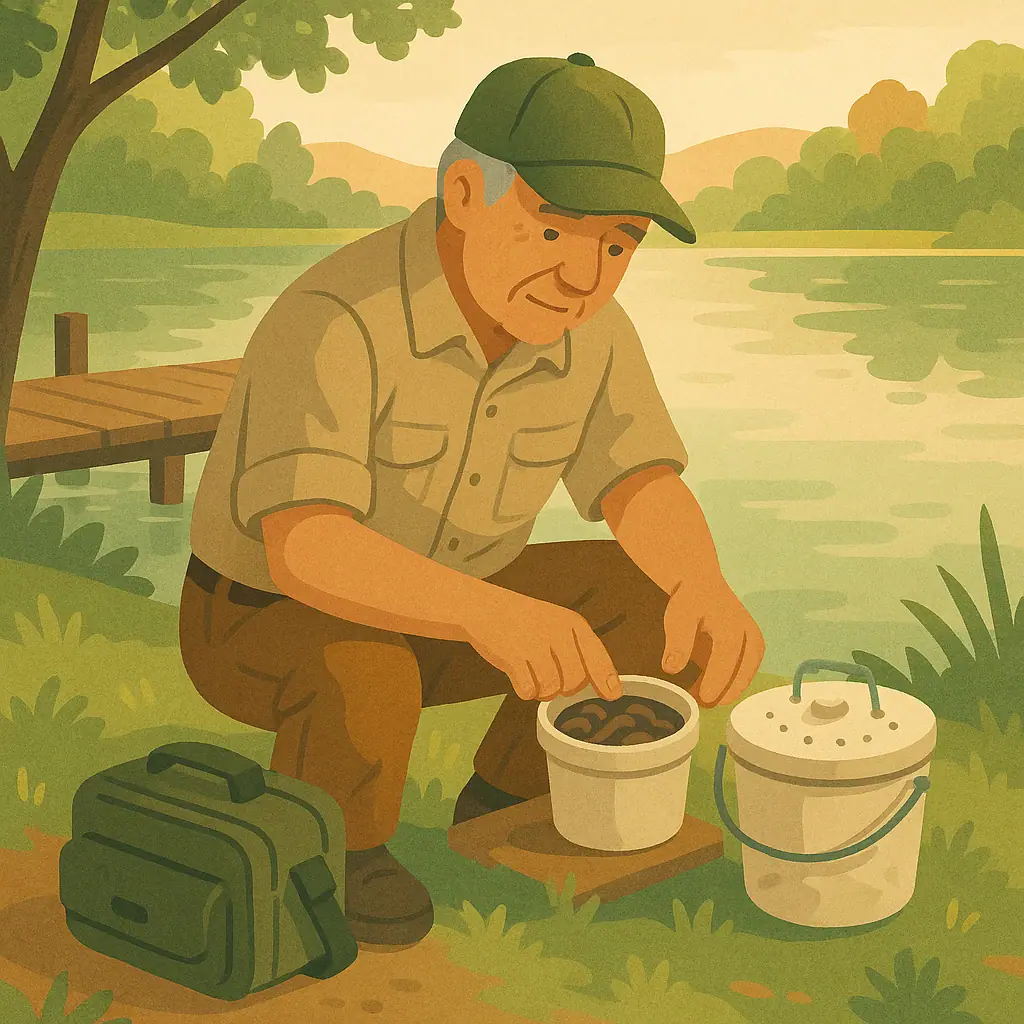
Worms do best when they stay cool and slightly damp, not soaked. Keep the lid closed, store the cup in shade, and avoid leaving worms on hot pavement, a sunny dock, or the dashboard. If the bedding dries out, add only a tiny bit of moisture.
Minnows need oxygen and stable water
Minnows need enough room, cool water, and oxygen. For a quick dock trip, a basic minnow bucket may be fine. For a longer outing, especially in warm weather, a small battery aerator is worth considering. Avoid changing water suddenly unless you know the new water is safe and similar in temperature.
How to Handle Live Bait Containers Step by Step
A simple routine keeps bait healthy and keeps you from fussing with containers every few minutes. Think of it as a pre-trip check, a bank-side habit, and a cleanup habit.
- Pack bait last: buy or load live bait close to departure time so it spends less time sitting around.
- Keep it shaded: place containers under a seat, in a small cooler without crushing them, or beside your chair away from direct sun.
- Open lids briefly: take out what you need, then close the container so bait does not dry out, escape, or get stepped on.
- Use clean hands: sunscreen, bug spray, gasoline, and snacks on your fingers can transfer to bait and water.
- Do not overcrowd minnows: too many minnows in a small bucket use oxygen quickly and become sluggish.
- Refresh carefully: if water gets warm or dirty, change it gradually and follow local bait rules.
- Clean up at the end: seal containers, trash old bedding when appropriate, and never dump live bait where rules prohibit it.
Live Bait Containers for Worms
Worms are the easiest bait to carry, but they still need care. The original paper or foam cup from the bait shop is usually fine for a short outing. For longer days, an insulated worm box can help keep them cool.
The bedding should feel like a wrung-out sponge, not soup. If worms are crawling up the sides of the container, the bedding may be too wet, too warm, or low on air. Move them to shade and avoid adding more water unless the bedding is truly dry.
When fishing with grandchildren or new anglers, separate a few worms into a smaller cup. That way the main container stays closed and cool while everyone learns to bait hooks without digging through the whole supply.
Live Bait Containers for Minnows
Minnows need more attention than worms because water quality changes quickly in a small bucket. Heat, crowding, and low oxygen are the big problems. A bucket with a lid helps prevent splashing, and an aerator helps keep water moving.
Check local rules before transporting, holding, or disposing of minnows. As one real example, Wisconsin DNR's VHS guidance says minnows left in a bait bucket or live box in a lake may not be transported away for use on another lake or river; the same page explains labeling and permission requirements for containers left in the water. You can read that state guidance here: Wisconsin DNR bait minnow rules.
That Wisconsin rule is not a national rule for every reader. It is a reminder to check the state, lake, park, or refuge rules where you fish. If you are visiting unfamiliar water, look up the local regulation before assuming leftover minnows can be moved or released.
Pros and Cons of Using Live Bait Containers
Keeps bait lively
The right container helps worms stay cool and minnows stay oxygenated, which makes the bait easier to fish.
Makes trips cleaner
Secure lids and organized bait boxes reduce spilled bedding, splashed water, escaped crickets, and loose containers in the vehicle.
Helps beginners relax
When bait is easy to reach and simple to manage, new anglers can focus on casting, bobbers, and having a good time.
Needs a little attention
Live bait is not set-and-forget gear. Heat, low oxygen, dry bedding, and loose lids can cause problems quickly.
Rules can vary by location
Minnow transport, leftover bait disposal, and live bait use may be restricted on some waters, parks, refuges, or states.
Common Gear Mistakes to Avoid
The first mistake is leaving bait in the sun. Even a good container struggles when it sits on a hot dock or in a closed car. Shade and airflow are simple, free improvements.
The second mistake is mixing everything together. Worm bedding does not belong in a minnow bucket, and minnow water does not belong in a tackle tray. Keep bait containers separate from hooks, lures, snacks, and towels.
The third mistake is assuming leftover bait can always go into the lake. In many places, releasing live bait is discouraged or illegal because it can spread disease or unwanted species. When in doubt, check local rules and dispose of bait responsibly.
A Simple Live Bait Container Checklist
- Container matches the bait: damp bedding for worms, water and oxygen for minnows, ventilation for crickets.
- Shade is planned: bait has a cool spot before the first cast.
- Lid closes securely: no loose minnows, escaped crickets, or spilled worm bedding.
- Hands stay clean: wipe off sunscreen, fuel, bug spray, and food before handling bait.
- Rules are checked: know what your state or fishing spot says about live minnows and leftover bait.
- Cleanup is ready: bring a small trash bag, towel, and water bottle for rinsing hands and containers.
For comfort on longer bait-fishing days, ReelHow's guide to comfortable fishing chairs, coolers, and convenience gear pairs well with this bait routine. A stable chair, shade, and easy reach make container management much simpler.
When to Get Extra Help
Ask a local bait shop, park office, fisheries agency, or experienced angler if you are unsure about live minnows. This is especially important at trout waters, wildlife refuges, state parks, reservoirs with special rules, and lakes with invasive species concerns.
You should also ask for help if minnows keep dying quickly. The problem may be temperature, oxygen, overcrowding, water quality, or rough handling. A local shop can often tell you what works in your area because they hear the same problem every week.
Frequently Asked Questions
What is the best live bait container for beginners?
Start with a simple worm box for worms and a lidded minnow bucket for minnows. If you fish longer than an hour or two with minnows, consider a small aerator.
How do I keep worms alive while fishing?
Keep worms cool, shaded, and in damp bedding. Do not soak them, leave them in direct sun, or keep opening the container longer than needed.
Why do minnows die in my bait bucket?
Common causes include warm water, low oxygen, overcrowding, dirty water, and sudden temperature changes. Shade, fewer minnows, and an aerator can help.
Can I dump leftover minnows into the lake?
Do not assume so. Rules vary, and releasing live bait can spread disease or unwanted species. Check local regulations and dispose of leftover bait responsibly.
Final Thoughts
Live bait containers are not complicated, but they matter. Worms need cool, damp bedding. Minnows need cool, oxygenated water. Crickets need ventilation. You need lids that close, a shady place to put them, and a cleanup plan before heading home.
Keep the routine simple and repeatable. Match the container to the bait, check local rules, and make the setup comfortable enough that bait care does not steal attention from the best part of the day: watching that bobber twitch.