Monofilament line for beginners is popular for a simple reason: it gives you a little grace while you are still learning. It stretches, ties knots without much fuss, works on common spinning reels, and does not punish every tiny mistake the way some stiffer or no-stretch lines can.
If you are setting up a first freshwater rod, mono is often the calmest place to start. You still need the right strength, fresh line, and a clean spool, but you do not need to understand every advanced line debate before you fish a pond, dock, or quiet lake bank.
Why Monofilament Line for Beginners Matters
The line is the only connection between your rod and the fish. That sounds dramatic, but it is also practical. A line that is easy to handle can make casting, tying, and landing fish feel less stressful while you build confidence.
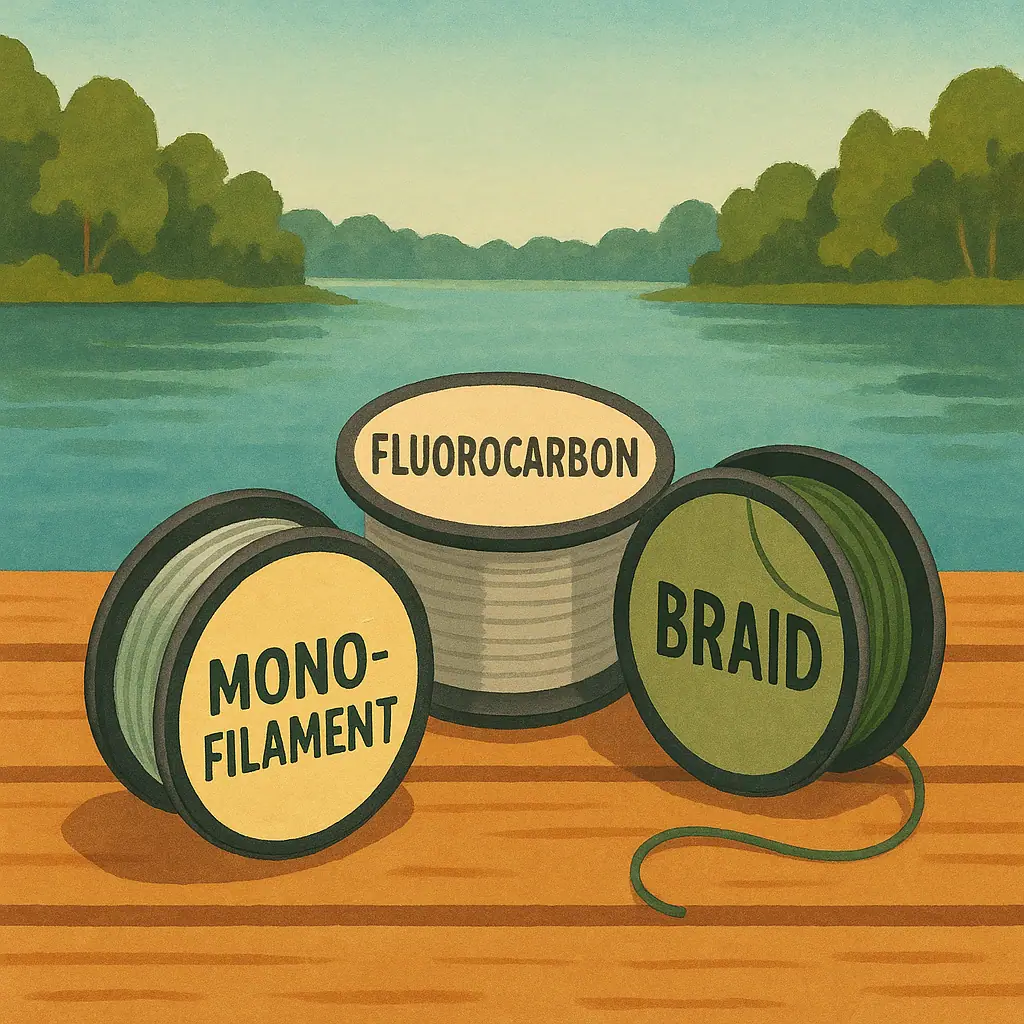
Take Me Fishing explains that monofilament is a single nylon strand, and its advantages include lower cost, stretch that absorbs shock, easy knot tying, and a round shape that sits neatly on a spool. Their guide to types of fishing line is a useful outside reference when you want the plain comparison between mono, braid, and fluorocarbon.
For a broader ReelHow overview, our fishing line guide explains how mono, fluoro, and braid differ without turning it into a technical lecture. Read that first if you are still deciding which line family fits your setup.
What Makes Monofilament Forgiving?
Mono is forgiving because it has stretch. When a fish surges, a beginner sets the hook a little hard, or the rod angle gets awkward for a moment, that stretch can cushion the mistake. It will not fix everything, but it can soften sudden pressure.
It also tends to be easier to tie than many other lines. A clean improved clinch knot, Palomar knot, or simple beginner knot usually cinches down nicely on mono if you wet the knot and pull it tight with steady pressure.
Stretch is comfort, not magic
Stretch helps, but it also makes mono less sensitive than braid. You may not feel every tiny tap right away. For beginners, that tradeoff is usually acceptable because mono makes the whole setup easier to manage.
Memory is the main downside
Mono can hold coils from the spool, especially if it is old, cheap, overfilled, or stored in heat and sunlight. Those coils are called memory. If your line springs off the reel in loose loops, it may be time to respool.
Start With a Simple Mono Setup
A good beginner setup does not need heavy line. In many freshwater situations, lighter mono casts better and behaves better on a spinning reel. Always match the line to your rod rating and the fish you expect, but do not assume stronger is automatically easier.
- For panfish and small ponds: 4- to 6-pound mono is often easy to cast and plenty for bluegill, sunfish, and small stocked trout.
- For general beginner freshwater fishing: 6- to 8-pound mono is a friendly middle ground on many light or medium-light spinning setups.
- For bass around light cover: 8- to 12-pound mono may make sense, depending on your rod, reel, lure, and local water.
- For heavy weeds or big fish: ask a local tackle shop or experienced angler before jumping to very heavy mono on a small spinning reel.
If you are building the rest of your first kit around this choice, the ReelHow budget fishing setup guide can help you keep the rod, reel, hooks, and tools balanced instead of overspending on one piece.
How to Handle Monofilament Line Step by Step
The best mono in the world can still misbehave if it is spooled loosely, tied poorly, or left damaged after a snag. These small habits make a big difference.
- Check the rod and reel rating: look for the printed line range on the rod and the reel spool. Stay inside that range when possible.
- Start with fresh line: old mono can get brittle, faded, or curly. Fresh line is cheap insurance before a family trip or first outing of the season.
- Spool it with light tension: loose wraps cause trouble later. Keep gentle pressure on the line as it goes onto the reel.
- Stop before overfilling: leave a small gap below the spool lip. Too much mono can jump off in coils during casts.
- Wet knots before tightening: a little moisture helps the knot seat smoothly and avoids heat from friction.
- Trim tag ends neatly: leave a tiny clean tag, but avoid long loose ends that catch weeds or tangle.
- Feel for nicks: after rocks, docks, branches, or a good fish, pinch the line above the hook and slide your fingers carefully. Retie if it feels rough.
Pros and Cons of Monofilament Line
Easy to learn with
Mono ties common knots well, handles smoothly, and works with the spinning reels many beginners already own.
Stretch absorbs mistakes
The line has some give, which can help when a fish surges or a new angler pulls a little too hard.
Affordable to replace
Fresh mono is usually budget-friendly, so changing worn or curly line does not feel like a major investment.
Less sensitive than braid
Because mono stretches, tiny bites and bottom contact may feel softer than they would on low-stretch braid.
Can coil when old
Mono can develop memory, especially after sitting on a small spool for a long time or being stored in heat.
Common Monofilament Mistakes to Avoid
The biggest mistake is using line that is too heavy for the reel. Heavy mono on a small spinning reel can spring off in loops, shorten casts, and make the reel feel clumsy. If your reel is small, lighter line is usually easier.
The second mistake is keeping the same line forever. Mono is not meant to be permanent. Sun, heat, abrasion, and time all take a toll. If the line looks cloudy, feels rough, or keeps coiling badly, replace it.
Another mistake is throwing old line on the ground. Monofilament can harm wildlife when it is left at ramps, banks, piers, or docks. The Washington Department of Fish and Wildlife recommends putting used line in a monofilament recycling bin when available, or in the trash if a bin is not nearby, in its monofilament recovery guidance.
A small pair of clippers and pliers makes these habits easier. ReelHow's guide to beginner fishing tools covers the basic items that keep line checks, hook removal, and cleanup simple.
A Simple Monofilament Checklist
- Line matches the rod and reel: stay within the printed line rating when you can.
- Line is fresh: replace mono that is brittle, badly coiled, faded, or rough.
- Spool is not overfilled: leave a small gap below the rim.
- Knot is wet and snug: pull steadily and trim the tag end cleanly.
- Last few feet are smooth: retie after snags, rocks, docks, or toothy fish.
- Used line is contained: recycle mono in a proper bin or put it in the trash.
When to Try Something Besides Mono
Mono is a great starting point, but it is not the only answer. If you fish thick weeds, deep water, or lures where feeling every tap matters, braid may eventually make sense. If you need a less visible leader in clear water, fluorocarbon can help.
There is no rush. Fish mono until you understand what you like and what bothers you. When you can explain the problem clearly, choosing another line becomes much easier.
Frequently Asked Questions
Is monofilament line good for beginners?
Yes. Monofilament line is easy to tie, affordable, flexible, and forgiving enough for many beginner freshwater setups. It is a very sensible first line.
What pound test mono should I start with?
For light freshwater fishing, many beginners do well with 4- to 8-pound mono. Match the line to your rod, reel, target fish, and local conditions instead of choosing the heaviest option.
How often should I replace monofilament?
Replace it when it is nicked, brittle, faded, badly coiled, or before an important trip if it has been sitting for a long time. Casual anglers often refresh mono at least once a season.
Can I use mono with bobbers and live bait?
Absolutely. Mono works well for bobbers, worms, crickets, minnows, small hooks, and many simple beginner rigs because it handles easily and knots well.
Final Thoughts
Monofilament line for beginners is forgiving because it keeps things simple. It gives you stretch, easy knots, good everyday handling, and a low-cost way to learn what fishing line actually does on the water.
Start with a sensible pound test, keep the line fresh, check for nicks, and replace it before it becomes a problem. Once those habits feel normal, every other line choice gets easier.