
The Palomar knot for beginners is a wonderful little knot to learn because it is strong, simple, and easy to check before you cast. If you can fold line in half, tie a loose overhand knot, and pass a hook through a loop, you can practice this at the kitchen table before your next fishing trip.
That confidence matters. A beginner can have the right bait, the right spot, and a perfect quiet morning, but a poor knot can still cost the first good bite of the day. The Palomar knot gives you a dependable way to attach many hooks, swivels, snaps, and lures without learning a dozen complicated patterns at once.
If you just learned our improved clinch knot guide, think of the Palomar as your next friendly option. The clinch knot uses wraps. The Palomar uses a doubled line and one simple overhand knot.
Why the Palomar Knot Matters for Beginners
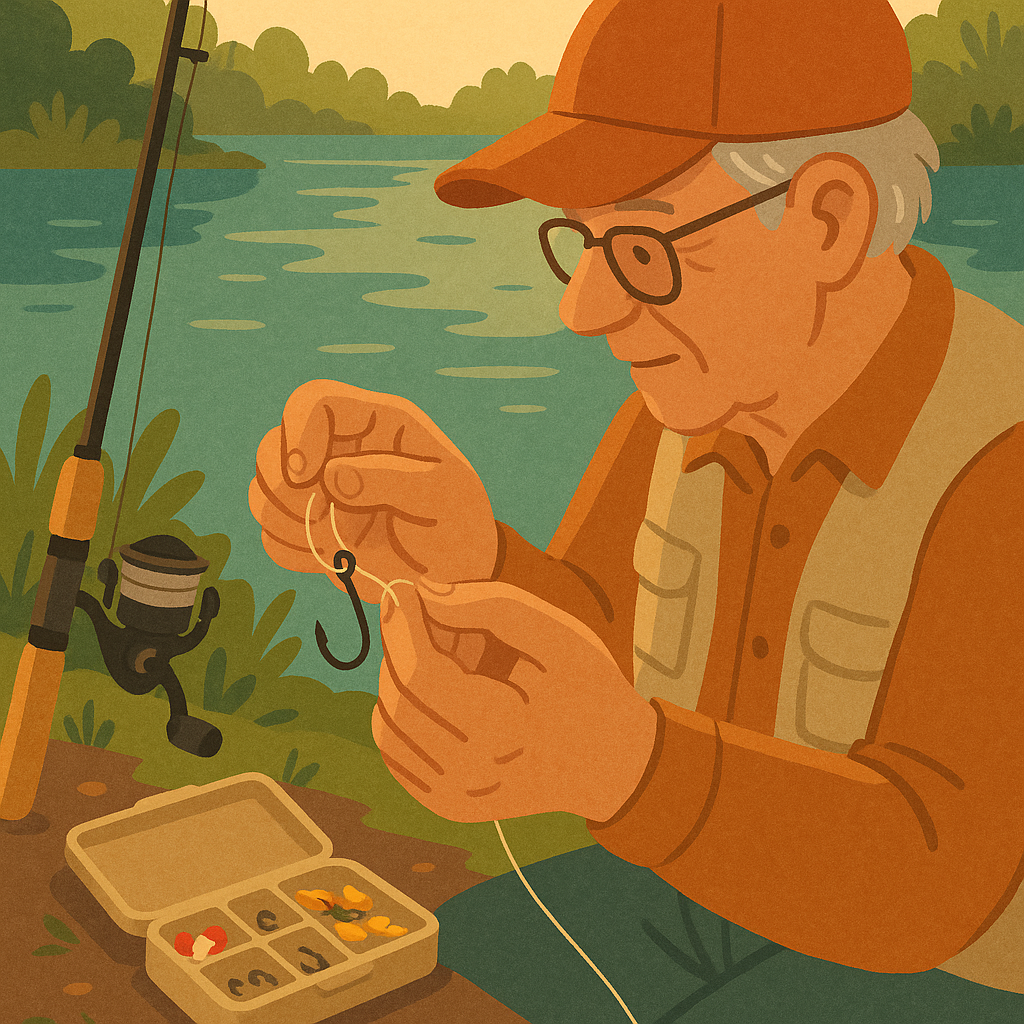
The Palomar knot is popular because it is short, compact, and repeatable. Instead of counting wraps or trying to keep coils perfectly even, you work with a doubled section of line and cinch the knot down slowly.
For older beginners, that is a big advantage. You can practice with thicker cord first, then move to fishing line once your fingers know the motion. You do not need to tie it fast. You need to tie it neatly, wet it before tightening, and inspect it before making a cast.
What You Need Before Tying the Palomar Knot
Start with a hook, swivel, or small lure that has an eye large enough for a doubled line to pass through. That one detail matters. If the eye is tiny and the doubled line will not pass cleanly, choose another knot rather than forcing it.
The NetKnots Palomar knot instructions show the same beginner-friendly sequence used here: double the line, pass it through the eye, tie a loose overhand knot, pass the loop over the hook or lure, then wet and tighten. That outside check is useful because small tying details matter more than speed.
Give yourself plenty of line to work with. Six inches can work, but beginners are usually happier with eight to ten inches while practicing. Extra tag end is easier to trim than too little line is to hold.
Good uses for this knot
- Hooks: A good choice for many simple bait rigs when the eye accepts doubled line.
- Swivels and snaps: Helpful when setting up basic freshwater rigs for panfish, bass, catfish, or trout.
- Small lures: Works well when the lure can pass through the loop without tangling trebles or hardware.
- Practice sessions: Easy to rehearse at home with string before using real line beside the water.
How to Tie the Palomar Knot Step by Step
Use slow hands here. Most Palomar knot problems happen when someone tightens before the loop is fully over the hook or lure.
Step 1: Double the line
Fold the end of your fishing line back on itself to create a loop, also called a doubled line. Make the loop long enough that it can pass over the hook, swivel, or lure later.
Step 2: Pass the doubled line through the eye
Push the loop through the eye of the hook or lure. If it will not pass through without crimping or fighting you, stop and choose a different knot for that piece of tackle.
Step 3: Tie a loose overhand knot
With the doubled line, tie a simple loose overhand knot. The hook or lure should hang below the knot. Do not tighten yet. Leave the loop open and roomy.
Step 4: Pass the loop over the hook or lure
Take the loop and pass it completely over the hook, swivel, or lure. This is the step beginners sometimes miss. The entire hook or lure must go through the loop before the knot is tightened.
Step 5: Wet, seat, and tighten
Moisten the knot with a little water or saliva. Then pull the standing line and tag end steadily while guiding the knot toward the eye. The knot should cinch down smoothly, without crossing sharply or leaving a loose loop.
Step 6: Trim the tag end
Once the knot is snug, trim the tag end with clippers. Leave a tiny bit of tag instead of cutting flush against the knot. That small margin is cheap insurance.
Common Palomar Knot Mistakes to Avoid
The first mistake is making the loop too short. If the loop barely reaches around the hook, you will rush and twist the knot. Start with more line than you think you need while learning.
The second mistake is tightening the knot dry. Fishing line can weaken from friction when a knot cinches down quickly. A little moisture helps the line slide into place more cleanly.
The third mistake is using the Palomar when the tackle is awkward for it. Some lures with multiple hooks, large bodies, or tiny line ties can make the final loop step annoying. In that case, use a knot you can tie cleanly rather than forcing this one.
Once the knot is tied, your next job is presenting the bait or lure well. If you are using lures, our guide to spinner fishing for beginners is a good next read because it explains slow, steady retrieves in plain language.
Pros and Cons of the Palomar Knot
Simple pattern
The knot uses a doubled line, one loose overhand knot, and a loop passed over the hook or lure.
Easy to inspect
A beginner can usually see whether the knot seated neatly or needs to be retied.
Useful with many setups
It works for many hooks, swivels, snaps, and smaller lures used in freshwater fishing.
Needs enough loop room
The lure or hook must pass through the loop, which can be awkward with larger or treble-hook lures.
Not always best for tiny eyes
If doubled line will not pass through the eye cleanly, another knot may be easier and safer.
A Simple Practice Routine
Practice the Palomar knot three times before your next trip. The first attempt teaches the order. The second attempt cleans up the loop. The third attempt builds the calm confidence you want at the lake.
After each practice knot, pull steadily on the standing line while keeping the hook point safely covered or turned away. You are not trying to break anything. You are checking that the knot grips and does not slip.
If you are putting this knot on a bait rig, the next skill is keeping the whole setup simple. Our bottom fishing guide shows how a basic hook, weight, and bait setup can catch fish without fancy casting.
Frequently Asked Questions
Is the Palomar knot good for beginners?
Yes. It is a good beginner knot because the pattern is short and easy to repeat. The main trick is leaving a large enough loop and tightening slowly.
Can I use the Palomar knot for lures?
Often, yes. It works well when the lure can pass through the loop without snagging hooks or hardware. If that feels clumsy, use a different knot you can tie cleanly.
Should I wet the Palomar knot before tightening?
Yes. Wetting the knot helps reduce friction and lets the line settle smoothly as you cinch it down.
What should I do if the knot looks twisted?
Cut it off and retie. A fresh knot takes less time than losing a hook, lure, or fish because something looked wrong and got ignored.
Final Thoughts
The Palomar knot for beginners is worth learning because it gives you a strong, repeatable connection without making fishing feel technical. Keep the loop roomy, pass the whole hook or lure through, wet the knot, and tighten with steady pressure.
Once you can tie it slowly and cleanly, it becomes one more small piece of confidence in your tackle box. And confidence, especially for a relaxed freshwater trip, makes the whole day feel better.