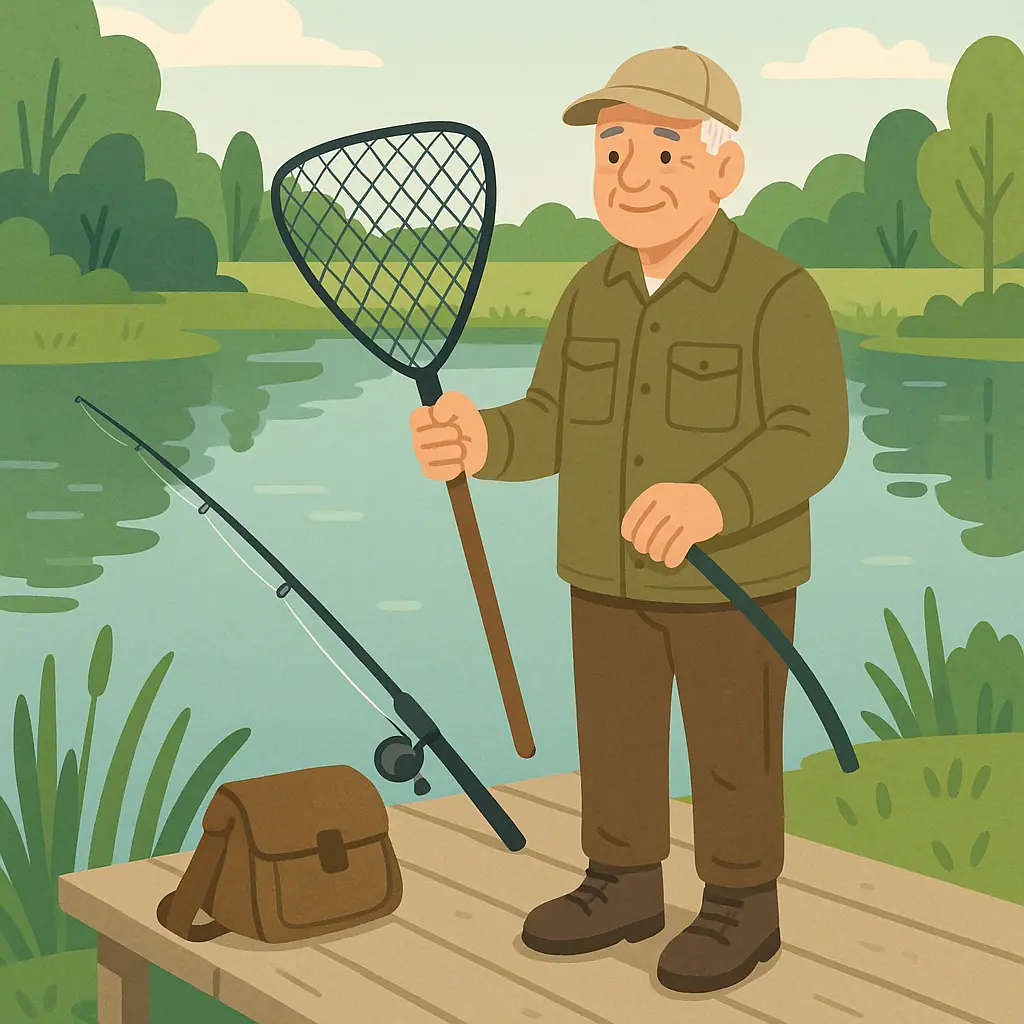
A good landing net is quiet insurance. You may not need it for every bluegill or small bass, but when a fish makes one last run at your feet, the right net keeps the moment calm instead of turning it into a scramble.
This fishing net size guide is written for everyday freshwater anglers who want a simple answer: big enough to land the fish, light enough to handle, and gentle enough for fish you plan to release. You do not need a tournament setup. You need a net that matches where you fish and what you usually catch.
Why Fishing Net Size Matters
Net size affects three things at once: reach, control, and fish care. A tiny net may miss a decent bass at the last second. A huge net can feel clumsy when you are standing on uneven ground or helping a grandchild land a fish from a dock.
The hoop, handle, and mesh all matter. The hoop needs enough opening for the fish. The handle needs enough reach for the place you fish. The mesh should hold the fish securely without scraping it up.
Florida Fish and Wildlife Conservation Commission recommends a knotless, rubber-coated landing net because it supports a fish's body weight during handling. Their fish handling guidance is saltwater-focused, but the basic handling idea is useful for freshwater anglers too: support the fish and keep handling gentle.
Start With Where You Fish Most
The best fishing net size guide starts with location, not a catalog page. A bank angler, dock angler, and small boat angler all need slightly different reach and control.
Bank fishing needs reach and stability
From the bank, you may stand above the water, behind weeds, or on a sloped shoreline. A handle around 36 to 48 inches is often easier than a short hand net because it lets you reach the fish without stepping into slick mud.
If you mostly fish from shore, ReelHow's guide to bank fishing for beginners pairs well with this choice. It helps you think through footing, casting angles, and easy shoreline setup before the fish is at your feet.
Dock fishing favors a longer handle
On a dock, the water may sit several feet below you. A short net can force you to kneel, lean, or ask someone else to grab the fish. A telescoping handle is handy here because you can extend it only when needed.
Small boats need compact control
In a small boat, a long handle can catch on seats, coolers, and tackle bags. A shorter handle with a medium hoop is usually easier to control. The goal is a smooth scoop beside the boat, not a wrestling match across the deck.
Choose the Right Hoop Size
The hoop is the opening of the net. For most beginner freshwater fishing, a hoop around 16 to 20 inches across is a friendly starting point. It is large enough for panfish, stocked trout, and many bass, yet not so large that it feels awkward.
If you often fish for larger bass, catfish, carp, or pike, move up toward a larger hoop. A 22 to 26 inch hoop gives more room for fish that roll, twist, or come in sideways. Bigger than that can be useful for serious catfish or musky fishing, but it is usually more net than a beginner needs.
- Panfish and trout: a smaller hoop is light, simple, and easy to store.
- Bass and mixed pond fish: a medium hoop gives a forgiving target when the fish surges near shore.
- Catfish and larger fish: a larger hoop and deeper bag help control weight and movement.
- Family fishing: choose a hoop that a helper can manage safely without feeling rushed.
Hook choice also affects how smoothly a fish comes to the net. If you are still sorting out sizes and styles, the ReelHow hook sizes and types guide explains the basics in plain language.
Match Handle Length to Your Body and Spot
A handle that looks perfect in the garage may feel different beside the water. Think about your reach, balance, and where your feet will be when the fish is close.
For bank fishing, a medium or telescoping handle is usually more forgiving. For kayak or small boat fishing, compact handles are easier to store. For dock fishing, extra reach can prevent awkward leaning.
Pick Mesh That Is Gentle and Practical
Mesh material matters because it touches the fish, hooks, and your hands. Rubber or rubber-coated mesh is often easier on fish and less likely to tangle with hooks. Nylon mesh can be lighter and cheaper, but treble hooks and fins may snag more easily.
For catch-and-release fishing, gentle mesh is worth considering. The U.S. Fish and Wildlife Service also reminds anglers that fishing rules can vary by refuge and state. Its page on general fishing laws is a useful reminder to check the rules for the exact water you plan to fish.
After that regulation check, come back to the practical choice: a net that helps you land, unhook, photograph if you want, and release the fish quickly is doing its job.
Pros and Cons of Bigger Landing Nets
More room for mistakes
A bigger hoop gives beginners a larger target when the fish turns, jumps, or comes in at an odd angle.
Better for larger fish
Bass, catfish, carp, and pike are easier to control when the hoop and bag are not undersized.
Useful from awkward spots
Extra reach and a deeper bag can help from docks, steep banks, and shorelines with weeds or rocks.
Harder to carry
Large nets can snag brush, fill the car trunk, and feel awkward on relaxed bank-fishing walks.
More tiring to control
A long handle and wide hoop can feel heavy when you are reaching over water with one hand.
A Simple Fishing Net Size Checklist
Before buying or packing a net, run through this quick checklist. It keeps the decision practical instead of getting lost in gear talk.
- Likely fish: choose a hoop that fits the biggest fish you reasonably expect, not the biggest fish in the lake.
- Fishing spot: use more handle for docks and steep banks, less handle for small boats.
- Mesh type: favor rubber or rubber-coated mesh if you release fish often.
- Storage: make sure the net fits your vehicle, tackle area, boat, or walking route.
- Grip comfort: pick a handle you can hold securely with wet hands.
- Helper friendly: if a spouse, friend, or grandchild may net the fish, keep the setup light and simple.
If you are building your first setup around a net, rod, and tackle box, ReelHow's budget fishing setup guide can help you spend on the gear that actually makes trips easier.
When to Get a Specialty Net
Most beginners do not need a specialty net on day one. A simple medium landing net works for a lot of pond, lake, and river fishing. Specialty nets start to make sense when your fishing style becomes more specific.
For example, trout anglers may prefer a shorter rubber net that hangs from a vest or pack. Catfish anglers may want a deeper, stronger net. Kayak anglers often like compact floating nets. Pike anglers may need more hoop size and a deeper bag because the fish are long and lively.
Let your actual fishing tell you when to upgrade. If your current net repeatedly feels too short, too shallow, too snaggy, or too heavy, that is a better signal than buying the largest net on the rack just in case.
Frequently Asked Questions
What size fishing net is best for beginners?
For mixed freshwater fishing, a medium hoop around 16 to 20 inches with a comfortable handle is a good starting point. Go larger if you regularly target catfish, carp, pike, or bigger bass.
Do I need a long handle for bank fishing?
Often, yes. A medium or telescoping handle helps from muddy banks, rocks, weeds, and spots where the water sits below your feet. It can also reduce bending.
Is rubber mesh better than nylon mesh?
Rubber or rubber-coated mesh is usually gentler on fish and easier with hooks. Nylon can be lighter and cheaper, but it may snag fins and hooks more often.
Can I land fish without a net?
Yes, especially small panfish. But a net helps with larger fish, high docks, slippery banks, and catch-and-release situations where quick, calm handling matters.
Final Thoughts
The right landing net is not about looking fancy. It is about staying balanced, protecting the fish, and making the last few seconds of the catch feel relaxed.
Start with a medium hoop, a handle that fits your usual fishing spot, and mesh that treats fish kindly. Then adjust from real experience. If your net helps you scoop smoothly, unhook quickly, and smile instead of panic, you picked the right one.