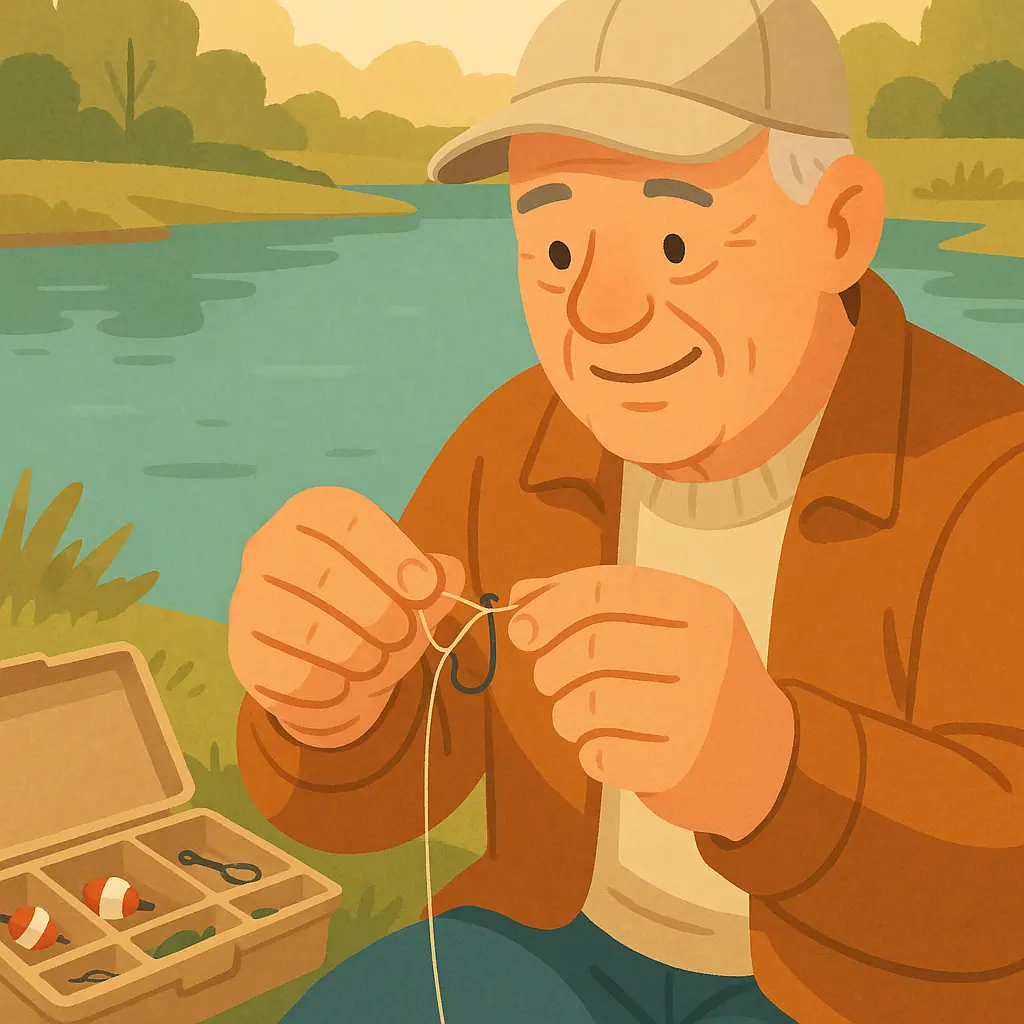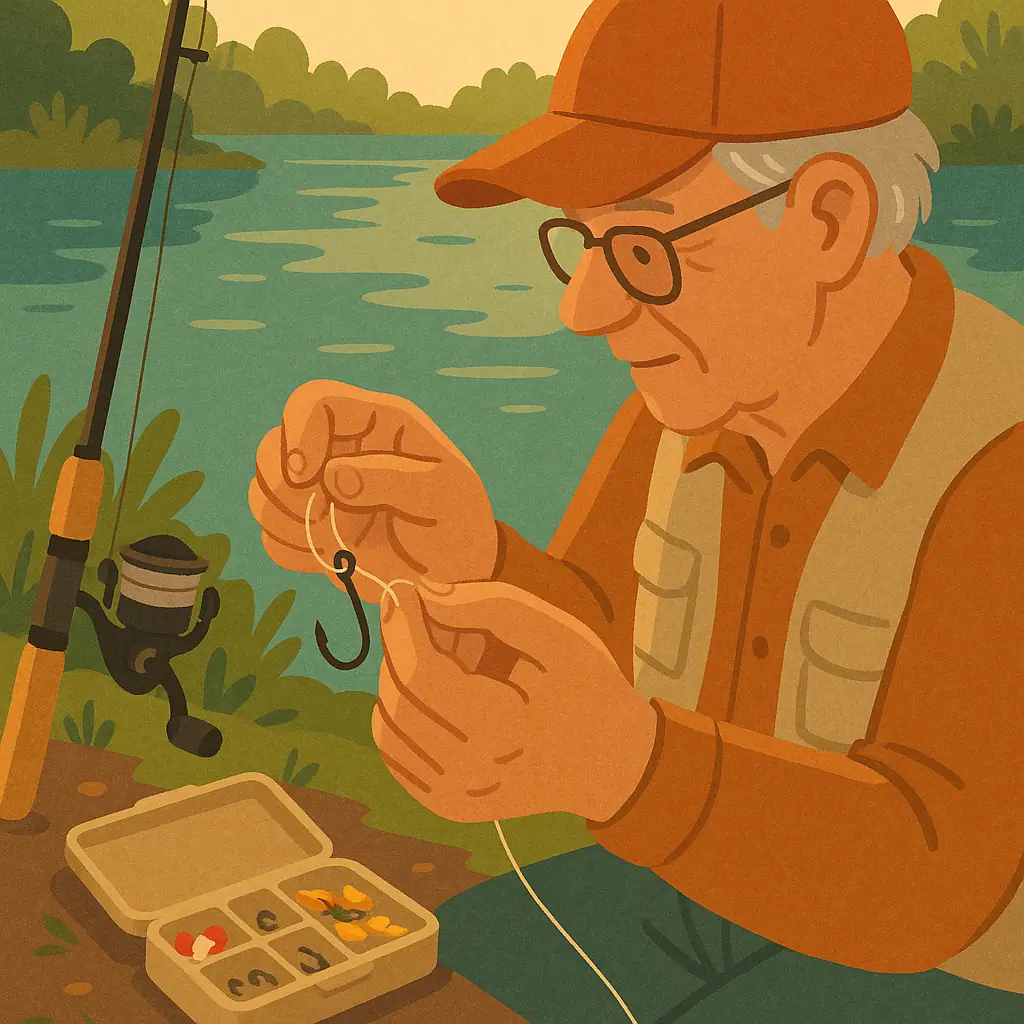
Untangle fishing line slowly and you will save more tackle, more time, and a lot of patience. Most tangles look worse than they are at first. A few loose loops on the spool, a knot near the hook, or a small mess around the rod tip can usually be fixed if you stop reeling and avoid pulling hard.
The trick is to treat a tangle like a little puzzle, not a disaster. Set the rod down safely, find where the line enters and exits the knot, and loosen the tightest spots before you try to pull anything through. That calm routine works on the bank, from a dock, or in a small boat.
If tangles usually happen right after a cast, it may help to revisit your casting motion. Our guide to casting basics explains a smoother beginner cast that keeps slack and sudden loops under better control.
Why Line Tangles Happen
Fishing line tangles when loose coils, twist, wind, weeds, or a rushed cast give the line a chance to cross over itself. Spinning reels are especially friendly for beginners, but they can throw loops if the spool is overfilled, the bail is closed by cranking the handle, or slack line is reeled onto the spool.
Hook-side knots can happen for different reasons. A worm spins on the retrieve, a bobber rig drifts in the breeze, or a hook swings around the main line while you carry the rod. None of this means you are bad at fishing. It means line is thin, flexible, and very good at finding trouble when it is loose.
Start With Freshwater Techniques That Keep You Calm
Before you start picking at the knot, get comfortable. Put the rod across your lap, on a bench, or on clean grass where the hook cannot swing into your hand. If you are with a child or grandchild, take the rod from them for a minute and explain what you are doing out loud. That turns a frustrating pause into a lesson.
Look for the simplest version of the problem. Is the line wrapped around the rod tip? Is the loop sitting on top of the reel spool? Is the hook tangled in the leader? Each situation has a different fix, but the same gentle rule applies: loosen first, pull second.
Check the rod tip and guides
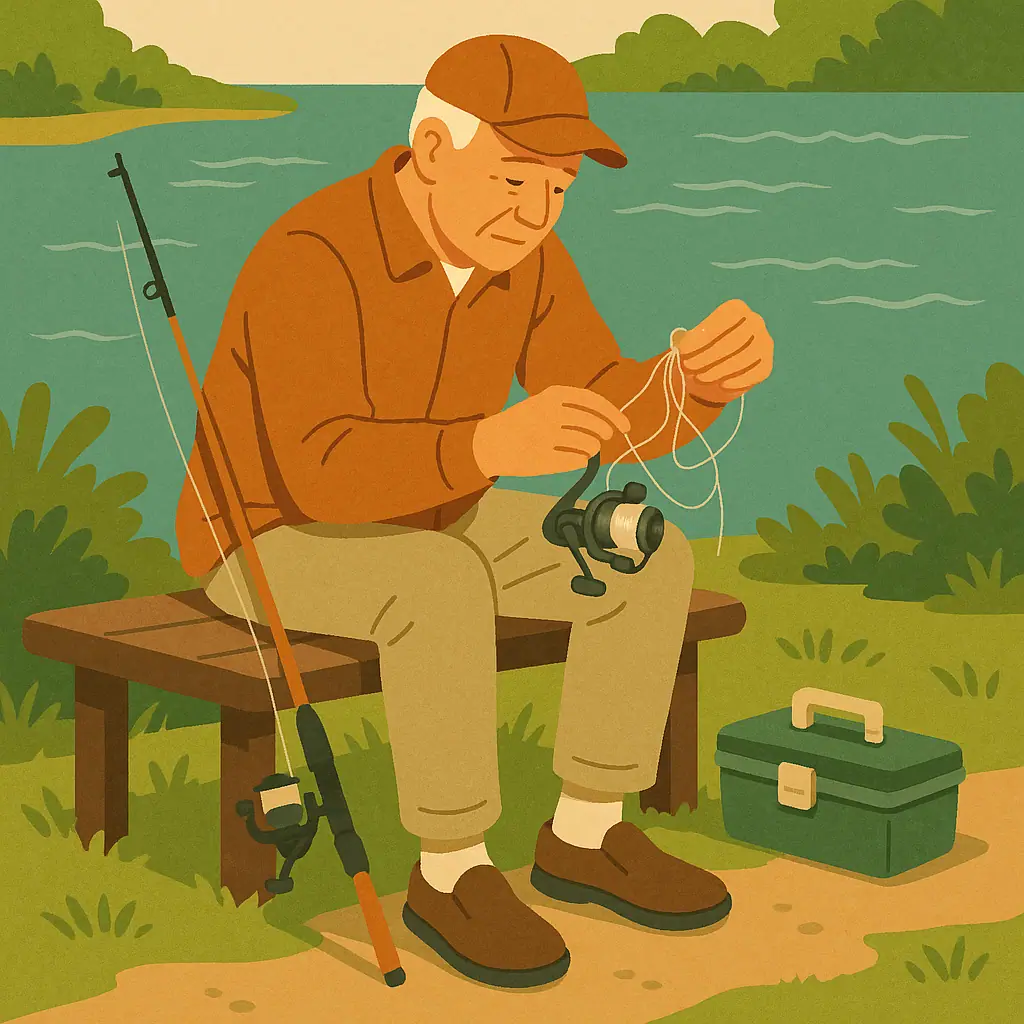
A surprising number of tangles begin at the rod tip. Line can wrap around the top guide while you are walking, baiting the hook, or landing a fish. Point the rod safely away from people, open the bail, and unwrap the tip by hand before you touch the reel.
Check the reel spool before the hook
If loops are standing up on the spool, do not cast again. Pull line off the reel by hand until the loose loop disappears, then pinch the line lightly between your fingers and reel it back under gentle tension.
How to Untangle Fishing Line Step by Step
Use this routine whenever the mess looks fixable. It is slower than yanking, but it saves more line.
- Stop and open the bail: On a spinning reel, open the bail so you are not adding pressure while you inspect the tangle.
- Find both ends: Locate the line going toward the rod tip and the line going toward the hook, lure, or bobber.
- Loosen the knot: Push small loops back toward the knot instead of pulling them tighter.
- Remove the biggest loop first: Work one loop at a time. If three loops are crossed, free the outermost one before touching the middle.
- Use a hook point carefully: If your fingers are too large, use the dull back of a hook eye, a small swivel, or fishing pliers to lift a loop. Do not jab at the line.
- Reel back with light tension: Once the line is free, pinch it gently above the reel and wind it back evenly.
- Inspect the damaged section: If the line looks kinked, cloudy, flattened, or rough, cut that part out and retie.
When you do need to retie, choose a knot you trust and can repeat. The improved clinch knot is a useful beginner knot for many small hooks and lures, especially when you want to get back to fishing without overthinking it.
When Cutting the Line Is the Better Choice
Some tangles are not worth saving. If the line is cinched into a hard knot, wrapped deep under other coils on the spool, or badly nicked from rocks and dock posts, cutting and retying is the calmer decision. You are not quitting. You are protecting the next fish from a weak spot in the line.
When you cut line, put the scraps in your pocket, tackle bag, or a recycling tube if one is available. The U.S. Fish and Wildlife Service notes that discarded fishing line and tackle can injure wildlife through entanglement, and its Oceans of Trash story highlights safe line disposal as a simple angler habit. A tiny coil of line on the bank can become a real problem after you leave.
Common Freshwater Techniques Mistakes to Avoid
Most line tangles get worse because the angler feels rushed. A fish may be biting nearby, the group may be waiting, or the wind may be pushing the bobber across the pond. Even then, the fastest fix is usually the patient one.
- Pulling hard right away: Tight pressure turns loose loops into tight knots.
- Casting over a reel loop: A loop on the spool can become a larger bird nest on the next cast.
- Reeling slack line: Loose wraps create future tangles, especially with light lures and bobber rigs.
- Ignoring damaged line: A kinked section may break later even if you untangle it now.
- Leaving scraps behind: Cut line belongs in a pocket, trash can, or recycling container, not on the shoreline.
If the tangle started after baiting a hook, the bait may be spinning or hanging unevenly. Our guide on live bait fishing can help you keep worms, crickets, and minnows more manageable on simple beginner rigs.
Pros and Cons of Saving the Tangle
You waste less line
Small loops and loose knots can often be fixed without cutting off several feet of usable line.
You learn what caused it
Taking a minute to inspect the knot shows whether the problem came from slack, twist, wind, or rough handling.
You build confidence
Once you can fix a simple tangle, a slow fishing day feels less frustrating.
Some knots weaken the line
A badly kinked or scraped section should be cut out even if you manage to loosen it.
It can steal fishing time
When the tangle is deep in the spool, a clean cut and retie may be faster and safer.
A Simple Checklist Before You Cast Again
After you untangle the line, take ten seconds to reset. This short check prevents many repeat tangles.
- Rod tip clear: The line runs cleanly through every guide.
- Spool smooth: No loose loops are sticking up on the reel.
- Bail closed by hand: Close the bail manually after the cast, then reel.
- Line under tension: Pinch lightly above the reel for the first few handle turns if slack is present.
- Kinks removed: Any rough or damaged line has been cut out and retied.
- Scraps packed out: Cut line is in your pocket, bag, trash can, or recycling tube.
When to Get Extra Help
Ask a bait shop, fishing friend, or local instructor for help if the same reel tangles every trip. The spool may be too full, the line may be too stiff for the reel, or the bail roller may need attention. A two-minute look from someone experienced can save you a whole afternoon of frustration.
You should also get help if line is tangled around a bird, turtle, or other animal. Do not guess or pull on wildlife. Contact local park staff, a wildlife agency, or a licensed rehabilitator when an animal is involved.
Frequently Asked Questions
What should I check first when fishing line tangles?
Check the rod tip and reel spool before the hook. Many tangles are simple wraps or loose loops that are easy to fix early.
Should I pull hard to free a knot?
No. Pulling hard usually tightens the knot. Push loops loose first, then work one loop at a time.
When should I cut the line instead?
Cut it when the knot is cinched tight, the line is kinked or scraped, or the tangle is buried deep in the reel spool.
How do I prevent tangles on the next cast?
Close the bail by hand, avoid reeling slack line, check for spool loops, and cast smoothly instead of snapping the rod forward.
Final Thoughts
The best way to untangle fishing line is to pause before the mess gets bigger. Stop reeling, loosen the knot, save what you can, and cut what is already damaged.
On your next trip, make this your habit: check the rod tip, check the spool, then cast. That little reset keeps the day calmer and helps you spend more time fishing than picking at knots.