Channel catfish basics are a good place to start when you want a freshwater fish that feels realistic, familiar, and exciting without requiring fancy technique. Channel catfish live in many ponds, reservoirs, rivers, and community fishing waters, and they often respond to simple bottom-fishing methods beginners can learn in one relaxed outing.
The nice thing about channel catfish is that you do not have to cast like a pro. You need a safe spot, a simple rig, bait that gives off scent, and enough patience to let the fish find it. Once you understand those few pieces, catfish fishing starts to feel less mysterious.
Why Channel Catfish Basics Matter
Many new anglers try to catch whatever bites first. That is fine, but choosing one beginner-friendly target can make the day easier. Channel catfish give you a clear plan: fish near bottom, use bait with smell, watch the rod tip, and be ready for a steady pull instead of a tiny nibble.
The U.S. Fish & Wildlife Service notes in its channel catfish species sheet that adult channel catfish live around quiet, slow-moving waters with sand, gravel, or rubble bottoms and are managed through state recreational fishing rules. That is a helpful reminder for beginners: learn the fish, then check your local license, limit, and bait rules before keeping any catch.
Start With the Fish Species Guide Mindset
A good fish species guide does not just name the fish. It tells you what the fish wants. For channel catfish, think about smell, bottom structure, slower water, and low-light feeding windows. You are not trying to make the bait look perfect. You are trying to put an easy meal where a catfish is comfortable moving.
If you are still learning how to compare common catches, ReelHow's fish identification guide can help you slow down and notice body shape, fins, whiskers, and other simple clues.
Look for calm feeding lanes
Channel catfish often travel edges rather than racing around open water. A creek mouth, outside bend, deeper pond corner, riprap bank, shaded dock edge, or flat near a drop-off can all be worth testing.
Keep your first setup boring on purpose
Boring is good when you are learning. A sliding sinker or simple bottom rig, a sturdy hook, and a bait that stays on the hook will teach you more than constantly changing lures.
What to Check First for Channel Catfish Basics
Start with access and footing. Catfish are often caught from the bank, which is great for beginners, but muddy shorelines, steep rocks, and night fishing can add risk. Pick a place where you can cast, sit or stand comfortably, and land a fish without climbing down a dangerous edge.
Next, look for water that gives catfish a reason to pass through: a creek inflow after rain, a gentle current seam, deeper water close to shore, a dam tailwater where legal, or a stocked pond with a clear fishing pier. Avoid guessing blindly across a whole lake. Choose one area with a reason and fish it patiently.
For wider catfish technique, ReelHow's earlier guide to catfish fishing for beginners covers general baits, handling, and simple bottom-fishing habits. This article narrows that advice to channel catfish as a first target.
How to Fish for Channel Catfish Step by Step
- Check local rules first: confirm your license, rod limits, bait rules, size limits, and harvest limits for the water you plan to fish.
- Choose a calm, reachable spot: try a pond dam, fishing pier, creek mouth, deeper bank, riprap edge, or slow river bend with safe footing.
- Use a simple bottom rig: a sinker, swivel, short leader, and sturdy hook work well. Keep the weight just heavy enough to hold bottom.
- Pick bait that stays put: nightcrawlers, cut bait where legal, prepared stink bait, shrimp, liver, or other local favorites can work. Ask nearby bait shops what holds on the hook in your water.
- Cast and let it settle: tighten the line gently after the sinker lands, then place the rod where you can see the tip without holding it stiffly.
- Wait through small taps: little pecks may be baitfish. A channel catfish bite often turns into a steady pull, bend, or slow moving line.
- Set with control: reel down and lift firmly instead of swinging wildly. If using circle hooks, avoid a hard hookset and let the line come tight.
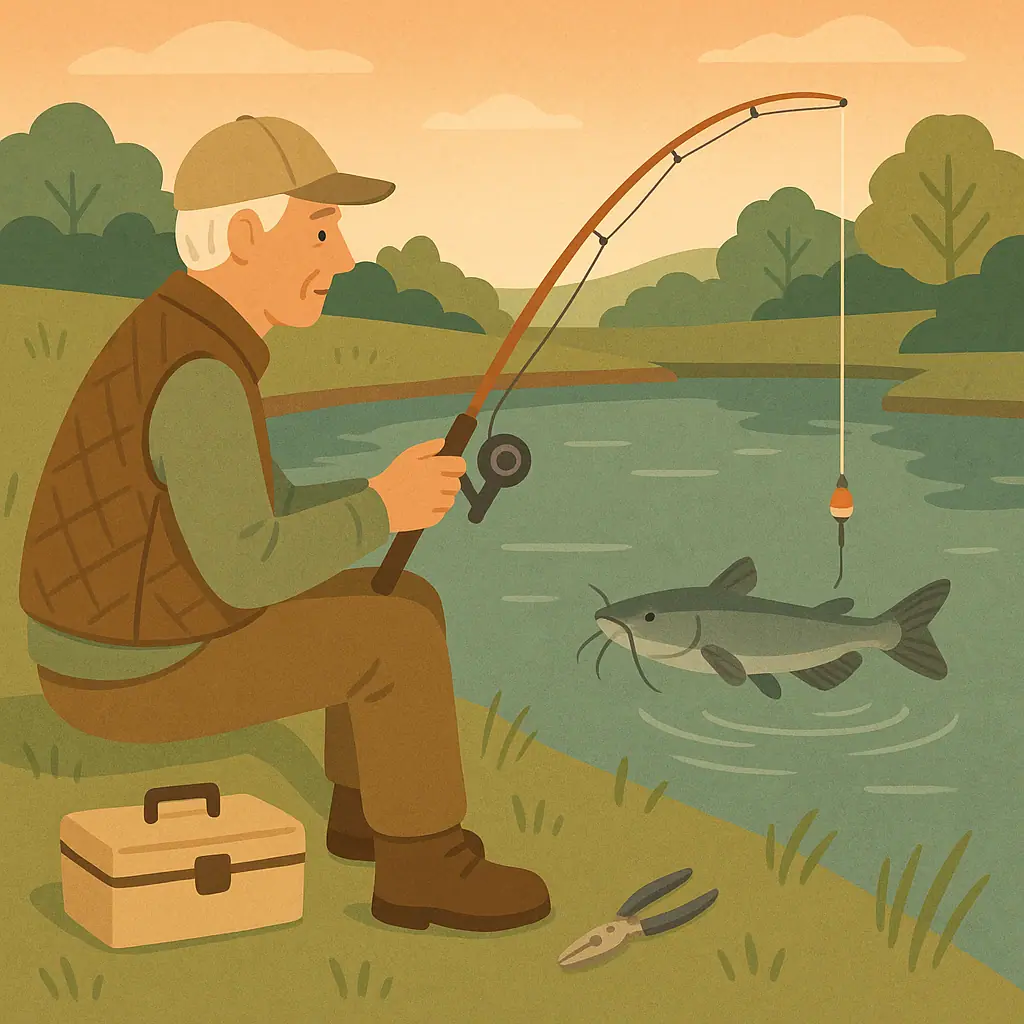
- Handle the fish carefully: use pliers, avoid the sharp pectoral and dorsal spines, and release or keep the fish according to local rules.
Common Channel Catfish Mistakes to Avoid
The first mistake is moving too soon. Catfish often need time to locate scent. If you picked a reasonable spot, give it a real chance before you reel in every few minutes.
The second mistake is using bait that flies off during the cast. A smaller piece of bait secured well is better than a giant gob that disappears before a fish ever finds it.
The third mistake is ignoring regulations because catfish seem common. Rules can vary by state and water body, especially around bait, number of rods, harvest limits, and special areas. When in doubt, release the fish and verify before the next trip.
A Simple Checklist for Your First Channel Catfish Trip
- Legal check: license, local regulations, bait rules, and harvest limits confirmed.
- Spot check: safe bank, deeper water nearby, slow current, or a stocked pond area.
- Rig check: sinker holds bottom, hook matches bait size, and pliers are within reach.
- Bait check: bait has scent, stays on the hook, and is legal where you fish.
- Patience check: give each good cast enough time before changing bait or moving.
Pros and Cons of Targeting Channel Catfish
Beginner-friendly methods
Simple bottom rigs and common baits make channel catfish approachable from shore, docks, and piers.
Good practice for patience
Catfish teach beginners to wait, watch the rod tip, and respond to a steady bite instead of overreacting to every tap.
Strong but manageable fight
A channel catfish can pull hard enough to feel exciting while still fitting normal beginner freshwater gear.
Messy bait and cleanup
Scented baits can be sticky or smelly, so towels, pliers, and a trash bag make the day easier.
Spines require careful handling
Channel catfish have sharp fin spines, so beginners should slow down, use tools, and avoid grabbing blindly.
When to Get Extra Help
Ask for help if you are not sure whether a fish is a channel catfish, blue catfish, bullhead, or another whiskered species. Identification matters when local rules differ by species or size. A clear photo and your state wildlife agency's fish ID resources can help.
Get local advice when the water is unfamiliar. A bait shop, park office, or state fishing report can often tell you whether channel catfish are stocked, what baits are legal, and whether nighttime access is allowed. Do not guess on access or harvest rules.
Frequently Asked Questions
What should I check first when learning channel catfish basics?
Check your local rules and choose a safe bank spot with deeper water nearby. Then use a simple bottom rig and legal bait that stays on the hook.
What bait should a beginner try for channel catfish?
Nightcrawlers are a simple first choice. Cut bait, prepared stink bait, shrimp, or liver may also work where legal, but local rules and local habits matter.
How long should I wait before moving spots?
If the spot has a good reason, give it at least 20 to 30 minutes with fresh bait. If nothing happens, change distance, angle, or bait before abandoning the whole area.
What should I do if I am not sure about regulations?
Do not keep the fish until you verify the rule. Check your state fish and wildlife agency, posted signs, or the park office for current limits and access rules.
Final Thoughts
Channel catfish basics come down to a calm plan: fish legal bait near bottom, choose safe water with a reason, wait long enough for scent to work, and handle each fish carefully. You do not need a complicated lure box to learn this target.
For your next trip, pick one reachable spot and fish it slowly for an hour. Take notes on bait, time, water level, and where the bite happened. That simple record will help your next channel catfish outing feel less like guessing and more like learning.