Sunfish vs bluegill can confuse almost every new angler at first. Someone at the dock may call a fish a sunfish, another person may call it a bluegill, and both might be partly right. The simple answer is that bluegill are one kind of sunfish, but not every sunfish you catch is a bluegill.
Once you know what to look for, the mystery gets much easier. You do not need a biology degree or a fancy measuring board. You just need a calm look at the fish's shape, mouth, ear flap, fins, and colors before you let it go or put it in the livewell.
Why Sunfish vs Bluegill Matters
Good fish identification helps you follow local rules, keep better notes, and learn what your pond or lake is really producing. It also makes fishing more fun. The more you can recognize, the more each little catch teaches you about the water.
Bluegill, pumpkinseed, redear sunfish, green sunfish, and hybrids can look similar, especially when they are small. The North Carolina Wildlife Resources Commission notes that bluegill have an entirely black earflap and that identification can be difficult where hybridization occurs on its bluegill species page. That is a good reminder to look at more than one clue.
Start With the Big Family Picture
Sunfish is the broad everyday name many anglers use for several small, round-bodied freshwater fish. Bluegill are one of the most familiar members of that group. So if someone says, "I caught a sunfish," that could mean bluegill, but it could also mean another related fish.
If you are still building your eye for fish names, ReelHow's guide to fish identification for new anglers is a helpful foundation. It explains why shape, fins, mouth position, and markings usually matter more than one bright color patch.
What to Check First on a Bluegill
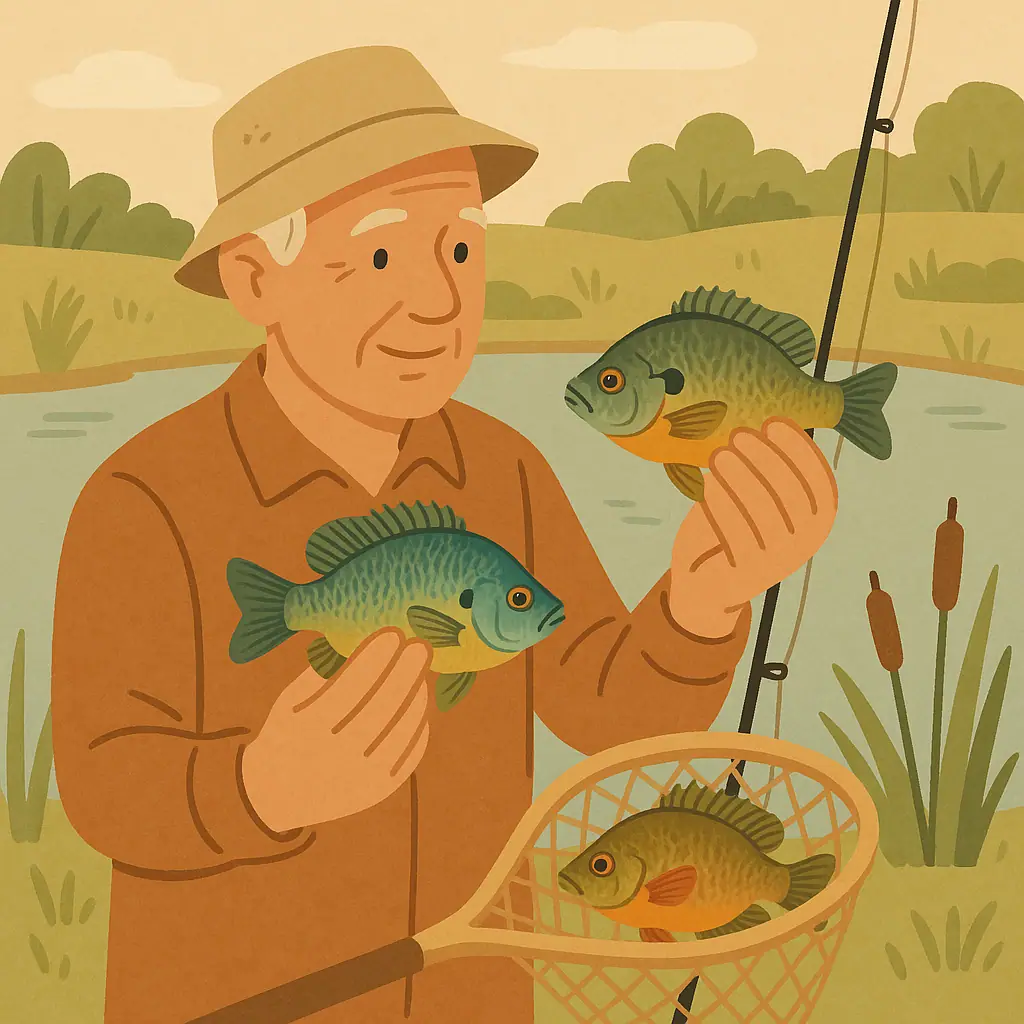
Bluegill usually have a deep, rounded body, a small mouth, a dark ear flap, and often a dark spot near the back of the dorsal fin. Their sides may show vertical bars, and mature males can show blue, purple, copper, or orange tones depending on season and water.
Do not rely on the blue color alone. Some bluegill are dull, some other sunfish are bright, and muddy water can change how colors appear in your hand. Start with body shape and mouth size, then look at the ear flap and dorsal fin spot.
How to Compare Sunfish vs Bluegill Step by Step
- Wet your hand first: this protects the fish's slime coat while you make a quick check.
- Look at the mouth: bluegill usually have a small mouth. Green sunfish often have a larger mouth for their size.
- Check the ear flap: a bluegill's flap is typically dark and plain, while some other sunfish may show orange, red, or lighter edging.
- Find the dorsal spot: many bluegill show a dark spot near the rear base of the dorsal fin.
- Compare the whole fish: use shape, fin marks, bars, and mouth size together before deciding.
After you identify a few bluegill, your eye starts to settle down. ReelHow's bluegill fishing guide can help you connect those identification clues with the places bluegill like to feed, such as docks, weed edges, and quiet pond banks.
Common Sunfish Identification Mistakes
The biggest beginner mistake is using one color as the whole answer. A bright belly does not automatically mean one species, and a dull fish is not automatically something else. Light, breeding season, stress, age, and water clarity can all change what you see.
Another mistake is calling every round panfish a bluegill. That might be harmless in casual talk, but it can become a problem if local harvest rules separate species or if you are trying to understand what fish live in your favorite pond.
A Simple Checklist
- Small mouth: points toward bluegill, though it is not the only clue.
- Plain dark ear flap: a useful bluegill clue when paired with body shape.
- Dorsal fin spot: look for a dark mark near the back of the dorsal fin.
- Deep rounded body: common in bluegill and several other sunfish.
- Multiple clues match: much better than trusting color alone.
Pros and Cons of Learning Sunfish ID
Better fishing notes
You can track whether you are catching bluegill, other sunfish, or a mix of panfish over time.
More confident releases
You spend less time wondering what is in your hand and more time handling the fish gently.
Smarter local questions
When you ask a bait shop or wildlife office for help, a clear photo and a few clues make the answer easier.
Hybrids can fool you
Sunfish species can hybridize, so some fish show mixed features that are hard to name perfectly.
Colors vary a lot
Season, water, and fish size can make two bluegill look surprisingly different.
When to Get Extra Help
Get extra help when a fish has mixed features, when you plan to keep fish for the table, or when you are fishing water with special rules. A state fish and wildlife agency, local park office, or experienced bait shop can help you avoid bad guesses.
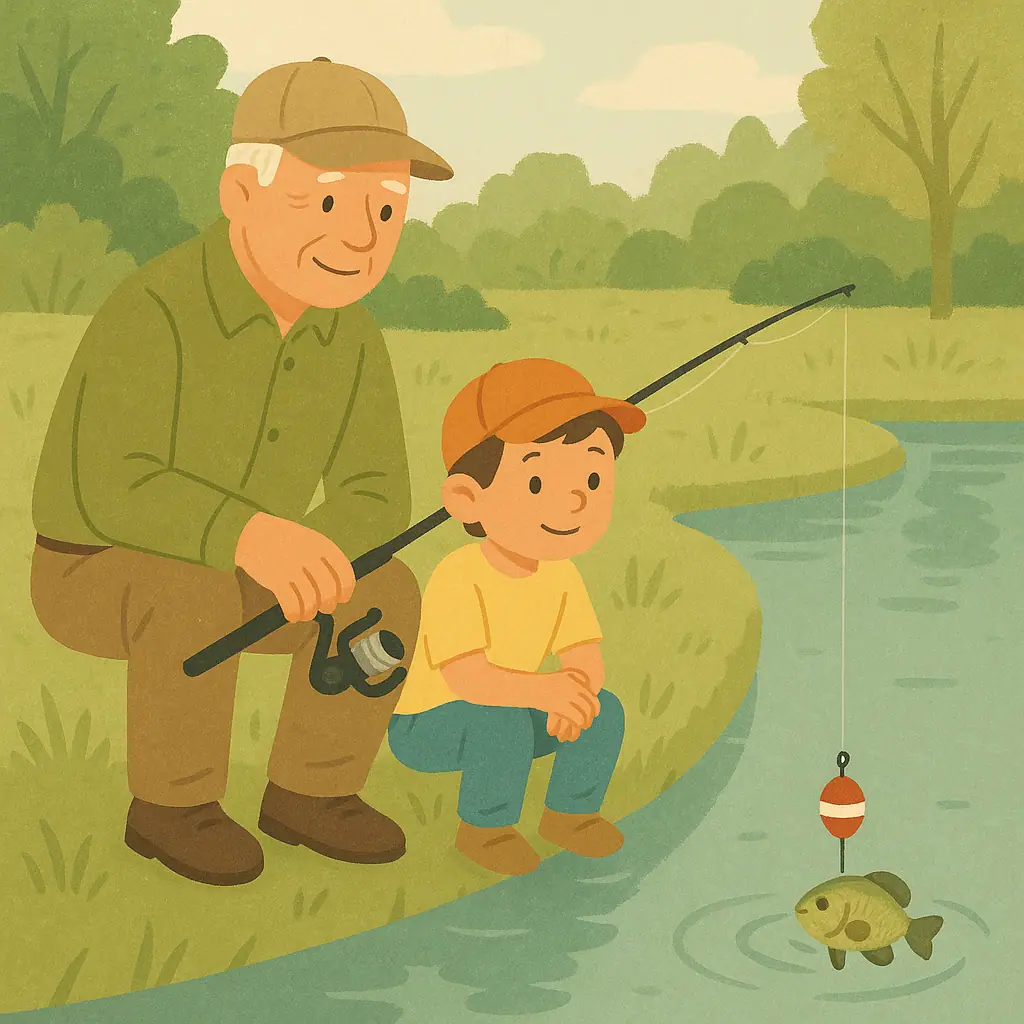
If you are teaching a child or grandchild, make identification part of the fun instead of a test. Ask, "What clues do we see?" rather than "What is it?" That small shift keeps the moment relaxed and turns each catch into a little field lesson.
Frequently Asked Questions
Are bluegill and sunfish the same thing?
Bluegill are a type of sunfish. Sunfish is the larger group, while bluegill is one specific common species within that group.
What is the first clue to check?
Start with mouth size, body shape, and the ear flap. Then look for the dark dorsal fin spot that often helps point toward bluegill.
Can sunfish hybrids make identification harder?
Yes. Hybrids can show blended features, so a photo and a local expert can be useful when the fish does not match cleanly.
Should I identify every small fish before release?
You do not have to be perfect, but a quick careful look builds skill. Keep the fish wet, work quickly, and release it gently if you are not keeping it legally.
Final Thoughts
Sunfish vs bluegill gets much less confusing when you remember the family rule: all bluegill are sunfish, but not all sunfish are bluegill. From there, use several clues together instead of trusting color alone.
On your next pond trip, practice with each small catch. Check the mouth, ear flap, body shape, and fin marks, then take a quick photo if you are unsure. A few careful looks will make these common fish feel familiar in no time.