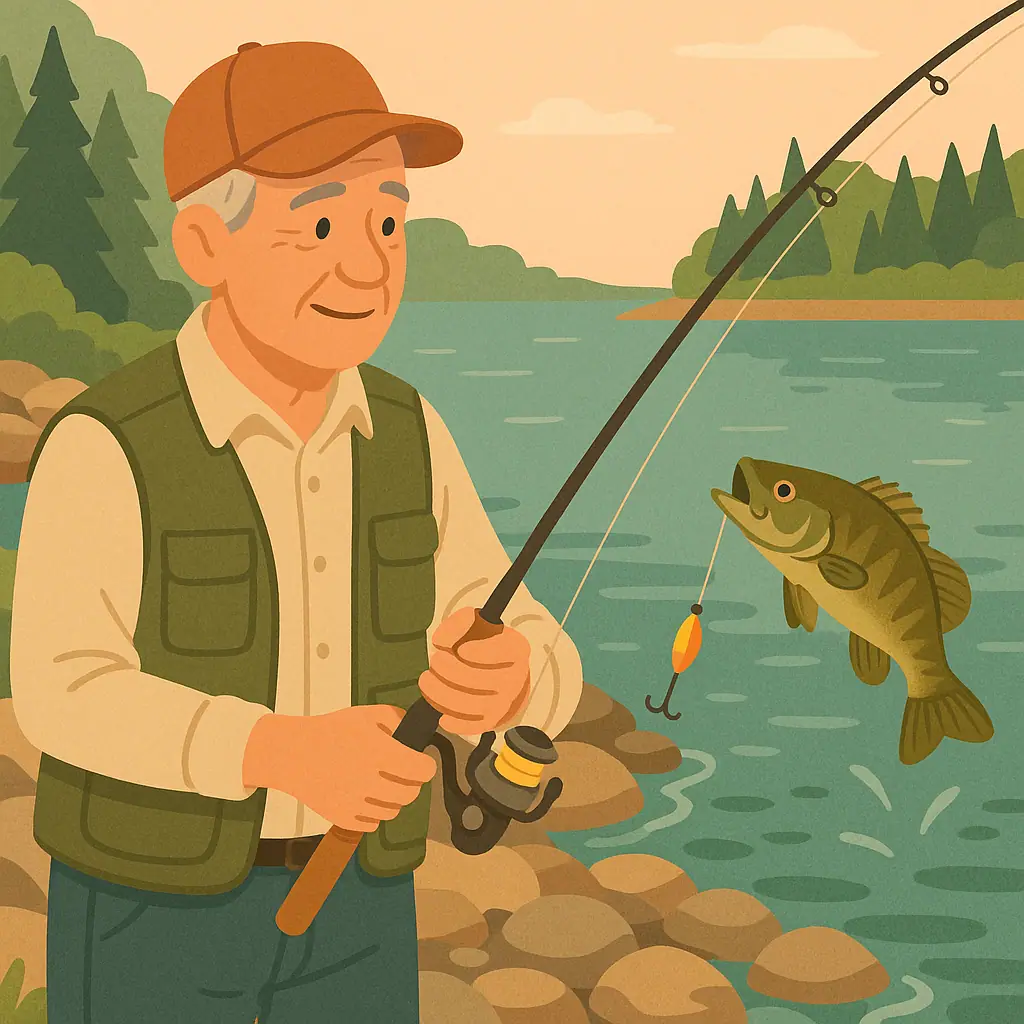
Smallmouth bass for beginners can feel like a step up from catching bluegill or general pond bass, but they are not out of reach. If you can cast near rocks, keep your lure moving naturally, and stay patient around current or clear lake edges, you already have the start of a good smallmouth plan.
The nice thing about smallmouth bass is that they often give you clues. They like cleaner water, rocky cover, current breaks, points, and places where food can drift past them. Your job is not to cover the whole lake or river. Your job is to pick a few likely spots and fish them calmly.
Why Smallmouth Bass for Beginners Matters
Smallmouth bass have a reputation for fighting hard, which makes even a modest fish exciting on light spinning gear. For a new angler, that can build confidence fast. You learn how to feel a strike, keep steady pressure, and land a fish without rushing.
The U.S. Fish and Wildlife Service describes adult smallmouth bass as living in shallow rocky lake areas and in clear gravel-bottom runs and flowing river pools on its smallmouth bass species page. That one sentence gives beginners a simple starting map: look for rocks, clearer water, and places where current or depth creates comfort for fish.
Start With the Fish Species Guide Mindset
A fish species guide is not just about naming the fish after you catch it. It helps you understand where that fish feels comfortable before you even make a cast. With smallmouth bass, that means paying attention to water clarity, rock, current, shade, and baitfish activity.
If you are still sorting out the broader bass family, ReelHow's bass fishing for beginners guide gives a wider foundation. Read that first if you want the simple difference between bass fishing as a whole and targeting smallmouth more specifically.
What to Check First Around Rivers and Lakes
In rivers, start where fast water slows down. That might be behind a boulder, beside a fallen tree, along an undercut bank, or at the tail end of a riffle where the water settles into a pool. Smallmouth can hold in easier water while food washes past.
In lakes, start with rocky points, gravel banks, riprap, shallow ledges, and the edges of drop-offs. If the water is very clear, back away from the edge and make longer casts. Smallmouth can be cautious when they can see you as clearly as you can see the water.
Another helpful habit is comparing species behavior. ReelHow's trout fishing basics article explains why clear, cool water and careful presentation matter for another popular freshwater fish. Smallmouth are different from trout, but the same calm approach around clear water can help.
How to Fish for Smallmouth Bass Step by Step
- Pick one simple water type: choose either a rocky river stretch or a lake point instead of trying every spot in one outing.
- Use light to medium spinning gear: a comfortable spinning rod, 6- to 10-pound line, and a few simple lures are enough for a first trip.
- Start with natural-looking lures: try a small tube jig, curly-tail grub, inline spinner, or soft plastic that looks like a minnow or crayfish.
- Cast past the target: land beyond the rock, seam, or point, then bring the lure through the likely holding area.
- Retrieve slowly at first: smallmouth often respond to a steady swim, gentle hop, or pause more than wild rod movement.
- Set the hook with steady pressure: lift firmly and reel, but do not snap so hard that you pull the lure away.
- Handle the fish quickly: wet your hand, support the fish, remove the hook carefully, and follow local rules if you plan to keep any fish.
Common Smallmouth Bass Mistakes to Avoid
The first mistake is fishing too fast. Beginners often cast, reel quickly, and move on before the lure spends enough time near the fish. Smallmouth may chase, but they still need a lure to pass close enough to notice.
The second mistake is ignoring current in rivers. Current breaks are smallmouth highways. If every cast lands in the strongest flow, your lure may rush past the fish before it looks natural. Cast at an angle and let the lure move with the water instead of fighting it.
The third mistake is using gear that feels too heavy. You do not need giant hooks, heavy rods, or oversized lures to enjoy smallmouth bass. Lighter gear helps you cast smaller baits, feel bottom contact, and notice those quick taps that might be a strike.
A Simple Checklist for Your First Smallmouth Trip
- Water choice: clear river stretch, rocky lake bank, point, riprap, or gravel area.
- Basic lures: tube jig, small spinner, grub, soft minnow, or crayfish-style bait.
- Presentation: slow, steady, and close to rocks or current breaks.
- Safety check: stable footing, sun protection, pliers, and local license or regulation details.
- Handling plan: wet hand, quick photo if desired, gentle release unless harvest is legal and planned.
Pros and Cons of Targeting Smallmouth Bass
Exciting fight
Smallmouth bass pull hard for their size, so even a short outing can feel memorable.
Simple clues
Rock, clear water, points, and current breaks give beginners visible places to start.
Light gear works well
You can target them with beginner-friendly spinning tackle instead of complicated setups.
Clear water can be tricky
Fish may see movement on shore, so quiet casts and a little distance help.
Rocky banks need care
Good smallmouth water can have uneven footing, so comfort and safety should guide your spot choice.
When to Get Extra Help
Get extra help when you are unsure about local seasons, size limits, harvest rules, or access rules. Fishing regulations are local, and they can change by state, water body, and time of year. Check your state fish and wildlife agency before keeping fish or fishing unfamiliar water.
A bait shop can also help you choose a lure color, line size, or nearby beginner spot. Bring a simple description like, "I am trying smallmouth from shore on a rocky river," and you will usually get better advice than asking for the best lure in general.
Frequently Asked Questions
What should I check first when fishing for smallmouth bass?
Start with habitat. Look for rocks, gravel, clear water, current breaks in rivers, or points and ledges in lakes before changing lures.
Can beginners catch smallmouth bass from shore?
Yes. Rocky banks, bridges with safe public access, riprap, docks, and lake points can all work from shore when the footing is safe.
What lure should I try first?
A small tube jig, inline spinner, grub, or soft minnow is a sensible first choice. Pick one, fish it slowly, and learn how it feels.
What should I do if I am not sure about keeping a fish?
Release it gently and check your state regulations before the next trip. When rules are uncertain, guessing is not worth it.
Final Thoughts
Smallmouth bass for beginners comes down to a few calm habits: choose rocky clear water, fish around current breaks or points, keep your lure natural, and avoid rushing. You do not need a boat full of tackle to start.
On your next trip, pick one river stretch or one lake point and fish it carefully for an hour. Watch what the water tells you, adjust slowly, and let each cast teach you something about where smallmouth bass like to live.