Learning how to handle small fish is one of the kindest skills a beginner angler can build. Bluegill, perch, small bass, stocked trout, and young panfish may look sturdy in your hand, but they are still wet, slippery living animals that do best when you stay calm and move with purpose.
The goal is simple: keep the fish wet, protect your hands from hooks and fins, remove the hook without panic, and let the fish swim away as soon as it is ready. You do not need fancy gear or expert confidence. You need a few gentle habits you can repeat every time.
Why How to Handle Small Fish Matters
Small fish often become a beginner's first real catch. That moment is exciting, especially when you are fishing with grandkids or learning from a local dock, but excitement can make people squeeze too hard, hold the fish too long, or tug at a hook that needs pliers.
The U.S. Fish & Wildlife Service gives beginner catch-and-release guidance on its official first-time fishing guide, including keeping fish wet, minimizing air time, and cutting the line if a fish has swallowed the hook. Those are practical habits for small fish too.
Start With the Fish in the Water
Before you lift the fish, take a breath and look at the situation. Is the hook in the lip, deeper in the mouth, or near a fin? Is the fish tiny enough to slip through your fingers? Are you standing on a steep bank, dock, rocks, or mud?
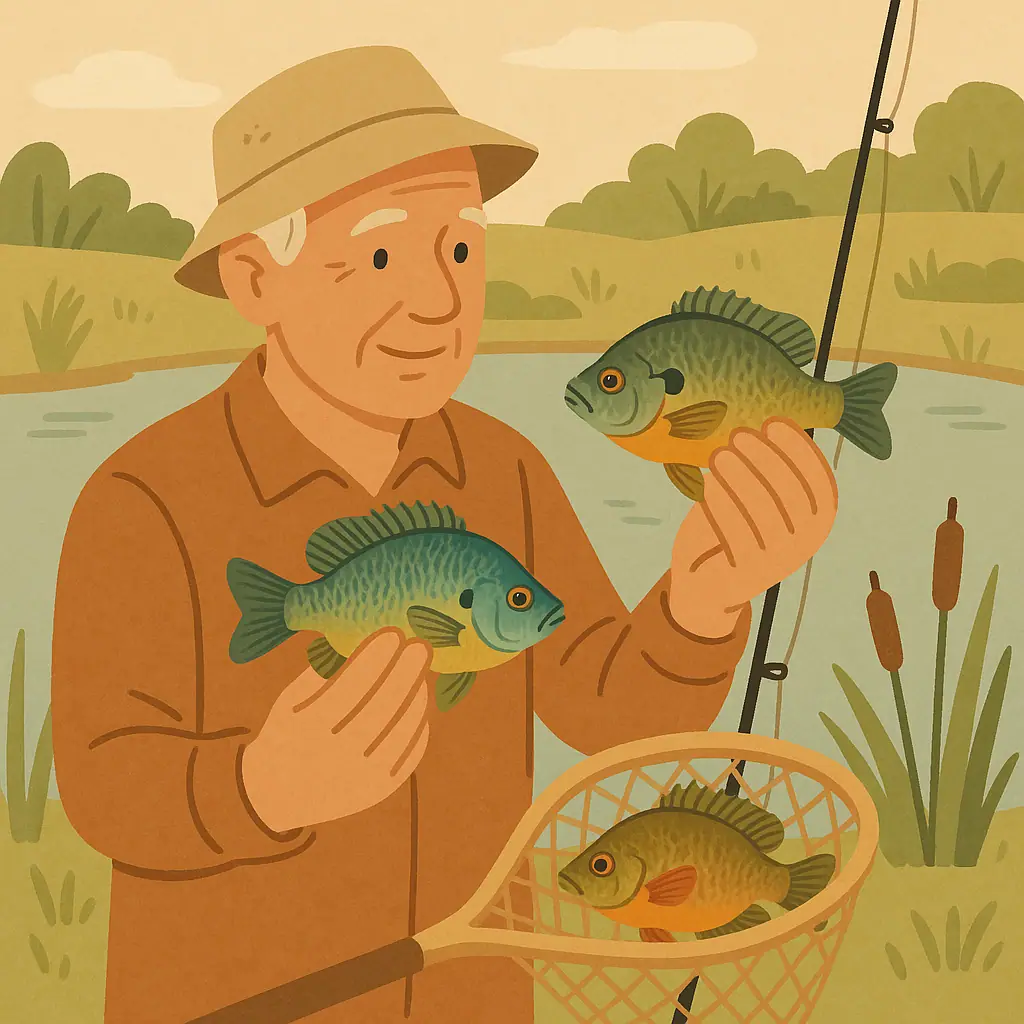
If the fish is small and lively, a wet rubber landing net makes the whole job easier. It keeps the fish controlled without dropping it on dry ground, and it gives you a safer place to work with the hook. If you do not have a net, keep the fish low over the water or a damp patch of grass, not high in the air.
Wet hands help protect the fish
Fish have a protective slime coat. Dry hands, towels, and dusty bank dirt can damage that coating. Wet your hands first, then support the fish gently instead of grabbing it like a tool handle.
Small fish still have sharp parts
Panfish and perch may have spiny dorsal fins. Catfish have sharp pectoral and dorsal spines. Bass have rough mouths. Move slowly, watch the hook, and use needle-nose pliers when your fingers would be too close.
How to Handle Small Fish Step by Step
Most beginner handling mistakes come from rushing. Use this calm sequence whenever you plan to release a small fish.
- Bring the fish in steadily: do not drag it across rocks, sand, or dry grass if you can avoid it.
- Wet your hands or net: a quick dip in the lake or pond is enough to start.
- Keep the fish low: hold it over the water, over a wet net, or just above a safe landing spot.
- Support the body: use one gentle hand around the fish and avoid squeezing the belly.
- Remove the hook carefully: back it out the way it went in, using pliers if needed.
- Skip long photo sessions: if you want a picture, get the camera ready first and keep the fish wet.
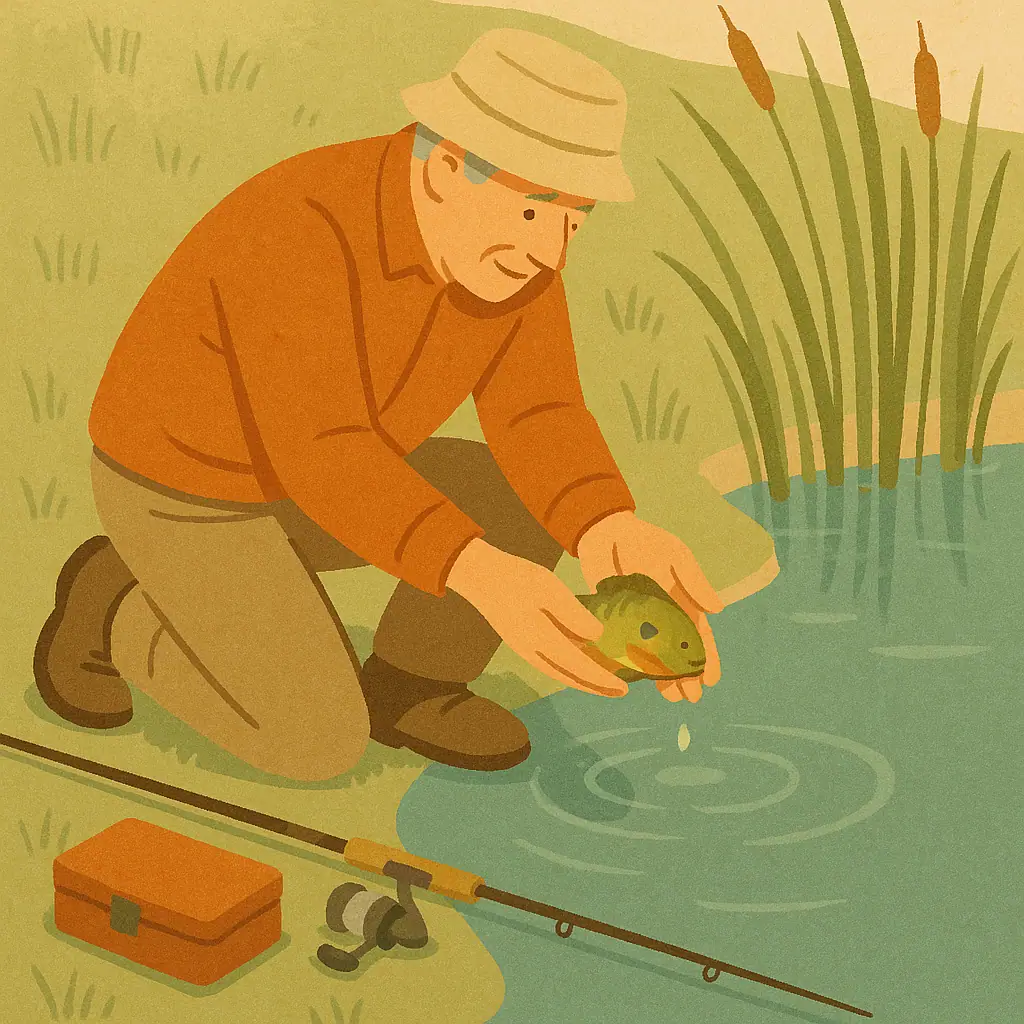
- Release with patience: hold the fish upright in the water until it kicks away on its own.
If the hook is swallowed deeply, do not tear it out. Cut the line as close to the mouth as you safely can, then release the fish if local rules allow. Pulling hard usually causes more harm than leaving a deep hook alone.
Handling Common Small Fish
Different fish call for slightly different hand placement. This is where a little species awareness helps. If you want more confidence with beginner-friendly small fish, ReelHow's guide to panfish fishing for beginners explains why bluegill, sunfish, perch, and crappie are such common first catches.
Bluegill, sunfish, and perch
For bluegill, sunfish, and perch, gently fold the dorsal fin down from front to back if you need to hold the fish. Keep your hand damp and avoid squeezing. These fish are small, but their spines can poke if you grab blindly.
Small bass
Small bass can often be held by the lower jaw for a short moment, but support larger fish with a second hand under the body. Do not bend the jaw sideways for a photo. For a small bass, quick hook removal and a steady release matter more than a dramatic pose.
Small catfish
Catfish deserve extra care because their side and top spines can hurt. Grip behind the pectoral spines only if you know what you are doing, or use a net and pliers until you are confident. Beginners should not rush catfish handling.
Pros and Cons of Catching Small Fish as a Beginner
Great confidence builders
Small fish let new anglers practice hook sets, landing, unhooking, and releasing without fighting a large fish first.
Common in easy access spots
Ponds, docks, shaded banks, and small lakes often hold panfish that are reachable without a boat.
Good teaching moments
Handling a small fish gently teaches patience, wet hands, quick releases, and respect for the water.
Easy to squeeze too hard
The smaller the fish, the easier it is to overgrip while trying to keep it from slipping.
Hooks feel close to your fingers
Tiny mouths leave less room to work, so pliers and a calm setup make unhooking safer.
A Simple Small Fish Handling Checklist
- Hands wet? Dip your hands or gloves before touching the fish.
- Fish low? Keep it close to the water, net, or damp safe surface.
- Hook visible? Use pliers if the hook is small, tight, or near your fingers.
- No dry towel? Avoid wiping slime off the fish.
- Rules checked? Release undersized fish and follow local harvest limits.
- Strong swim? Let the fish go when it can stay upright and move normally.
Small fish often show up when you are using worms, crickets, or tiny jigs. The ReelHow article on perch fishing for relaxed days is a helpful next read if you want to understand why small fish can make a simple afternoon feel successful.
When to Get Extra Help
Ask for help if the fish has swallowed the hook, if you cannot identify the fish, if local rules are unclear, or if the fish has sharp spines you are not comfortable handling. A nearby experienced angler, park staff member, bait shop, or state fish and wildlife agency can save you from guessing.
For any fish you may keep, check your license, size limit, season, and water-specific rules before putting it on a stringer or in a cooler. Fish handling is not only about kindness. It is also about knowing when a fish must be released by law.
Frequently Asked Questions
What should I do first after catching a small fish?
Keep it low, wet your hands, and look at where the hook is before grabbing. A calm first five seconds makes the rest much easier.
Can I hold a small fish with a towel?
It is better to use wet hands, wet rubberized gloves, or a wet net. A dry towel can remove protective slime and make release harder on the fish.
What if the fish keeps flopping?
Lower it into a wet net or close to the water, pause for a moment, and work slowly. Do not squeeze harder just because the fish is moving.
How long can a small fish stay out of water?
Keep air time as short as possible. Remove the hook quickly, skip unnecessary photos, and return the fish once it is upright and ready to swim.
Final Thoughts
How to handle small fish comes down to quiet, repeatable habits: wet hands, low hold, gentle support, careful hook removal, and a quick release. Once those steps feel normal, catching bluegill, perch, small bass, and other beginner fish becomes less stressful for you and better for the fish.
On your next trip, pack pliers, use a wet net when you can, and practice one calm release at a time. That is how beginners become thoughtful anglers.