Rainbow trout for beginners can feel refreshingly straightforward when you start with stocked waters, light tackle, and a few simple baits instead of trying to learn every trout technique at once. Many new anglers meet their first rainbow trout in community lakes, park ponds, reservoirs, or easy-access stream sections where stocking programs create realistic opportunities.
The goal is not to fish like a mountain-stream expert on day one. The goal is to choose legal water, fish at a sensible time, use bait or a small lure that matches the setting, and handle each trout gently. Once those basics are in place, rainbow trout fishing becomes a calm, repeatable outing rather than a guessing game.
Why Rainbow Trout for Beginners Matters
Rainbow trout are popular because they are beautiful, active, and often stocked in waters where beginners can reach them from shore. That makes them a practical first trout target for adults who want a relaxed trip without hiking miles into rough country.
The U.S. Fish & Wildlife Service explains on its Dale Hollow National Fish Hatchery page that federal hatcheries stock rainbow and other trout in public waters to support recreational fishing. For beginners, that points to a useful first step: find a stocked water near you, then check the current local rules before choosing bait or keeping fish.
Start With the Fish Species Guide Mindset
A fish species guide should help you answer three plain questions: where does the fish feel comfortable, what will it eat, and what rules apply today? For rainbow trout, think cool water, oxygen, smaller food, and local stocking schedules.
If you want a broader foundation before narrowing down to rainbow trout, ReelHow's trout fishing basics guide explains simple trout behavior, tackle, and presentations in a beginner-friendly way.
Stocked trout are still real fish
Stocking can improve your odds, but it does not mean trout bite anything at any time. They may cruise near shore soon after stocking, slide deeper when the sun gets high, or hold near cooler inflows and shaded edges.
Local rules matter more than habit
Some waters allow natural bait. Others restrict bait, hooks, seasons, harvest, or tackle. Before fishing an unfamiliar stocked lake, treat the posted rules and state fishing guide as part of your tackle box.
Choose the Best Stocked Lake Spot
Start where trout have a reason to pass within casting range. A fishing pier, boat ramp edge, dam face, shaded bank, creek inlet, wind-blown shoreline, or deeper corner can all be worth a calm first try. You do not need a heroic cast if the trout are cruising near shore.
Many stocked lakes also have obvious access points where fish are released or where anglers regularly fish. Those places can get crowded, but they are useful for learning. Watch where people cast, how deep their bobbers sit, and whether bites happen close to shore or farther out.
For comparison, panfish and perch often teach beginners to read small bites and shoreline structure too. ReelHow's perch fishing guide is a helpful next read if you want another relaxed freshwater target for family-friendly trips.
Use Simple Gear That Works From Shore
A light or ultralight spinning outfit is usually the easiest starting point. Pair it with 4- to 6-pound monofilament line, small hooks, a few split shot, a simple bobber, and a small selection of legal baits or lures. Keep the setup easy to carry and easy to retie.
- Rod and reel: a light spinning rod around 5 to 7 feet is friendly for bank fishing and small stocked trout.
- Line: 4- to 6-pound mono is forgiving, simple to knot, and fine for most stocked-lake trout situations.
- Hooks: small bait hooks often work better than large hooks because trout have smaller mouths than catfish or bass.
- Weights: use just enough split shot to cast and hold depth without making the bait look heavy or unnatural.
- Tools: bring pliers or forceps, a small net, polarized sunglasses, and a towel for safer handling.
Pick Simple Baits for Rainbow Trout
For stocked rainbow trout, common beginner options include garden worms, small nightcrawler pieces, salmon eggs where legal, prepared trout bait where legal, tiny jigs, small spoons, and small spinners. The best choice depends on the water's rules and how the trout are feeding that day.
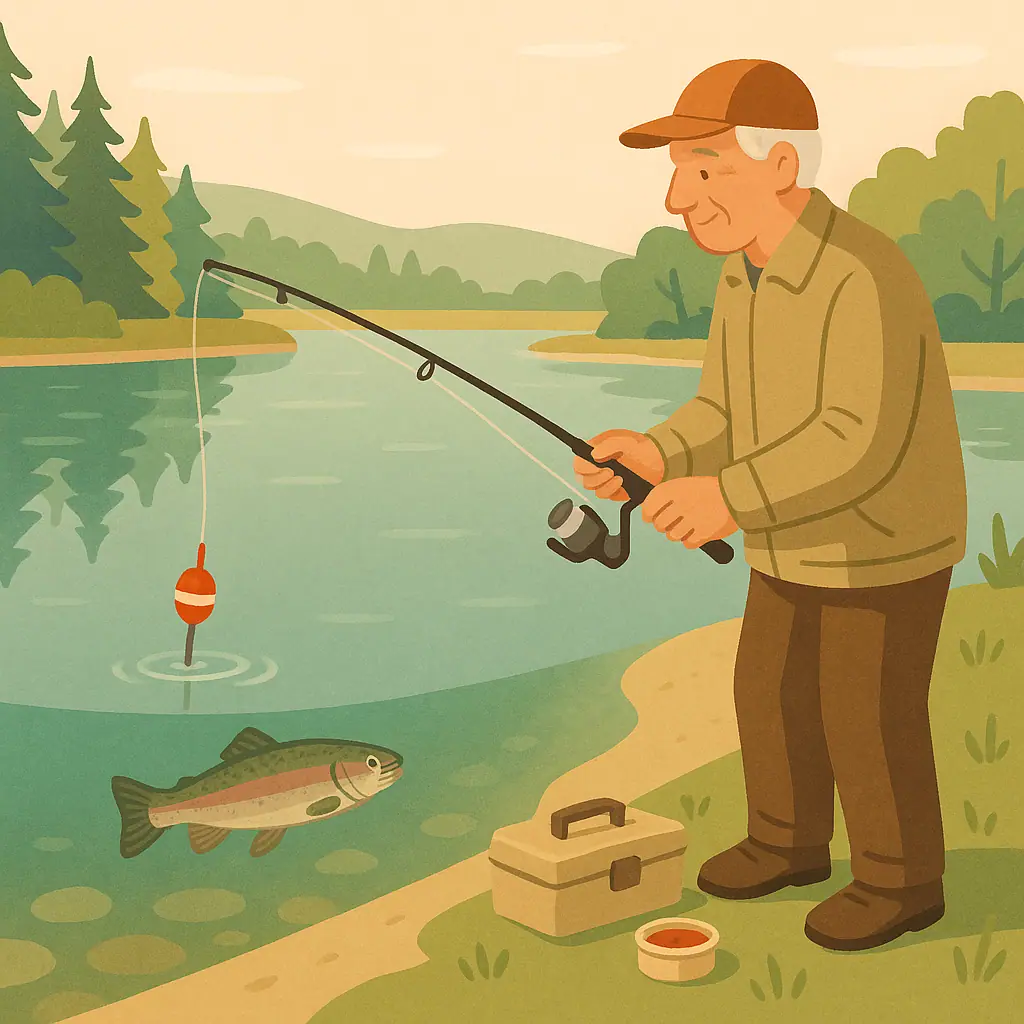
A bobber rig with a small hook and worm piece can be a gentle way to start when bait is legal. Set the bait a few feet below the float, cast near likely cruising water, and watch for the float to dip, slide, or twitch. If trout are deeper, remove the bobber and fish a small bait near bottom with light weight.
Small lures are useful when trout are active. Cast a tiny spinner or spoon, let it settle briefly, then retrieve slowly enough that it wobbles or spins without racing. If you see trout following but not biting, slow down, downsize, or switch to a subtler color.
Fish the Right Times of Day
Morning and evening are friendly starting windows because the light is softer and water near shore may feel more comfortable. Overcast days can also keep trout active longer. In warm weather, trout may slide deeper or gather near cooler water, so midday bank fishing can be slower.
Do not ignore recent stocking information. Many state agencies publish stocking schedules or reports, though they can change with weather, water conditions, or hatchery logistics. Use those reports as clues, not guarantees. A stocked lake still requires patience, careful casting, and legal tackle.
Pros and Cons of Targeting Stocked Rainbow Trout
Good beginner access
Stocked lakes and community waters often have shore access, piers, parking, and shorter walks than remote trout streams.
Simple tackle works
Light spinning gear, small hooks, bobbers, worms, tiny jigs, and small spinners can all teach useful trout habits.
Visible progress builds confidence
Watching a bobber dip or seeing trout cruise near shore helps beginners connect water clues with real bites.
Rules can vary by water
Bait, harvest, season, and tackle rules may change from one stocked lake or stream section to another.
Crowds can affect fishing
Popular stocked waters may be busy after a stocking, so quieter times and polite spacing matter.
A Simple Checklist for Your First Trout Trip
- Legal check: license, trout stamp if required, bait rules, size limits, creel limits, and water-specific rules confirmed.
- Water check: stocked lake, safe bank, posted access, and a reachable area with shade, depth, or an inlet nearby.
- Gear check: light spinning rod, 4- to 6-pound line, small hooks, split shot, bobber, pliers, and small net packed.
- Bait check: worms, prepared trout bait, salmon eggs, jigs, spoons, or spinners are legal where you plan to fish.
- Timing check: start early, late, or on an overcast day when trout may cruise shallower.
When to Get Extra Help
Get extra help when a rule seems unclear. The U.S. Fish & Wildlife Service reminds anglers on its Where to Fish map to consult current federal and state regulations before fishing. That is especially important for trout because some waters have special seasons, bait restrictions, or harvest rules.
A local bait shop, park office, or state fish and wildlife agency can also help you interpret stocking reports and water-specific rules. Ask direct questions: "Is bait legal here?" "Do I need a trout stamp?" "Can I keep stocked rainbow trout from this lake today?" Clear questions prevent expensive or disappointing mistakes.
Frequently Asked Questions
What is the easiest bait for stocked rainbow trout?
A small piece of worm under a bobber is a simple starting point where bait is legal. Prepared trout bait, salmon eggs, tiny jigs, and small spinners can also work depending on local rules.
Do I need a long cast for rainbow trout from shore?
Not always. Stocked trout often cruise within reach of banks, piers, ramps, inlets, and shaded edges, especially during low light or soon after stocking.
What time should I fish a stocked trout lake?
Early morning and evening are sensible first choices. Overcast days can also be good. In warm, bright conditions, trout may hold deeper or near cooler water.
How do I avoid breaking trout rules by accident?
Check your state agency's current regulations for the exact water before fishing. Confirm license, trout stamp, bait rules, hook rules, season, size limits, and harvest limits.
Final Thoughts
Rainbow trout for beginners starts with a small, steady plan: choose a stocked water, confirm the current rules, bring light tackle, and fish simple baits or small lures at a comfortable pace. You do not need to master every trout method before your first trip.
For your next outing, pick one stocked lake, one legal bait, and one backup lure. Fish early or late, keep notes on where trout showed up, and let the first trip teach you what to adjust next time.